
Overview
Businesses depend on Weight Stations to weigh goods that are run by booth operators. Maintaining its weight station is an expensive affair and weight stations are a common ground for weighing malpractices like underweighting, bribery, and theft. The manned weighbridge system that is commonly used across the world for weighing goods can be irregular and incur a huge operating cost to companies.
Process of Commercial weighing of goods
When we talk about weighing and transportation of goods in logistics we usually refer to large-scale operations involving goods weighing in thousands of kilograms transported by a fleet of vehicles. To maintain accurate goods, there is a common due process followed by every company or the other that produces and transports goods.
Weighing goods before transportation, by the seller
The weight of the goods is measured by the seller before dispatching it to the buyer. A final invoice slip is generated by the seller before transporting the goods which serve as documentation certifying the weight of goods being sent.
Weighing goods before receiving for audit, by the buyer
Once the goods arrive at the buyer’s end, they are required to cross-check the weight and quality of goods before receiving them. This is either done within the receiving facility or done at a third-party weighing station equipped to weigh commercial shipments of goods. At the receiver’s end,
- Vehicles are first measured in the state they arrive at, along with the goods. The total weight of the shipment is calculated.
- Post this, goods are offloaded and the weight of the vehicle without goods is calculated.
[Total Weight of vehicle with goods - Weight of vehicle without goods = Final weight of goods]
The final weight of goods is matched with the invoice from the seller’s end. If the weight and conditions of goods are acceptable, the goods are successfully received. In case when the weight of goods does not add up or is not within the acceptable margin of error, it leads to weight disputes resulting in either return or freight adjustments that could lead to a revaluation of the consignment.
How Manned Weighbridge Systems Operate in Commercial Logistics
To measure such large quantities of goods, commercial manned weighing stations are used. These weighing stations are either equipped with manual, semi-automatic, or automatic commercial weighbridges that are capable of measuring heavy vehicles with goods. In India, these weighbridges are colloquially referred to as Dharam Kanta (धरमकाँटा) for decades. Their name translates to a place to measure the weight of goods with utmost honesty which is very crucial when we talk about weighing goods worth crores!
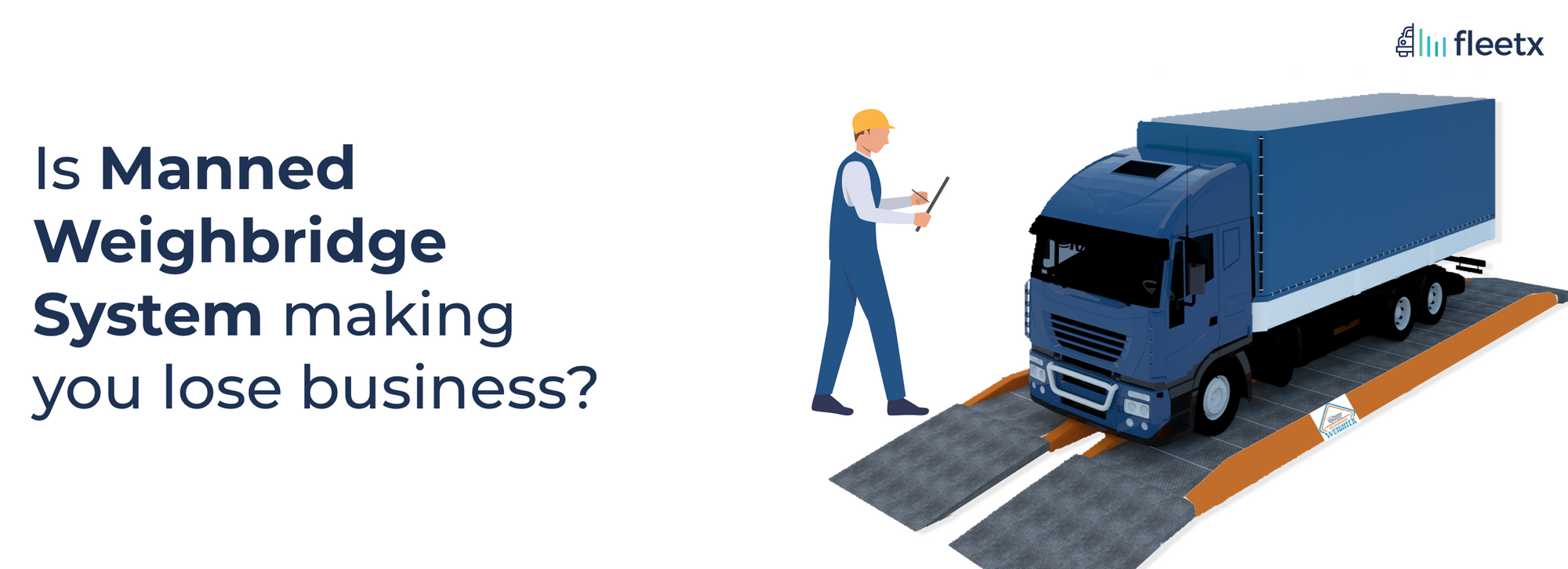
These Weighing Stations equipped with Manual operated Weighbridges or Manned Weighbridges form a system that requires a weight booth and a booth operator. The booth operator is responsible for registering the vehicle details either manually or electronically. These include details like:
- Vehicle entry and exits
- Vehicle registration number
- Details of the driver
- Sender details
- Invoice details
- Other details related to the goods
Operating manned weighbridges
Manned Weighbridges are equipped with a large platform fitted with a digital reading meter that displays the weight. Vehicles, mostly trucks with goods are loaded on the platform, their weight is captured by the scale and displayed on the meter.
The booth operator is responsible for the management of the entire weighing operation for vehicles that enter and exit the weighing stations. Additionally, weight stations are either part of a company’s logistics or are owned by third-party commercial service providers.
Problems with Manned Weighbridge System
The most significant problem with the Manned Weighbridge System is the fact that they require manual intervention. They are dependent on an individual which increases the chances of human error and malpractice, resulting in financial loss for companies that makes the weighing process less transparent. There are several other issues with Manned Weighbridge Systems as listed below:
Managing weight stations require heavy capital investments and increase operational cost
Manned Weighbridge Systems are expensive and require heavy upfront fixed capital investment. Additionally, maintaining and operating a Weighing Station incurs additional expenses that include the cost of setting up a weighing booth, employing additional workers for managing the weighing terminal, and other additional costs which drive up the cost of doing business.
Manual weighbridges have a heavy reliance on booth operators to oversee operations
The Manned Weighbridge system requires a booth operator who oversees the entire process. Companies become extremely reliant on these operators to oversee weighing operations for goods with extremely high quantity and monetary value. This creates an opening for operators to indulge in bribery, theft, and other related malpractices causing irregularities and financial losses for the company.
Manual weighing stations lack transparency in the weighing process of goods
In manned weighbridge systems, booth operators are solely responsible for weighing and maintaining records for goods entering and exiting the facility. This causes poor transparency in the process. As a result, malpractices at the micro-level could go undetected for a long time resulting in compounding financial losses to the company.
Manual weighbridge systems are riddled with poor time and resource management for any logistics operator
Weight Stations deal with a large number of vehicles every day. Manual registration and weighing lead to long queues and overcrowding of incoming vehicles at the station. This further leads to delays at the weighing station reducing the operating efficiency of the entire supply chain process.
The manual process of weighing goods lacks security and are prone to frauds and malpractice
Due to the lack of transparency and centralization of operation in the hands of driver and booth operator, the manual weighing process is riddled with massive security concerns. Supply-chain managers can’t oversee every step of operation in weighing which gives rise to frauds and malpractice in weighing of goods which can reflect poorly on the business as well as the operation managers.
Financial Impact of Manned Weighbridge Systems on Businesses
A manned weighbridge system may appear to be a routine operational requirement, but its hidden costs can significantly affect business profitability. Beyond the initial installation cost of the weighbridge and weighing booth, businesses must account for operator salaries, maintenance expenses, training costs, electricity consumption, hardware calibration, and security monitoring.
For organizations handling hundreds of vehicle movements daily, even minor inefficiencies can accumulate into substantial annual losses. Delays caused by manual record entry can increase vehicle turnaround time, resulting in idle trucks, driver dissatisfaction, and reduced productivity. In industries such as mining, cement, steel, construction materials, agriculture, and logistics, where margins are heavily dependent on operational efficiency, these losses directly impact profitability.
Furthermore, manual weighing errors can result in incorrect invoicing, shipment disputes, inventory mismatches, and customer complaints. The financial burden of investigating and resolving these issues often exceeds the apparent cost of the weighing operation itself. Businesses seeking long-term scalability increasingly recognize that manual weighbridge operations are not only inefficient but also financially unsustainable.
Common Frauds and Malpractices in Manned Weighbridge Operations
One of the biggest challenges associated with manned weighbridge systems is their vulnerability to manipulation and fraud. Since the weighing process relies heavily on human intervention, there are numerous opportunities for intentional or unintentional errors.
Common fraud scenarios include:
- Underreporting the weight of outgoing goods.
- Overreporting incoming material quantities.
- Manipulation of weighment slips.
- Duplicate vehicle entries.
- Unauthorized vehicle movements.
- Bribery involving weighbridge operators and drivers.
- Manual alteration of recorded data.
- Fake vehicle registrations.
Such practices can lead to inventory losses, revenue leakage, regulatory penalties, and damaged business relationships. In high-volume logistics environments, these discrepancies may remain undetected for months before audits uncover them.
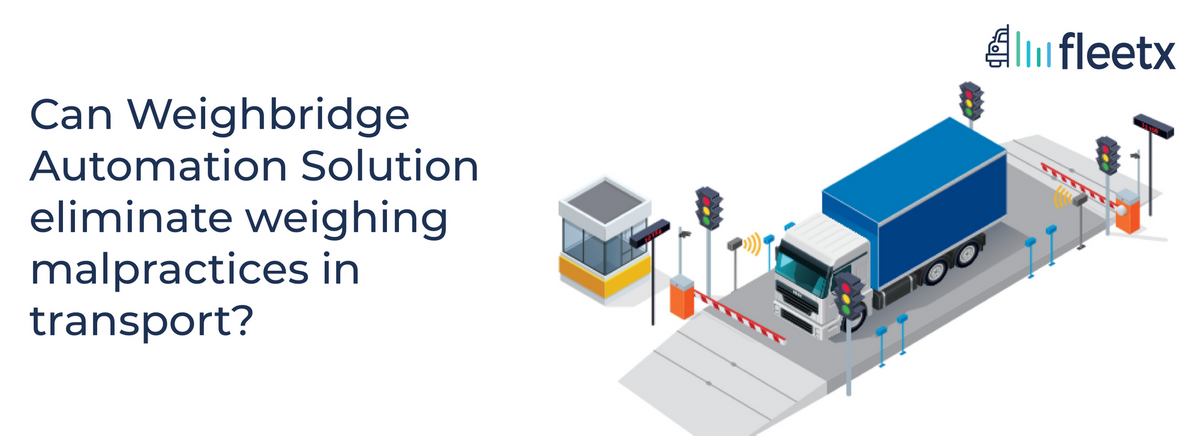
Automated weighbridge systems address these issues through digital records, RFID authentication, ANPR (Automatic Number Plate Recognition), CCTV integration, and real-time monitoring, significantly reducing opportunities for fraud.
Challenges Faced by Logistics Managers Due to Manual Weighing
Logistics managers are responsible for ensuring that goods move efficiently across the supply chain. Manual weighbridge operations often become bottlenecks that disrupt this objective.
Challenges commonly faced include:
- Long vehicle queues.
- Delayed dispatch schedules.
- Difficulty tracking vehicle movement.
- Limited visibility into weighing operations.
- Increased dependency on individual operators.
- Manual documentation errors.
- Difficulty generating real-time reports.
When trucks spend excessive time waiting at weighbridges, overall fleet utilization declines. This creates scheduling conflicts and affects delivery commitments. Customers increasingly expect real-time shipment visibility, making manual systems inadequate for modern logistics requirements.
As businesses expand, these operational challenges become increasingly difficult to manage using traditional weighbridge processes.
How Weighbridge Automation Improves Operational Efficiency
Weighbridge automation introduces technology-driven processes that reduce manual intervention while improving speed, accuracy, and transparency.
An automated weighbridge system can integrate multiple technologies, including:
- RFID vehicle identification.
- Automatic number plate recognition.
- IoT sensors.
- Barrier gate automation.
- CCTV surveillance.
- ERP integration.
- Transportation Management System integration.
The result is a seamless weighing process where vehicles are identified automatically, weight data is captured digitally, and records are stored centrally without manual intervention.
Benefits include:
- Faster vehicle processing.
- Reduced operational costs.
- Improved weighing accuracy.
- Enhanced security.
- Better reporting capabilities.
- Improved customer satisfaction.
Businesses can process significantly more vehicles per day without increasing manpower requirements.
Importance of Accurate Weighing in Supply Chain Management
Accurate weighing plays a critical role in supply chain management. The weight of goods directly affects inventory records, transportation planning, billing accuracy, and regulatory compliance.
Inaccurate weight measurements can create:
- Inventory discrepancies.
- Freight billing disputes.
- Vehicle overloading issues.
- Regulatory penalties.
- Reduced customer trust.
For manufacturers, distributors, and logistics providers, precise weighing ensures that inventory records remain accurate throughout the supply chain. It also enables more effective planning and forecasting, reducing unnecessary operational costs.
Role of Weighbridges in Different Industries
Mining Industry
Mining companies depend on weighbridges to measure extracted minerals and transported material accurately. Small discrepancies can result in significant financial losses due to the high value and volume of materials being moved.
Cement Industry
Cement manufacturers use weighbridges to monitor raw material inflow and finished product dispatches. Accurate weight records help maintain production efficiency and customer satisfaction.
Steel Industry
Steel transportation involves heavy loads requiring precise measurement for compliance and billing purposes.
Agriculture Industry
Agricultural businesses use weighbridges to measure grain, produce, and fertilizer movement while ensuring accurate procurement and distribution.
Logistics and Transportation
Transport companies rely on weighbridges to optimize vehicle loading and maintain regulatory compliance.
Regulatory Compliance and Vehicle Weight Management
Governments across the world impose vehicle weight regulations to ensure road safety and infrastructure protection.
Overloaded vehicles can cause:
- Road damage.
- Increased accident risks.
- Higher fuel consumption.
- Vehicle maintenance issues.
Weighbridges help businesses comply with these regulations by accurately measuring vehicle loads before dispatch. Automated systems improve compliance further by maintaining tamper-proof digital records that can be retrieved during inspections and audits.
How Digital Transformation Is Changing Weighbridge Operations
The logistics industry is rapidly adopting digital technologies to improve operational visibility and efficiency. Weighbridge operations are also undergoing significant transformation.
Modern weighbridge automation solutions support:
- Cloud-based monitoring.
- Remote management.
- Mobile access.
- Automated reporting.
- Real-time analytics.
- AI-driven anomaly detection.
These technologies enable organizations to manage multiple weighbridge locations from a centralized dashboard, improving control and decision-making.
Key Features to Look for in a Modern Weighbridge Automation Solution
When evaluating weighbridge automation systems, businesses should consider the following features:
- RFID integration.
- ANPR camera support.
- Barrier gate automation.
- ERP integration.
- Transport Management System integration.
- Real-time reporting.
- Multi-location monitoring.
- Cloud-based access.
- Digital weighment slips.
- Audit trails.
- Role-based access controls.
A comprehensive solution not only automates weighing but also enhances overall logistics management.
Future of Weighbridge Automation
The future of weighbridge technology lies in intelligent automation and data-driven decision-making.
Emerging innovations include:
- Artificial Intelligence-based anomaly detection.
- Computer vision systems.
- Predictive analytics.
- Autonomous vehicle integration.
- IoT-enabled monitoring.
- Digital twins for logistics operations.
As organizations focus on operational excellence, weighbridge automation will increasingly become a strategic component of broader supply chain digitization initiatives.
Manned Weighbridge vs Automated Weighbridge
| Parameter | Manned Weighbridge | Automated Weighbridge |
|---|---|---|
| Human Intervention | High | Minimal |
| Accuracy | Moderate | High |
| Fraud Risk | High | Low |
| Processing Speed | Slow | Fast |
| Documentation | Manual | Digital |
| Visibility | Limited | Real-Time |
| Reporting | Manual | Automated |
| Operational Cost | High | Lower Long-Term |
| Scalability | Limited | High |
| Compliance Tracking | Difficult | Easier |
Organizations aiming to improve productivity and reduce operational risks increasingly prefer automated weighbridge solutions.
Industry Statistics and Cost-Saving Benefits of Weighbridge Automation
Modern logistics operations are rapidly shifting toward automation as organizations seek greater efficiency, visibility, and cost control across their supply chains. Industry research indicates that technology investments in logistics continue to rise as businesses prioritize automation, digital transformation, and real-time operational visibility. More than 250 global shippers and logistics providers surveyed by industry researchers reported increasing investments in digital logistics technologies and automation initiatives.
Traditional manned weighbridge systems often create operational bottlenecks due to manual data entry, paperwork, operator dependency, and vehicle queues. Automated weighbridge solutions address these challenges by enabling automatic vehicle identification, digital recordkeeping, real-time reporting, and integration with enterprise systems. Automation providers report that unmanned weighbridge systems can reduce operator dependency, improve turnaround times, prevent weighing malpractices, and support continuous 24/7 operations.
From a cost perspective, broader supply chain digitization initiatives have demonstrated substantial financial benefits. Research shows that organizations implementing digital technologies across supply chains can reduce operational costs by approximately 20–30% while improving service performance and operational efficiency.
For businesses handling hundreds of vehicle movements daily, weighbridge automation can contribute to savings through:
- Reduced manpower requirements at weighing stations.
- Lower administrative and documentation costs.
- Faster truck turnaround times.
- Reduced vehicle waiting and idle fuel consumption.
- Improved inventory accuracy.
- Lower revenue leakage due to fraud prevention.
- Better compliance and audit readiness.
- Reduced shipment disputes and reconciliation costs.
Industry studies also show that automated warehouses and digitally enabled logistics operations deliver increased productivity, lower labor dependency, and improved operational performance. Automation technologies are becoming a core component of modern supply chain strategies as organizations seek scalable growth and operational resilience.
For large logistics operators in Delhi NCR, Gurgaon, Mumbai, Bengaluru, Pune, and other major industrial regions, even a modest reduction in vehicle processing time can generate significant annual savings. For example, reducing average weighbridge turnaround time by just a few minutes per vehicle can result in hundreds of additional productive vehicle hours every month, improving fleet utilization and reducing congestion at logistics facilities.
As supply chains become increasingly digital, weighbridge automation is no longer viewed solely as a weighing solution. It is becoming a strategic operational tool that improves visibility, enhances security, supports compliance, reduces costs, and contributes directly to profitability across logistics, transportation, manufacturing, mining, cement, steel, warehousing, and distribution operations.
Key Takeaways
Manned weighbridge systems have been a standard part of logistics and supply chain operations for decades, but they are increasingly becoming a source of operational inefficiency, revenue leakage, and compliance risks. Businesses that rely heavily on manual weighing processes often face challenges such as human errors, long vehicle queues, delayed dispatches, inaccurate records, fraud opportunities, and increased operating costs.
Traditional weighbridge operations require significant human intervention, making them difficult to scale in high-volume logistics environments. As transportation networks continue to expand across India, particularly in logistics hubs such as Delhi NCR, Gurgaon, Mumbai, Bengaluru, and Pune, businesses are under growing pressure to improve transparency, reduce turnaround times, and increase productivity.
Weighbridge automation addresses these challenges by replacing manual processes with digital workflows powered by technologies such as RFID, Automatic Number Plate Recognition (ANPR), CCTV integration, barrier gate automation, cloud reporting, and Transportation Management System integration. Automated systems help eliminate weighing malpractices, improve auditability, accelerate vehicle movement, and provide real-time operational visibility.
Organizations across industries including logistics, transportation, mining, cement, steel, warehousing, construction, agriculture, and manufacturing are increasingly adopting weighbridge automation to improve operational efficiency and reduce business risks. Although automation requires an initial investment, the long-term benefits often include lower operating costs, reduced fraud, improved compliance, better inventory control, and higher customer satisfaction.
- Manual weighbridge systems increase dependency on human operators and create opportunities for errors and fraud.
- Long vehicle queues and manual documentation reduce fleet productivity and supply chain efficiency.
- Automated weighbridge solutions improve weighing accuracy, transparency, and operational control.
- Technologies such as RFID, ANPR, CCTV, and ERP integration streamline weighing operations.
- Businesses can significantly reduce revenue leakage and inventory discrepancies through automation.
- Integration with Transportation Management Systems improves logistics visibility and decision-making.
- Weighbridge automation supports regulatory compliance and helps prevent vehicle overloading issues.
- Industries such as logistics, mining, cement, steel, warehousing, and manufacturing benefit substantially from automation.
- Growing logistics hubs like Delhi NCR, Gurgaon, Mumbai, Bengaluru, and Pune are rapidly adopting automated weighing solutions.
- The future of weighbridge management lies in AI-driven automation, IoT connectivity, predictive analytics, and real-time operational intelligence.
Conclusion
As businesses and operation move towards improving the efficiency of operations through automation, the traditional process of weighing using manned weighbridge systems are dragging them backward. The inefficient and improper weighing process is a growing concern that operation managers across the world are worried about. There is a need to automate the weighing process through weighbridge automation solutions if businesses are serious about improving their operating efficiency. To find out how your business can successfully automate the process, check out our piece of fleetx’s weighbridge automation system.
Frequently Asked Questions About Manned and Automated Weighbridge Systems
What is a manned weighbridge system and how does it work in logistics operations? ▼
A manned weighbridge system is a commercial vehicle weighing solution where a booth operator manually records vehicle details, shipment information, driver data, and weight measurements before generating weighment slips. These systems are widely used across logistics, mining, cement, steel, construction, agriculture, warehousing, and manufacturing industries throughout India. In cities such as Delhi, Gurgaon, Mumbai, Bengaluru, and Pune, thousands of trucks pass through weighbridges every day for dispatch and receiving operations.
The process typically involves weighing a loaded truck, unloading the goods, and then weighing the empty vehicle. The difference between the two readings determines the net weight of goods. Operators manually enter registration numbers, invoice details, customer information, and other shipment records. While this method has been used for decades, it depends heavily on human intervention, making it vulnerable to errors, delays, fraud, and operational inefficiencies. Modern logistics businesses are increasingly replacing traditional weighbridges with automated systems that improve transparency, accuracy, security, and operational speed while reducing labor dependency and long vehicle queues.
What are the biggest problems associated with traditional manned weighbridge systems? ▼
The biggest challenge with traditional manned weighbridge systems is their dependence on manual operations. Every vehicle entering and exiting the facility requires operator involvement, increasing the likelihood of data entry mistakes, delayed processing, and operational bottlenecks. Industries handling high vehicle volumes often experience long queues, increased turnaround times, and reduced fleet productivity.
Another major concern is fraud and malpractice. Since records are manually maintained, operators may intentionally or unintentionally alter vehicle information, weights, invoices, or shipment records. Businesses can face inventory discrepancies, customer disputes, revenue leakage, and compliance issues as a result. Companies operating in logistics hubs such as Delhi NCR, Gurgaon, Mumbai, and Bengaluru frequently deal with hundreds of vehicle movements daily, making manual oversight increasingly difficult.
Manned weighbridges also increase operating expenses through staffing requirements, booth infrastructure, maintenance, training, and administrative management. As organizations scale their transportation and supply chain operations, these inefficiencies become more costly. This is why many businesses are investing in automated weighbridge solutions that offer real-time visibility, digital records, and improved process control.
What is the best weighbridge automation solution for logistics companies in India? ▼
The best weighbridge automation solution in India is one that integrates weighing operations with broader logistics and transportation management workflows. Modern solutions typically combine RFID technology, Automatic Number Plate Recognition (ANPR), barrier gate automation, CCTV surveillance, cloud reporting, ERP connectivity, and Transportation Management System integration.
Leading logistics operators in Delhi, Gurgaon, Mumbai, Pune, and Bengaluru increasingly prefer automated weighbridge platforms that eliminate manual data entry and automatically capture vehicle details. These systems create digital audit trails, improve compliance, and significantly reduce fraud opportunities. A top weighbridge automation solution should provide real-time monitoring, centralized dashboards, automated weighment slips, remote access, and analytics capabilities.
Businesses should evaluate automation platforms based on scalability, integration capabilities, reporting features, implementation support, and long-term return on investment. Organizations processing hundreds of vehicles daily often achieve measurable improvements in turnaround time, operational efficiency, resource utilization, and inventory accuracy after implementing weighbridge automation systems. The right solution can transform weighbridge operations from a manual checkpoint into a strategic logistics optimization tool.
How much does a weighbridge automation system cost in India? ▼
The cost of a weighbridge automation system in India varies depending on project scope, infrastructure requirements, automation level, and integration needs. Basic automation deployments may start around ₹3 lakh to ₹10 lakh for smaller facilities, while advanced enterprise-grade weighbridge automation solutions can range from ₹10 lakh to ₹50 lakh or more.
Pricing is influenced by factors such as RFID integration, ANPR cameras, barrier gates, software licensing, cloud hosting, ERP integration, CCTV systems, remote monitoring capabilities, and multi-location management requirements. Businesses operating large logistics facilities in Delhi NCR, Gurgaon, Mumbai, Bengaluru, and Pune often require more comprehensive implementations that support higher vehicle volumes and centralized control.
While automation involves an upfront investment, many organizations recover costs through reduced manpower expenses, improved operational efficiency, fraud prevention, faster vehicle processing, and more accurate inventory tracking. When evaluating cost, businesses should focus on total return on investment rather than initial deployment expenses alone, as automation often generates substantial long-term savings.
Why are automated weighbridges becoming popular in Delhi NCR and Gurgaon logistics hubs? ▼
Delhi NCR and Gurgaon have emerged as major logistics and warehousing hubs due to their strategic location, industrial growth, and connectivity to North India. With increasing freight movement and higher customer expectations, logistics operators are under pressure to improve operational speed and visibility. Automated weighbridges help achieve these objectives by eliminating manual processes and reducing vehicle congestion.
Warehousing parks, manufacturing facilities, e-commerce distribution centers, and transport companies across Gurgaon and Delhi process large numbers of trucks every day. Traditional weighing methods often create delays that affect dispatch schedules and delivery commitments. Automated systems accelerate vehicle throughput while maintaining accurate weight records and compliance standards.
Additionally, businesses in Delhi NCR increasingly prioritize digital transformation initiatives. Automated weighbridges integrate seamlessly with ERP systems, fleet management platforms, and transportation management solutions, creating a connected logistics ecosystem. This integration supports data-driven decision-making, operational transparency, and better customer service while reducing administrative workloads.
How do weighbridge systems help logistics companies in Mumbai improve efficiency? ▼
Mumbai serves as one of India's most important transportation, manufacturing, and port-based logistics centers. The city's logistics ecosystem handles massive cargo volumes every day, making operational efficiency critical for business success. Weighbridge systems play a central role in ensuring accurate shipment measurement, regulatory compliance, and inventory control.
For logistics companies operating around Mumbai's industrial zones, ports, warehouses, and distribution centers, automated weighbridge systems reduce truck waiting times and improve throughput. Faster vehicle processing helps optimize fleet utilization and supports time-sensitive supply chain operations. Real-time monitoring capabilities also provide greater visibility into cargo movement and dispatch activities.
Modern weighbridge automation solutions further enhance efficiency by generating digital weighment records, integrating with transportation software, and reducing manual paperwork. This allows logistics managers to focus on strategic operations rather than administrative tasks. As Mumbai continues to expand as a logistics hub, automated weighing technology is becoming an increasingly valuable operational asset.
What industries benefit the most from weighbridge automation systems? ▼
Weighbridge automation delivers benefits across multiple industries where accurate vehicle weighing is essential. Mining companies use automated systems to track extracted materials and monitor transportation activities. Cement manufacturers rely on weighbridge automation to manage raw material intake and finished goods dispatches. Steel companies utilize automated weighing to improve compliance and shipment accuracy.
Logistics providers, transporters, warehouse operators, construction firms, agricultural businesses, food processing companies, and manufacturing enterprises also benefit significantly from weighbridge automation. These organizations frequently process large volumes of inbound and outbound vehicle traffic, making operational efficiency a critical business requirement.
Facilities located in major industrial regions such as Delhi NCR, Gurgaon, Mumbai, Pune, and Bengaluru often experience particularly strong returns from automation investments due to higher traffic volumes. Automated weighbridge solutions improve productivity, reduce fraud, support regulatory compliance, and create centralized visibility across logistics operations. This combination of operational and financial benefits makes automation valuable across a wide range of sectors.
How does weighbridge automation reduce fraud and weighing malpractices? ▼
Fraud prevention is one of the strongest business cases for weighbridge automation. Traditional manned weighbridge systems rely heavily on human operators who manually record weights, vehicle information, and shipment details. This creates opportunities for intentional manipulation, inaccurate records, unauthorized vehicle entries, and weight discrepancies.
Automated weighbridge systems eliminate many of these vulnerabilities through technology-driven controls. RFID tags automatically identify vehicles, ANPR cameras verify registration numbers, CCTV systems provide visual documentation, and digital records create tamper-resistant audit trails. Weight data is captured directly from the weighing equipment and stored electronically, reducing opportunities for manual interference.
Businesses operating high-value logistics networks in India often experience significant reductions in inventory losses, shipment disputes, and revenue leakage after implementing automation. Centralized reporting and real-time monitoring also make it easier for managers to identify unusual activities. By increasing transparency throughout the weighing process, automation helps organizations establish stronger operational controls and protect valuable assets.
What are the top benefits of integrating weighbridge automation with transportation management systems? ▼
Integrating weighbridge automation with a Transportation Management System (TMS) creates a more connected and efficient logistics environment. Instead of operating as a standalone weighing station, the weighbridge becomes part of a broader transportation ecosystem that manages vehicle movement, dispatch planning, freight visibility, and operational reporting.
When integration is implemented, vehicle information, shipment details, route data, and weight records flow automatically between systems. This reduces duplicate data entry, improves information accuracy, and accelerates decision-making. Logistics managers gain real-time visibility into vehicle status, loading operations, and dispatch activities.
Organizations across Delhi, Mumbai, Gurgaon, Pune, and Bengaluru increasingly adopt integrated logistics technology stacks because they improve operational efficiency and customer service. Additional benefits include better fleet utilization, reduced paperwork, automated reporting, enhanced compliance management, and more accurate performance analytics. Together, these capabilities help businesses build more resilient and scalable transportation operations.
How can businesses choose the top weighbridge automation software in India? ▼
Selecting the top weighbridge automation software requires evaluating both current operational requirements and future scalability needs. Businesses should begin by assessing vehicle volumes, facility complexity, integration requirements, compliance obligations, and reporting expectations.
The best weighbridge software platforms typically support RFID integration, ANPR technology, cloud-based reporting, ERP connectivity, role-based access control, automated weighment slips, audit trails, and multi-location management. Organizations should also examine implementation support, software reliability, cybersecurity standards, and customer service capabilities.
Companies operating in major logistics markets such as Delhi NCR, Gurgaon, Mumbai, Bengaluru, and Pune often benefit from solutions that integrate with fleet management systems and transportation management platforms. A successful implementation should improve weighing accuracy, reduce administrative workload, increase transparency, and provide measurable operational gains. Comparing long-term value rather than focusing solely on purchase price usually leads to better business outcomes and stronger returns on investment.
What is the future of weighbridge technology and logistics automation in India? ▼
The future of weighbridge technology is closely tied to broader digital transformation trends within logistics and supply chain management. Organizations are increasingly adopting automation, artificial intelligence, cloud computing, IoT devices, and advanced analytics to improve operational visibility and efficiency.
Future weighbridge systems are expected to incorporate AI-powered anomaly detection, predictive analytics, smart cameras, advanced vehicle recognition technologies, and deeper integration with enterprise logistics platforms. These innovations will help businesses identify operational issues proactively and make faster data-driven decisions.
As logistics activity continues to expand across India, particularly in cities such as Delhi, Gurgaon, Mumbai, Bengaluru, and Pune, the demand for intelligent weighing infrastructure will grow. Automated weighbridges will become an important component of connected supply chains, helping organizations improve accuracy, compliance, sustainability, and profitability while supporting increasingly complex transportation networks.
Are automated weighbridge systems suitable for small and medium-sized businesses? ▼
Yes, automated weighbridge systems are increasingly accessible to small and medium-sized businesses. While automation was once considered suitable only for large enterprises, modern software platforms and modular deployment models have made implementation more affordable and scalable.
Small manufacturers, transport companies, warehouse operators, agricultural businesses, and regional logistics providers can benefit from improved weighing accuracy, reduced paperwork, enhanced compliance, and lower dependency on manual processes. Entry-level automation solutions can often be customized based on operational requirements and budget constraints.
Businesses located in emerging industrial areas around Delhi NCR, Gurgaon, Pune, Bengaluru, and Mumbai frequently use automation to improve competitiveness and support growth. By reducing operational inefficiencies and improving process transparency, automated weighbridge systems help smaller organizations establish stronger logistics capabilities without requiring large administrative teams. As technology costs continue to decline, adoption among SMEs is expected to increase significantly across India.