
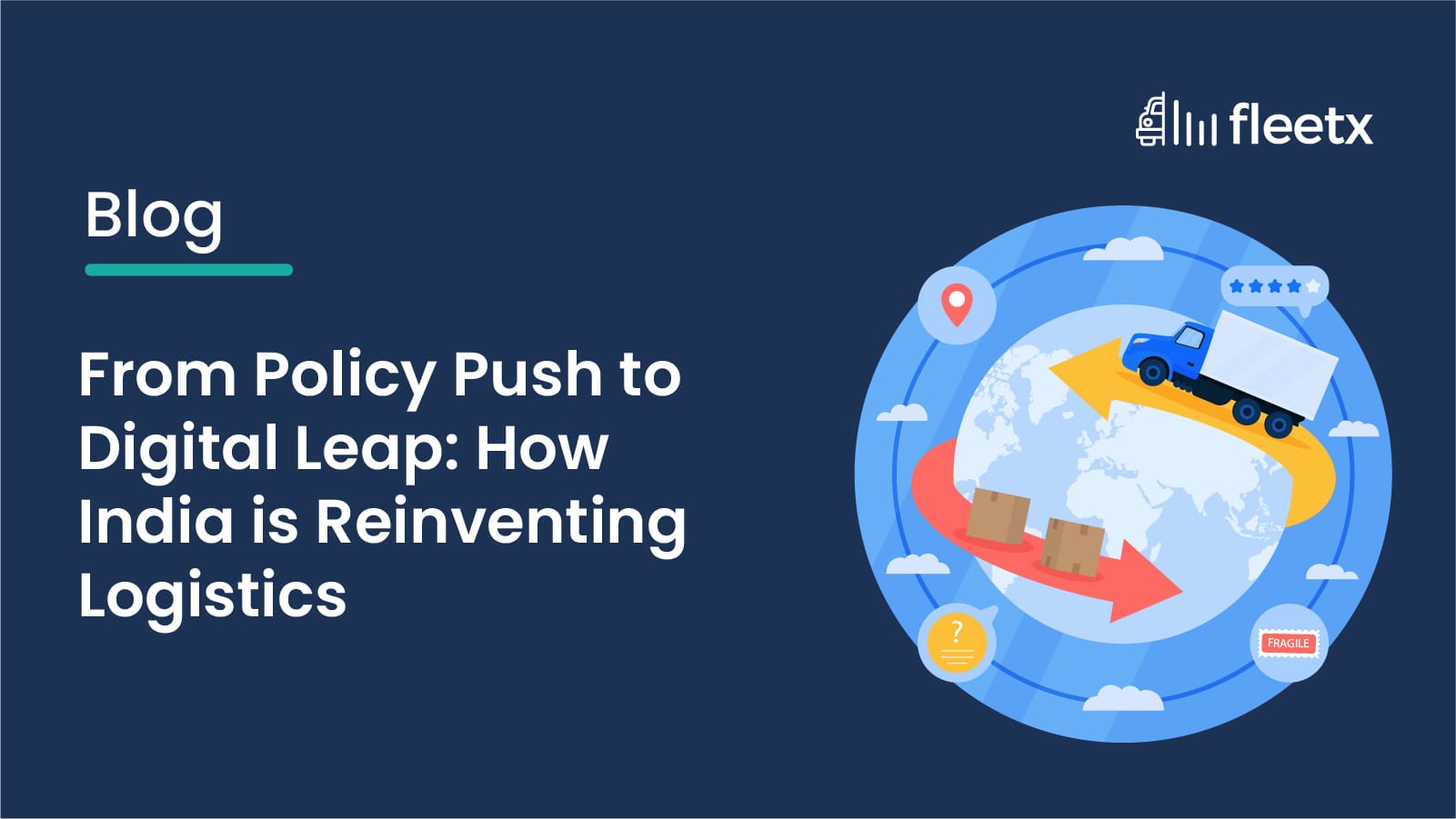
India’s logistics sector has long been slow, fragmented, and weighed down by inefficiencies. High logistics costs - 14% of GDP versus the global benchmark of 8 - 10%. Endless paperwork and unreliable infrastructure have turned supply chains into stress chains. But over the last decade, a radical shift has begun. A combination of digital adoption, futuristic policies, and heavy infrastructure investment is reinventing logistics into a leaner, smarter, and globally competitive sector. The shift isn’t just about efficiency - it’s about making India a credible supply chain hub in the global market.
Hurdles on the Way to Logistics Success in India
- Fragmentation of Players: The market is dominated by small fleet operators who lack the resources to digitize or modernize.
- High Logistics Cost: Inefficiencies inflate logistics expenses, eating into national competitiveness.
- Infrastructure Gaps: Poor road conditions, limited multimodal connectivity, and congested ports lead to high turnaround times.
- Compliance Overload: Multiple permits, taxes, and state-level restrictions delay seamless cargo movement.
- Low Technology Penetration: Traditional operators often rely on manual tracking, paperwork, and outdated practices.
- Unorganized Sector Dependence: Informal players, who form the majority, operate outside data-driven or standardized systems.
- Skill Shortages: Driver training, fleet management skills, and digital literacy still remain inadequate.
Digital India – How Is Technology Transforming the Growth Curve
The government’s Digital India program is giving logistics a new growth curve. According to GSMA Intelligence, India had over 806 million active internet users as of January 2025, nearly double its 2018 figures — making it one of the world's largest digitally connected populations, with the number expected to surpass 1 billion by end of 2025. This connectivity is trickling into logistics in transformative ways -
- AI & Predictive Analytics are forecasting demand, reducing empty miles, and enabling better load consolidation.
- IoT & Telematics are embedding intelligence in fleets - monitoring vehicle health, driver behavior, and cargo conditions in real time.
- Fleet Tech platforms are giving operators digital dashboards to optimize routing, dispatching, and fuel consumption.
- FASTag has automated toll payments, cutting average wait times at toll booths by 70–80%, while saving billions in fuel costs.
- E-Way Bills have digitized documentation, enabling faster interstate transport and reducing compliance headaches.
Policy Push Enabling Logistics Transformation
National Logistics Policy (NLP) - Launched in 2022, the NLP is India’s logistics master plan. It sets a target of reducing logistics costs within 8 - 9% of GDP, aligning India with global benchmarks. It emphasizes digital integration of stakeholders, standardized data exchange, and a Unified Logistics Interface Platform (ULIP). For transporters, that means fewer compliance hoops and better visibility.
PM Gati Shakti - The ₹100 lakh crore national masterplan is about hardwiring connectivity. It synchronizes road, rail, air, and port projects, ensuring that investments don’t operate in silos. For logistics players, it means better multimodal networks, fewer bottlenecks, and faster project execution.
Infrastructure for Logistics - Recognizing logistics as “infrastructure” unlocked easier access to long-term finance, lower borrowing costs, and increased investor confidence. This policy shift made logistics attractive for private equity, institutional capital, and startups - fueling innovation and scale.
Indian Infrastructure Development: A Game Changer
Dedicated Freight Corridors (DFCs) - DFC projects are turning rail freight into a high-speed backbone. By separating freight from passenger movement, DFCs are expected to reduce transit time by up to 50% and cut logistics costs significantly.
Multimodal Logistics Parks (MMLPs) - These hubs combine warehousing, value-added services, and multimodal connectivity in one ecosystem. MMLPs promise economies of scale, better capacity utilization, and smoother freight transitions across modes.
Bharatmala Pariyojana - This ambitious road development project is building 34,800 km of highways, improving freight efficiency by connecting economic corridors, rural markets, and border areas. It is India’s attempt to fix the long-ailing arterial network.
Sagarmala Program - Sagarmala is reshaping coastal and port-led development. Modernizing ports, improving hinterland connectivity, and boosting coastal shipping will cut dependence on road freight while linking India more efficiently to global supply chains.
The Evolving Landscape of Public–Private Partnership
This logistics reinvention isn’t a one-sided government effort. Startups and 3PL players are rewriting the rules with tech-first approaches - digital freight marketplaces, AI-driven fleet optimization, and blockchain-based compliance.
Meanwhile, government–industry collaboration is stronger than ever. Whether it’s FASTag adoption, ULIP integration, or pilot EV freight corridors, policy and private enterprise are working together. This ecosystem approach is enabling both scale and innovation—a combination India badly needed.
Green Shift: Making Indian Logistics Future-Ready
- EV Fleets are scaling rapidly across last-mile and mid-mile segments, cutting both emissions and operating costs while aligning with India’s 2070 net-zero commitment.
- Smart Warehouses are adopting IoT-driven automation, robotics, and solar panels to improve energy efficiency while slashing overheads.
- Renewable Energy Adoption at logistics hubs is reducing dependence on diesel gensets, making freight parks and warehouses greener and more resilient.
Industry-Wise Impact of India's Logistics Transformation
While policy reforms and digital infrastructure are creating a stronger logistics ecosystem, their real value lies in how they solve industry-specific challenges. Every sector has unique transportation, warehousing, compliance, and inventory requirements. Modern logistics is no longer a one-size-fits-all function; it has become a strategic enabler that improves operational efficiency, customer experience, profitability, and resilience across industries.
From manufacturers looking to reduce production downtime to e-commerce companies promising same-day deliveries, digital logistics technologies are transforming how goods move across India's increasingly connected economy. The integration of AI, IoT, GPS tracking, cloud-based transportation management systems, warehouse automation, and predictive analytics is enabling businesses to make smarter decisions while responding faster to changing market conditions.
Below is a closer look at how India's logistics transformation is reshaping major industries.
Manufacturing: Building Smarter and More Predictable Supply Chains
Manufacturing companies depend on the uninterrupted movement of raw materials and finished goods. Even minor transportation delays can halt production lines, increase inventory carrying costs, and affect customer commitments.
Modern logistics solutions help manufacturers move from reactive operations to predictive supply chain management.
Key improvements include:
- Real-time visibility of inbound and outbound shipments.
- Better production planning through accurate delivery forecasts.
- Reduced inventory holding through Just-in-Time (JIT) replenishment.
- Faster identification of transportation bottlenecks.
- Improved coordination between suppliers, warehouses, and distributors.
For industries such as steel, cement, chemicals, automotive components, and heavy engineering, digital logistics minimizes operational disruptions while improving asset utilization and cost efficiency.
FMCG: Meeting Consumer Demand Without Increasing Inventory
Fast-Moving Consumer Goods (FMCG) companies operate on extremely high shipment volumes with short delivery windows. Products must reach distributors and retailers quickly while maintaining product freshness and availability.
Digital logistics enables FMCG businesses to:
- Optimize secondary distribution routes.
- Track distributor inventory in near real time.
- Reduce stock-outs at retail locations.
- Improve warehouse replenishment planning.
- Forecast seasonal demand more accurately using AI-driven analytics.
This becomes especially valuable during festive seasons, promotional campaigns, and sudden demand spikes when supply chains are under maximum pressure.
E-Commerce and Retail: Delivering Speed with Precision
India's e-commerce industry has significantly raised customer expectations around delivery speed and order visibility. Consumers now expect accurate tracking, flexible delivery options, and minimal delays.
Modern logistics technologies support these expectations through:
- AI-powered route optimization.
- Intelligent order allocation across fulfillment centers.
- Automated shipment tracking.
- Dynamic last-mile delivery planning.
- Reverse logistics for returns and exchanges.
As quick commerce continues to grow in metropolitan cities while e-commerce expands into Tier-2 and Tier-3 markets, logistics providers require greater network visibility and operational agility than ever before.
Pharmaceutical and Healthcare Logistics
Healthcare logistics extends beyond transportation—it directly impacts patient safety and product integrity.
Medicines, vaccines, biologics, and diagnostic equipment often require controlled temperatures and strict regulatory compliance throughout transit.
Digital logistics platforms strengthen pharmaceutical supply chains by providing:
- Continuous cold chain monitoring.
- Real-time temperature and humidity tracking.
- GPS-enabled shipment visibility.
- Automated compliance documentation.
- Faster exception alerts during transit disruptions.
These capabilities reduce product spoilage while ensuring regulatory standards are maintained throughout the supply chain.
Automotive and Auto Components
India's automotive industry relies on thousands of suppliers operating across multiple states. Any disruption in component movement can delay assembly lines and increase manufacturing costs.
Logistics modernization supports automotive companies through:
- End-to-end supplier visibility.
- Optimized milk-run transportation.
- Improved trailer utilization.
- Digital proof of delivery.
- Predictive maintenance for transportation fleets.
- Faster movement of aftermarket spare parts.
By improving synchronization across suppliers, manufacturers, and dealers, logistics becomes a competitive advantage rather than simply a transportation function.
Agriculture and Food Supply Chains
Agricultural logistics has historically been affected by fragmented transportation, inadequate cold storage, and post-harvest losses. As India strengthens its food supply chain infrastructure, digital logistics is becoming increasingly important.
Technology enables:
- Better farm-to-market visibility.
- Improved cold chain coordination.
- Reduced food wastage during transit.
- Route optimization for perishable goods.
- Faster deliveries to processing units and retail markets.
- Enhanced traceability for food safety compliance.
These improvements not only increase farmer income but also help stabilize food availability across urban and rural markets.
Cold Chain Logistics
Cold chain logistics is emerging as one of India's fastest-growing logistics segments due to increasing demand from pharmaceuticals, dairy, seafood, processed foods, and fresh produce industries.
Unlike conventional freight transportation, cold chain operations require uninterrupted environmental monitoring throughout the shipment lifecycle.
Key technologies driving this transformation include:
- IoT-enabled temperature sensors.
- GPS-integrated refrigerated vehicles.
- Automated deviation alerts.
- Remote equipment diagnostics.
- Predictive maintenance for refrigeration systems.
- Cloud-based monitoring dashboards.
By ensuring consistent product quality from origin to destination, these technologies reduce spoilage while improving customer confidence.
Export and International Trade
As India strengthens its position in global manufacturing and international trade, logistics efficiency plays a major role in export competitiveness.
Exporters increasingly depend on digital logistics platforms for:
- Faster customs documentation.
- Better container visibility.
- Port scheduling optimization.
- Multimodal shipment planning.
- International shipment tracking.
- Compliance with global trade regulations.
Reduced dwell times at ports and improved multimodal connectivity enable Indian exporters to compete more effectively in international markets while improving delivery reliability.
Traditional Logistics vs Digital Logistics Ecosystem
| Parameter | Traditional Logistics | Digital Logistics Ecosystem |
|---|---|---|
| Shipment Visibility | Limited updates through phone calls and manual reporting | Real-time GPS tracking with live dashboards |
| Route Planning | Static and experience-based | AI-driven route optimization based on live traffic and constraints |
| Documentation | Manual paperwork | Digital documentation with automated workflows |
| Inventory Management | Periodic manual updates | Real-time inventory synchronization |
| Decision Making | Reactive after issues occur | Predictive and data-driven |
| Fleet Utilization | Lower asset efficiency | Higher utilization through intelligent scheduling |
| Customer Communication | Limited shipment updates | Automated tracking notifications and delivery alerts |
| Risk Management | Delayed issue detection | Instant exception alerts and predictive risk analysis |
| Cost Control | Difficult to identify inefficiencies | Continuous cost optimization using analytics |
| Sustainability | Higher fuel consumption and emissions | Optimized routes, lower idle time, and improved fuel efficiency |
The Growing Importance of Regional Logistics Hubs
India's logistics transformation is not limited to major metropolitan regions. Increasing investments in industrial corridors, dedicated freight infrastructure, multimodal logistics parks, and digital connectivity are enabling Tier-2 and Tier-3 cities to become strategic logistics hubs.
Cities such as Indore, Nagpur, Lucknow, Coimbatore, Jaipur, Guwahati, Visakhapatnam, Surat, Kochi, and Bhubaneswar are witnessing growing investments in warehousing, transportation infrastructure, and distribution networks. This decentralization reduces dependence on a few major logistics centers while bringing supply chains closer to manufacturing clusters and consumption markets.
The advantages of regional logistics development include:
- Reduced transportation distances and delivery timelines.
- Lower operating and warehousing costs.
- Faster market access for manufacturers.
- Better connectivity between rural producers and urban consumers.
- Improved resilience through distributed logistics networks.
- Increased employment opportunities across the logistics value chain.
As India's infrastructure ecosystem continues to mature under initiatives such as PM Gati Shakti, multimodal logistics parks, Bharatmala, Sagarmala, and the National Logistics Policy, businesses will increasingly benefit from a logistics network that is faster, more connected, and digitally integrated.
This industry-wide transformation demonstrates that logistics is no longer merely a support function—it is becoming a strategic driver of business growth, customer satisfaction, operational resilience, and global competitiveness. Organizations that embrace intelligent logistics technologies today will be better positioned to navigate future supply chain disruptions while capitalizing on India's emergence as a leading global manufacturing and logistics destination.
On the Road to Global Recognition
India is steadily climbing the World Bank Logistics Performance Index (LPI), reflecting the progress made in efficiency and reliability. The vision is clear: transform India into a global supply chain hub, not just a low-cost alternative. With NLP’s digital backbone, Gati Shakti’s infrastructure grid, and private sector innovation, exports are set to move faster, cheaper, and greener.
The reinvention is still a work in progress, but the trajectory is unmistakable. From policy push to digital leap, India’s logistics is no longer crawling - it’s learning to sprint.
Frequently Asked Questions
1. What is logistics transformation, and why is it important for India's economy? ▼
Logistics transformation refers to the modernization of the entire supply chain ecosystem through better infrastructure, digital technologies, automation, policy reforms, and data-driven decision making. Instead of depending on fragmented transport networks, manual paperwork, and disconnected operations, businesses are increasingly adopting integrated logistics systems that provide real-time visibility across transportation, warehousing, inventory, and fleet management.
For India, logistics transformation has become one of the biggest drivers of economic competitiveness. Historically, India's logistics costs have been significantly higher than global averages, making domestic manufacturing and exports more expensive. Initiatives such as the National Logistics Policy, PM Gati Shakti, Dedicated Freight Corridors, ULIP, FASTag, and digital freight technologies are helping reduce these inefficiencies while improving multimodal connectivity across roads, railways, ports, and airports.
The benefits extend beyond large enterprises. Small and medium businesses are also gaining access to affordable cloud-based logistics platforms that improve shipment tracking, optimize delivery routes, reduce fuel consumption, and automate documentation.
Industries expected to benefit the most include:
- Manufacturing
- Retail and eCommerce
- Pharmaceuticals
- FMCG
- Agriculture
- Cold chain logistics
- Automotive
- Export businesses
Ultimately, logistics transformation strengthens India's ability to attract global investments, improve export competitiveness, support Make in India initiatives, and create a faster, smarter, and more resilient supply chain ecosystem.
2. How are digital logistics technologies improving supply chain operations across India? ▼
Digital logistics combines technologies such as Artificial Intelligence (AI), GPS tracking, IoT sensors, transportation management software (TMS), warehouse management systems (WMS), cloud computing, predictive analytics, and automation to make logistics operations faster, more transparent, and more efficient.
Instead of reacting after disruptions occur, businesses can proactively identify delays, predict maintenance requirements, optimize routes, and improve customer communication using real-time operational data.
Across India, companies are increasingly replacing spreadsheets and manual coordination with centralized logistics platforms that connect transporters, warehouses, drivers, customers, and management teams through a single digital dashboard.
Some of the biggest operational improvements include:
- Live vehicle tracking and shipment visibility
- Reduced fuel consumption through intelligent route optimization
- Automated documentation and compliance management
- Better fleet utilization and lower empty miles
- Improved warehouse productivity through automation
- Predictive maintenance that minimizes vehicle downtime
- Faster delivery planning based on traffic and weather conditions
- Improved customer communication with automated delivery notifications
Whether a business operates within Delhi NCR, Mumbai, Bengaluru, Pune, Chennai, Hyderabad, or across multiple states, digital logistics helps improve operational visibility while reducing overall transportation costs. As businesses continue expanding into Tier-2 and Tier-3 cities, digital logistics platforms will play an increasingly important role in maintaining service quality without proportionally increasing operational complexity.
3. Which industries benefit the most from India's logistics transformation? ▼
Almost every industry depends on logistics, but certain sectors experience significantly higher returns from digital transformation because of their complex transportation, inventory, and distribution requirements.
Manufacturing companies benefit from improved supplier coordination and reduced production delays. FMCG companies improve inventory replenishment and retailer servicing. Pharmaceutical organizations strengthen cold chain compliance and product traceability. E-commerce companies optimize last-mile delivery while improving customer experience. Agricultural businesses reduce post-harvest losses through better transportation planning, and exporters improve shipment visibility and international compliance.
Cities like Delhi, Gurgaon, Mumbai, Bengaluru, Pune, Ahmedabad, Chennai, and Hyderabad are witnessing particularly strong adoption because they serve as major manufacturing, warehousing, and distribution hubs for domestic and international trade.
Industries seeing the greatest impact include:
- Manufacturing and industrial production
- Retail and eCommerce
- Third-party logistics (3PL)
- Cold chain and food distribution
- Healthcare and pharmaceuticals
- Construction materials
- Automotive and spare parts
- Agriculture and food processing
- Chemical and industrial goods transportation
As logistics becomes increasingly data-driven, companies across these industries are shifting from traditional transportation management toward intelligent supply chain ecosystems capable of supporting faster growth, lower operating costs, improved sustainability, and greater resilience against supply chain disruptions.
4. What is the cost of implementing a logistics management system or transportation management software in India? ▼
The cost of implementing a Logistics Management System (LMS) or Transportation Management System (TMS) in India depends on several factors, including fleet size, number of users, business locations, required integrations, customization, and deployment model. Cloud-based logistics software has made enterprise-grade technology accessible even for small and medium-sized businesses, eliminating the need for heavy upfront infrastructure investments.
For small businesses operating 10–30 vehicles, subscription-based platforms may start from approximately ₹2,000–₹8,000 per vehicle per month, depending on the features included. Mid-sized logistics companies generally invest between ₹2 lakh and ₹15 lakh for implementation, integrations, and user onboarding. Large enterprises with multiple warehouses, ERP integrations, AI-powered analytics, and nationwide operations may invest anywhere from ₹25 lakh to several crores as part of a long-term digital transformation strategy.
Apart from software licensing, businesses should also account for:
- GPS hardware installation (if required)
- IoT devices and sensors
- ERP or accounting software integration
- Employee training and onboarding
- Data migration
- Annual maintenance and support
- Customization for operational workflows
Companies in Delhi NCR, Gurgaon, Mumbai, Bengaluru, Pune, Chennai, and Hyderabad are increasingly adopting cloud-first logistics platforms because they offer faster deployment, lower maintenance costs, automatic software updates, and easier scalability. While implementation costs vary, most organizations recover their investment through lower fuel expenses, better fleet utilization, improved on-time deliveries, reduced paperwork, and increased operational efficiency over time.
5. Which are the best logistics management software solutions for businesses in India? ▼
The best logistics management software depends on your business size, transportation network, operational complexity, and digital maturity. Some businesses require complete transportation management capabilities, while others focus primarily on fleet tracking, warehouse operations, order fulfillment, or supply chain visibility. Rather than choosing software based solely on popularity, companies should evaluate how well the platform aligns with their operational goals and future expansion plans.
A modern logistics platform should ideally provide:
- Transportation Management System (TMS)
- Real-time GPS fleet tracking
- Warehouse Management capabilities
- AI-powered route optimization
- Driver performance monitoring
- Digital proof of delivery
- Fuel management and analytics
- Vehicle maintenance management
- Business intelligence dashboards
- ERP and accounting integrations
Businesses operating in logistics-intensive markets such as Delhi, Gurgaon, Mumbai, Bengaluru, Pune, Ahmedabad, Chennai, and Hyderabad generally prioritize software that supports multi-location operations, interstate transportation, GST compliance, and real-time shipment visibility. Cloud-based platforms have become particularly popular because they reduce implementation complexity while allowing businesses to scale operations without major IT investments.
Instead of selecting software solely based on price, decision-makers should compare scalability, customer support, implementation timelines, reporting capabilities, mobile accessibility, integration options, cybersecurity standards, and total cost of ownership before making a final decision.
6. Why are Delhi NCR, Gurgaon, Mumbai, Bengaluru, and Pune becoming major logistics technology hubs in India? ▼
India's largest metropolitan regions have emerged as logistics innovation hubs because they combine manufacturing activity, industrial corridors, e-commerce demand, warehousing infrastructure, technology companies, and multimodal transportation networks within a single ecosystem. These cities also attract significant public and private investments aimed at modernizing freight movement and supply chain infrastructure.
Delhi NCR and Gurgaon serve as important distribution centres for North India, supported by extensive highway connectivity, industrial clusters, and growing warehousing capacity. Mumbai remains India's largest commercial gateway, with its ports facilitating international trade and container movement. Bengaluru's thriving technology ecosystem is accelerating digital logistics innovation, while Pune has become a key manufacturing and automotive hub requiring highly efficient inbound and outbound logistics operations.
Businesses operating in these regions benefit from:
- Excellent highway and expressway connectivity
- Access to multimodal transportation options
- Large logistics and warehousing ecosystems
- Skilled workforce and technology talent
- Growing adoption of AI-driven logistics platforms
- Better connectivity to ports, airports, and industrial corridors
- Improved last-mile delivery infrastructure
- Faster implementation of digital freight solutions
As initiatives like PM Gati Shakti, the National Logistics Policy, Dedicated Freight Corridors, and Multimodal Logistics Parks continue expanding, these cities are expected to play an even larger role in strengthening India's position as a globally competitive logistics and manufacturing destination while encouraging similar growth across Tier-2 and Tier-3 cities.
7. What are the biggest challenges businesses face while modernizing their logistics operations in India? ▼
Although India's logistics sector is undergoing rapid modernization, many organizations still face operational, technological, and organizational challenges during digital transformation. Implementing new logistics technologies requires more than purchasing software—it involves redesigning business processes, training employees, integrating existing systems, and building a data-driven operational culture.
Small and medium-sized transport companies often struggle with budget constraints, limited technical expertise, fragmented operations, and resistance to change. Large enterprises, on the other hand, frequently deal with challenges related to legacy ERP systems, multiple vendor integrations, interstate compliance requirements, and managing large transportation networks across multiple regions.
Some of the most common logistics transformation challenges include:
- High dependence on manual processes and paperwork
- Limited visibility across multi-location supply chains
- Difficulty integrating ERP, warehouse, and transportation systems
- Resistance to technology adoption among employees and drivers
- Poor quality operational data for analytics
- High implementation costs for legacy businesses
- Cybersecurity and data privacy concerns
- Managing compliance across different states
- Shortage of digitally skilled logistics professionals
Companies in Delhi NCR, Mumbai, Bengaluru, Gurgaon, Pune, Chennai, and Hyderabad are increasingly overcoming these challenges through phased implementation strategies, cloud-based logistics platforms, employee training programs, and AI-powered decision support systems. Businesses that approach digital transformation incrementally typically experience smoother adoption, faster employee acceptance, and quicker returns on investment compared to organizations attempting large-scale system replacements all at once.
8. How can businesses choose the right logistics technology partner for long-term growth? ▼
Selecting the right logistics technology partner is one of the most important strategic decisions for any transportation, manufacturing, retail, or supply chain business. Rather than focusing only on software pricing, organizations should evaluate whether the solution can support future business growth, operational complexity, and digital innovation over the coming years.
A reliable logistics technology provider should offer scalable cloud infrastructure, strong customer support, continuous product updates, robust cybersecurity, seamless integrations, and industry-specific expertise. The software should also provide actionable insights instead of simply displaying operational data.
Before making a decision, businesses should evaluate the following factors:
- Ease of implementation and onboarding
- Ability to scale with business growth
- Real-time fleet and shipment visibility
- AI-powered analytics and reporting capabilities
- Mobile accessibility for drivers and field teams
- Integration with ERP, accounting, and warehouse systems
- Customer support quality and implementation assistance
- Compliance with Indian transportation regulations
- Product roadmap and innovation strategy
- Total cost of ownership rather than only subscription pricing
Businesses operating across Delhi, Gurgaon, Mumbai, Bengaluru, Pune, Ahmedabad, Kolkata, and other major logistics hubs should also assess whether the technology partner has experience supporting multi-location operations and high shipment volumes. Choosing a future-ready logistics platform ensures that businesses remain competitive as digital supply chains continue to evolve with AI, automation, predictive analytics, and intelligent transportation technologies.
9. What is the future of India's logistics sector, and what should businesses do to stay competitive? ▼
India's logistics sector is expected to undergo one of the most significant transformations over the next decade. Continued investments in multimodal infrastructure, artificial intelligence, automation, smart warehousing, electric mobility, and integrated digital platforms are creating a more connected and efficient supply chain ecosystem. Government initiatives such as the National Logistics Policy, PM Gati Shakti, Dedicated Freight Corridors, Bharatmala, Sagarmala, and ULIP will continue supporting this long-term growth.
Businesses that invest in digital logistics today will be better positioned to improve operational efficiency, reduce costs, strengthen customer satisfaction, and respond quickly to future market disruptions. Instead of viewing logistics as a support function, leading organizations are increasingly treating it as a strategic business advantage that directly influences profitability and customer experience.
To remain competitive, organizations should focus on:
- Digitizing transportation and warehouse operations
- Using AI and predictive analytics for planning
- Improving end-to-end supply chain visibility
- Investing in sustainable and fuel-efficient logistics practices
- Training employees in digital logistics technologies
- Leveraging real-time business intelligence dashboards
- Strengthening risk management and supply chain resilience
- Continuously monitoring logistics performance using data-driven KPIs
Whether operating in Delhi NCR, Gurgaon, Mumbai, Bengaluru, Pune, Chennai, or emerging Tier-2 logistics hubs, businesses that embrace innovation today will be well positioned to benefit from India's rise as a global manufacturing, exports, and logistics powerhouse. The future belongs to organizations that combine infrastructure investments with intelligent technology, operational agility, and customer-centric supply chain strategies.