
In logistics, every kilometre counts — in cost, in performance, and in reliability.
Whether you run 5 trucks or 500, your profitability depends on how efficiently they move, how transparently fuel is managed, and how accurately every trip is recorded.
That’s where GPS tracking for trucks steps in — transforming fleet visibility into cost control, driver accountability, and data-backed decision-making.
Key Takeaways
- GPS tracking for trucks provides real-time vehicle visibility, helping fleet managers monitor location, routes, and delivery status from a single dashboard.
- Modern truck GPS tracking systems improve fleet efficiency by reducing fuel consumption, preventing route deviations, and supporting preventive maintenance.
- Businesses using GPS tracking can improve KPIs such as vehicle utilization, fuel efficiency, fleet uptime, ETA accuracy, and cost per kilometre.
- GPS trackers integrated with fuel monitoring systems help detect fuel theft, excessive idling, harsh driving, and unauthorized vehicle movement.
- Fleet operators across India, including Delhi NCR, Gurgaon, Mumbai, Bengaluru, and Pune, use GPS tracking to improve operational visibility and customer service.
- The best GPS tracking software combines live tracking, geofencing, driver behaviour analytics, maintenance reminders, reporting, and fleet management tools.
- Implementing GPS tracking delivers measurable ROI through lower operating costs, better asset utilization, improved compliance, and increased fleet profitability.
Why Fleet Businesses Are Moving to GPS Tracking
Traditional fleet management relies on manual updates, phone calls, and trust.
But as operations grow, this system breaks down — leading to fuel loss, unplanned downtime, and unclear accountability.
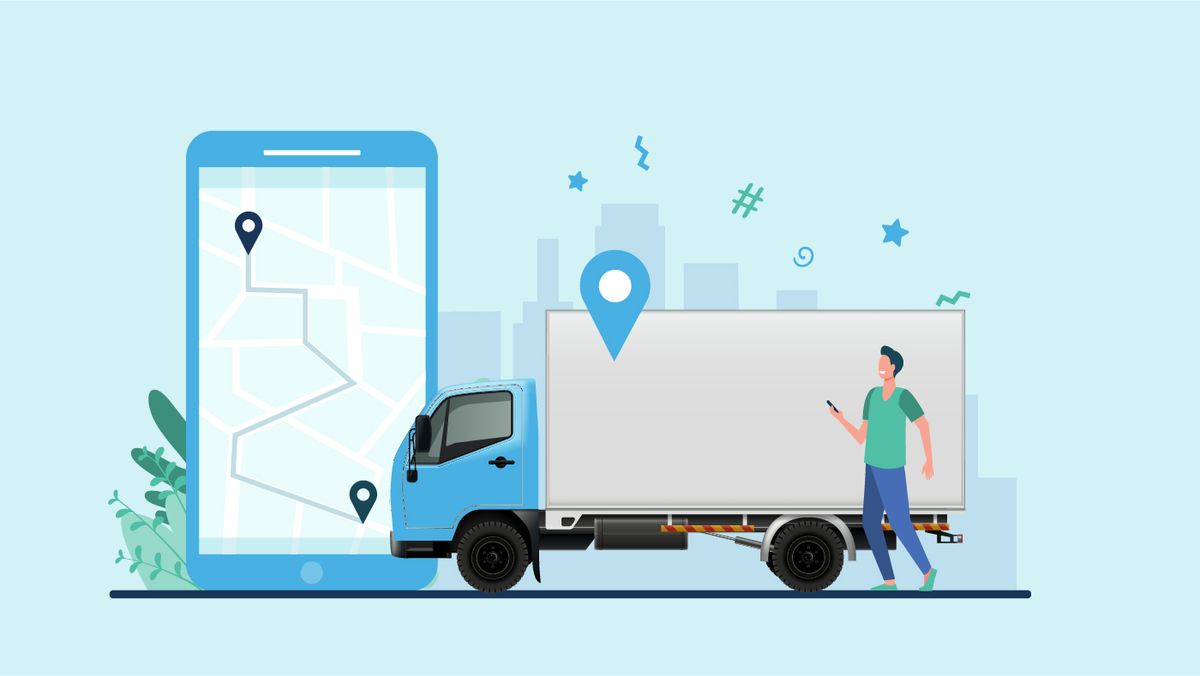
A truck GPS tracking system connects every vehicle in your fleet to a single dashboard. You can see:
- Where each truck is right now
- Which route it’s taking
- How much fuel it’s consuming
- When the next service is due
It’s not just tracking — it’s total operational control.
How GPS Tracking Works in Heavy Duty Vehicles
Every GPS tracker connects to a network of satellites orbiting the Earth. By calculating distance from three or more satellites (a process called trilateration), it determines the truck’s exact position.
This live data is sent to your fleet management software, where you can monitor routes, fuel, and performance in real time — all from one dashboard or mobile app.
So, instead of chasing updates, you get live visibility of your entire fleet.
The Real Problems GPS Tracking Solves
Rising Fuel Costs and Fuel Theft
Fuel can account for up to half of your total fleet expenses.
GPS tracking helps cut fuel costs by:
- Monitoring fuel consumption per trip or driver
- Detecting idling and harsh driving behaviour
- Flagging refuelling and fuel drain events in real time
- Verifying route efficiency to reduce unnecessary kilometres
With integrated fuel level sensors, you can even detect fuel theft — a sudden dip in fuel while parked or off-route instantly triggers an alert.
Result: 10–15% reduction in monthly fuel spend.
Maintenance Delays and Odometer Tampering
Manual odometer readings often get misreported — intentionally or by mistake — leading to delayed servicing and unexpected breakdowns.
GPS-based odometer tracking gives you accurate, tamper-proof distance data.
Your system can automatically:
- Send service reminders by kilometre
- Schedule preventive maintenance
- Compare performance across vehicles
Result: Reduced breakdowns, longer asset life, and consistent uptime.
Low Route Visibility and Delivery Delays
When trucks move across states, visibility gaps cause delays and customer complaints.
A truck GPS tracking system fixes that with:
- Real-time truck location and ETA
- Geofence alerts for arrival or departure
- Route deviation reports for driver monitoring
Result: On-time deliveries, smoother dispatch planning, and fewer missed SLAs.
Driver Behaviour and Accountability
Driver behaviour directly impacts fuel efficiency and safety.
GPS tracking lets you monitor:
- Speeding, idling, and harsh braking
- Trip duration and rest breaks
- Unauthorised route detours
This builds transparency, improves driving habits, and enhances safety for both driver and asset.
Result: Lower fuel consumption and higher driver performance.
How GPS Tracking Improves Your Fleet KPIs
Once GPS data flows into your fleet dashboard, your numbers start telling a more accurate story:
| KPI | Before GPS | After GPS |
|---|---|---|
| Fuel Efficiency (km/l) | Estimated | Measured & improved by 10–15% |
| Maintenance Compliance | Manual & irregular | Automated & on-time |
| Vehicle Utilisation Rate | Unknown | Data-driven allocation |
| Cost per Kilometre | Approximate | Precisely calculated |
| Fleet Uptime | Reactive | Predictive |
When your decisions are based on verified GPS data, you manage smarter, not harder.
The ROI That Speaks for Itself
Implementing a GPS tracking solution for trucks isn’t just about convenience — it’s about measurable impact:
- Fuel cost savings: ₹10,000–₹15,000 per truck per month
- Maintenance savings: up to 25% reduction in unplanned repairs
- Operational productivity: faster trip turnaround, fewer idle hours
- Better customer service: accurate ETAs, faster communication
The system pays for itself within months — and keeps giving returns year after year.
Choosing the Right Truck GPS Tracking Solution
When selecting a GPS tracking partner, look for:
- Accurate real-time tracking (satellite + cellular hybrid connectivity)
- Fuel monitoring integration for theft detection
- Odometer and maintenance automation
- Driver behaviour analytics
- 24/7 support and easy onboarding
A good provider should deliver visibility + reliability, not just raw data.
Transform the Way You Manage Your Fleet
If your business depends on trucks, GPS tracking is not a luxury — it’s a necessity.
It’s the simplest way to reduce fuel loss, prevent tampering, and build operational control across routes, drivers, and deliveries.
With one system, you can:
- Monitor every truck in real time
- Track every litre of fuel used or lost
- Schedule maintenance automatically
- Compare driver and vehicle performance
That’s how smart fleets stay efficient, compliant, and profitable.
Final Words
You don’t have to guess where your trucks are — you can know.
See how GPS tracking can help you save fuel, prevent theft, and optimise fleet performance in real time.
In logistics, control equals profit — and GPS tracking for trucks gives you both.
FAQs on GPS Tracking for Trucks and Fleet Management
What is GPS tracking for trucks? ▼
GPS tracking for trucks is a fleet visibility system that uses satellite-based location data, cellular connectivity, and fleet management software to show where a truck is moving in real time. For transporters, logistics companies, distributors, and fleet owners in India, it helps monitor vehicle location, route movement, stoppages, fuel usage, driver behaviour, and trip performance from one dashboard.
A truck GPS tracker is usually installed inside the vehicle and connected to a tracking platform. The device receives signals from GPS satellites, calculates the vehicle’s position, and sends that information to the software through mobile networks. Fleet managers can then view live location, route history, ETA, distance travelled, speed, idle time, and alerts for route deviation or unauthorized stoppage.
For Indian fleet businesses operating across Delhi NCR, Gurgaon, Mumbai, Bengaluru, Pune, and interstate logistics corridors, GPS tracking is especially useful because manual updates are often delayed or inaccurate. Instead of calling drivers repeatedly, companies can track movement digitally and make faster dispatch decisions.
The best GPS tracking system for trucks is not limited to location tracking. It should also support fuel monitoring, maintenance reminders, geofence alerts, driver performance reports, and integration with transport management systems. This makes GPS tracking a practical tool for reducing fuel losses, improving delivery reliability, and increasing fleet accountability.
How does a GPS tracker work in commercial vehicles? ▼
A GPS tracker works by receiving signals from multiple satellites orbiting the Earth. The device calculates the vehicle’s exact location using a process known as trilateration. Once the location is identified, the tracker sends the data to a cloud-based fleet tracking platform through a SIM card, mobile network, or IoT connectivity.
In a commercial vehicle, the GPS tracker continuously records key movement data such as latitude, longitude, speed, direction, distance, ignition status, halt duration, and route history. Advanced truck GPS tracking systems can also connect with fuel sensors, temperature sensors, odometer data, and vehicle diagnostics depending on the fleet’s operational needs.
For fleet managers, this data appears on a dashboard or mobile app. They can check whether a truck is on the planned route, whether it has stopped unexpectedly, whether the driver is overspeeding, or whether the ETA needs to be updated. This is especially important for high-volume logistics routes in India, including Delhi to Mumbai, Gurgaon to Jaipur, Mumbai to Pune, and Bengaluru to Chennai.
The top benefit of GPS tracking is that it converts vehicle movement into usable business intelligence. Instead of only knowing where a truck is, fleet owners can understand how efficiently the truck is moving, how much fuel is being consumed, and whether the trip is profitable.
What are the benefits of GPS tracking for logistics companies in India? ▼
GPS tracking gives logistics companies in India better control over vehicle movement, fuel usage, driver accountability, and delivery performance. In a market where fleets often operate across long routes, congested cities, toll roads, industrial zones, and multi-state corridors, real-time visibility can directly improve operational efficiency.
The main benefits include:
- Real-time vehicle visibility: Fleet managers can see the live location of every truck without depending on manual calls.
- Fuel cost control: GPS data helps identify route deviations, idling, unauthorized movement, and inefficient driving patterns.
- Better delivery planning: Accurate ETAs help dispatch teams update customers and reduce missed delivery timelines.
- Driver accountability: Speeding, harsh braking, long halts, and detours can be tracked and reviewed.
- Preventive maintenance: Distance-based service reminders reduce breakdowns and improve vehicle uptime.
For logistics businesses in Delhi NCR, Gurgaon, Mumbai, Bengaluru, and Pune, GPS tracking also supports better city-level planning. It helps avoid high-delay routes, track warehouse arrivals, manage last-mile movement, and monitor vehicles entering or leaving geofenced locations.
The best GPS tracking solutions for logistics companies do more than show dots on a map. They provide reports, alerts, analytics, and integrations that help businesses reduce cost per kilometre, improve asset utilization, and make data-backed fleet decisions.
How much does a truck GPS tracking system cost in India? ▼
The cost of a truck GPS tracking system in India usually depends on the device type, software features, subscription plan, installation requirements, and whether additional sensors are included. A basic GPS tracker for commercial vehicles may start from around ₹2,000 to ₹5,000 per device, while advanced fleet tracking solutions with fuel monitoring, driver behaviour analytics, geofencing, reports, and maintenance alerts can cost more.
Most fleet management providers also charge a recurring software subscription. This may range from approximately ₹200 to ₹800 per vehicle per month, depending on features, support, data frequency, and dashboard access. If a fleet wants fuel level sensors, temperature monitoring, camera integration, or advanced analytics, the total cost can increase.
For small fleet owners with 5–20 trucks, the focus is usually on affordable live tracking, route history, and basic alerts. For mid-sized and enterprise fleets operating across India, Delhi NCR, Gurgaon, Mumbai, Bengaluru, and Pune, a higher-value GPS tracking platform may be more useful because it can connect tracking with fuel savings, trip planning, maintenance, and productivity reports.
While price matters, the cheapest tracker is not always the best choice. Fleet owners should compare accuracy, uptime, support, software quality, data security, reporting, and integration capabilities. A good GPS tracking system can often recover its cost by reducing fuel loss, route inefficiency, idle time, and unplanned breakdowns.
Which is the best GPS tracking system for trucks in Delhi NCR and Gurgaon? ▼
The best GPS tracking system for trucks in Delhi NCR and Gurgaon should support real-time tracking, route deviation alerts, geofencing, fuel monitoring, driver behaviour reports, and maintenance reminders. These features are important because fleets in this region often operate through dense traffic zones, industrial areas, warehouses, expressways, and interstate routes connecting Haryana, Rajasthan, Uttar Pradesh, Punjab, and Delhi.
For Gurgaon-based fleet companies, GPS tracking is especially useful for vehicles moving between logistics hubs, manufacturing units, distribution centres, and customer delivery points. A strong truck tracking system can help dispatchers monitor vehicle entry and exit from geofenced locations such as warehouses, plants, yards, toll points, and customer sites.
For Delhi NCR fleets, the top use cases include reducing route deviation, improving ETA accuracy, controlling fuel wastage, monitoring driver stoppages, and tracking vehicles across high-congestion routes. Since NCR traffic conditions can change quickly, real-time visibility helps operations teams make faster decisions.
When choosing a GPS tracking provider in Delhi NCR or Gurgaon, fleet owners should check:
- Live location accuracy and update frequency
- Mobile app and dashboard usability
- Fuel sensor and odometer integration
- Local support and installation assistance
- Trip, route, driver, and vehicle performance reports
A good GPS tracking system should help fleet teams move from manual follow-ups to automated visibility and measurable cost control.
What is the top GPS tracking solution for fleet businesses in Mumbai and Pune? ▼
The top GPS tracking solution for fleet businesses in Mumbai and Pune should offer live vehicle tracking, route history, ETA monitoring, geofence alerts, fuel analytics, and driver performance tracking. These cities are major logistics and industrial zones, with frequent fleet movement between ports, warehouses, manufacturing hubs, distribution centres, and highway corridors.
In Mumbai, GPS tracking is useful for fleets operating near ports, container yards, FMCG distribution networks, e-commerce hubs, and city delivery routes. Congestion, long waiting times, and route delays can increase fuel usage and reduce delivery reliability. A truck GPS tracking system helps fleet managers identify idle time, route inefficiencies, and unauthorized stoppages.
In Pune, fleet operators often manage vehicle movement across automotive, manufacturing, construction, and regional distribution routes. GPS tracking helps monitor long-haul trips, plant dispatches, driver behaviour, and service schedules. It also supports better coordination between dispatch teams and customers.
Approximate costs in Mumbai and Pune are similar to other major Indian cities. Basic GPS tracking devices may cost around ₹2,000–₹5,000 per vehicle, while monthly software subscriptions may range from ₹200–₹800 per vehicle depending on features. Advanced systems with fuel sensors, route analytics, temperature monitoring, or camera-based telematics may cost more.
The best solution is one that improves visibility, reduces fuel leakage, supports local operations, and provides reports that management teams can use to improve fleet profitability.
How can GPS tracking reduce fuel theft and fuel costs? ▼
GPS tracking reduces fuel theft and fuel costs by giving fleet owners visibility into how, where, and when a vehicle consumes fuel. While a GPS tracker alone shows location and movement, it becomes more powerful when combined with fuel level sensors, route analytics, idling reports, and driver behaviour monitoring.
Fuel loss in commercial fleets can happen due to route deviation, unnecessary idling, unauthorized trips, harsh driving, over-speeding, poor route planning, or direct fuel pilferage. A GPS tracking system helps detect these issues by comparing vehicle movement, distance travelled, fuel consumption, halt points, and trip timelines.
For example, if a truck is parked but the fuel level suddenly drops, the system can trigger an alert. If a driver takes a longer route than planned, fleet managers can identify the extra kilometres and calculate the impact on fuel cost. If a vehicle remains idle for long periods, the system can flag the event and help reduce wastage.
In India, where fuel is one of the largest operating expenses for logistics companies, even small improvements can create significant monthly savings. Many fleets use GPS tracking to reduce fuel spend by improving route discipline, tracking refuelling events, controlling idle time, and monitoring driver performance.
The best GPS tracking platforms provide fuel reports that are easy to understand, allowing fleet owners to compare trucks, drivers, routes, and trips to identify where costs can be reduced.
Is GPS tracking useful for small fleet owners with 5 to 20 trucks? ▼
Yes, GPS tracking is useful for small fleet owners with 5 to 20 trucks because it helps them manage vehicles with better visibility and fewer manual follow-ups. Small fleet operators often depend on phone calls, driver updates, manual trip sheets, and basic records. This can lead to delayed information, missed delivery updates, fuel leakage, and poor route control.
A GPS tracking system allows small fleet owners to know where each truck is, whether it is moving on the assigned route, how long it has been stopped, and when it is expected to reach the destination. This improves customer communication and reduces the time spent calling drivers for updates.
For small businesses in India, Delhi, Gurgaon, Mumbai, Bengaluru, and Pune, GPS tracking can also help improve cost control. Even one vehicle taking unnecessary detours, idling for hours, or missing maintenance schedules can affect monthly profitability. With digital tracking, owners can identify these issues early.
Small fleets can start with basic GPS tracking and later add advanced features such as fuel monitoring, driver behaviour reports, geofencing, and maintenance alerts. The price can vary, but basic systems are generally affordable compared to the cost of recurring fuel loss, delayed deliveries, and unexpected breakdowns.
The top advantage for small fleet owners is simple: GPS tracking helps them run operations professionally without needing a large operations team.
How does GPS tracking improve delivery performance and ETA accuracy? ▼
GPS tracking improves delivery performance by giving fleet managers real-time visibility into vehicle movement, route progress, stoppages, and estimated arrival times. Instead of depending on delayed driver updates, the operations team can track every truck on a live dashboard and make faster decisions when delays occur.
ETA accuracy improves because the system uses live location, vehicle speed, route progress, and distance remaining to estimate arrival time. This helps logistics companies update customers, warehouses, plants, dealers, and delivery teams more reliably. For industries where delivery timelines affect production, retail availability, or customer satisfaction, accurate ETA tracking is a major advantage.
GPS tracking also helps identify delivery delays caused by route deviations, long halts, traffic congestion, vehicle breakdowns, or unauthorized stoppages. Once these patterns are visible, fleet managers can improve dispatch planning, route selection, driver discipline, and customer communication.
For city and regional logistics in Delhi NCR, Mumbai, Bengaluru, Pune, and Gurgaon, GPS tracking is valuable because traffic and delivery conditions can change throughout the day. Real-time updates help teams adjust routes, inform customers, and reduce missed delivery windows.
The best fleet tracking systems combine live tracking with geofence alerts, trip reports, and route analytics. This gives businesses a clear view of planned versus actual performance and helps improve on-time delivery rates over time.
What features should businesses look for before buying a truck GPS tracker? ▼
Before buying a truck GPS tracker, businesses should look beyond basic location tracking and evaluate whether the system can improve fleet efficiency, reduce costs, and support long-term operations. A good GPS tracking solution should provide accurate data, useful reports, reliable alerts, and an easy-to-use dashboard.
Important features to check include:
- Real-time tracking: Live vehicle location with frequent updates.
- Route history: Complete trip records for review and audit.
- Geofencing: Alerts when trucks enter or exit warehouses, plants, yards, or customer locations.
- Fuel monitoring: Integration with fuel sensors to detect fuel loss and consumption patterns.
- Driver behaviour analytics: Reports on speeding, harsh braking, idling, and route deviation.
- Maintenance alerts: Service reminders based on distance, usage, or schedules.
- Mobile app access: Easy tracking for owners, managers, and operations teams.
- Customer support: Reliable installation, onboarding, and technical assistance.
For fleet owners in India’s major logistics hubs such as Delhi NCR, Gurgaon, Mumbai, Bengaluru, and Pune, the best truck GPS tracking system should also support scalability. A business may start with a few vehicles but should be able to expand tracking across hundreds of vehicles without changing platforms.
The right GPS tracker should help businesses measure fleet KPIs, improve route compliance, reduce fuel expenses, and make every trip more transparent.