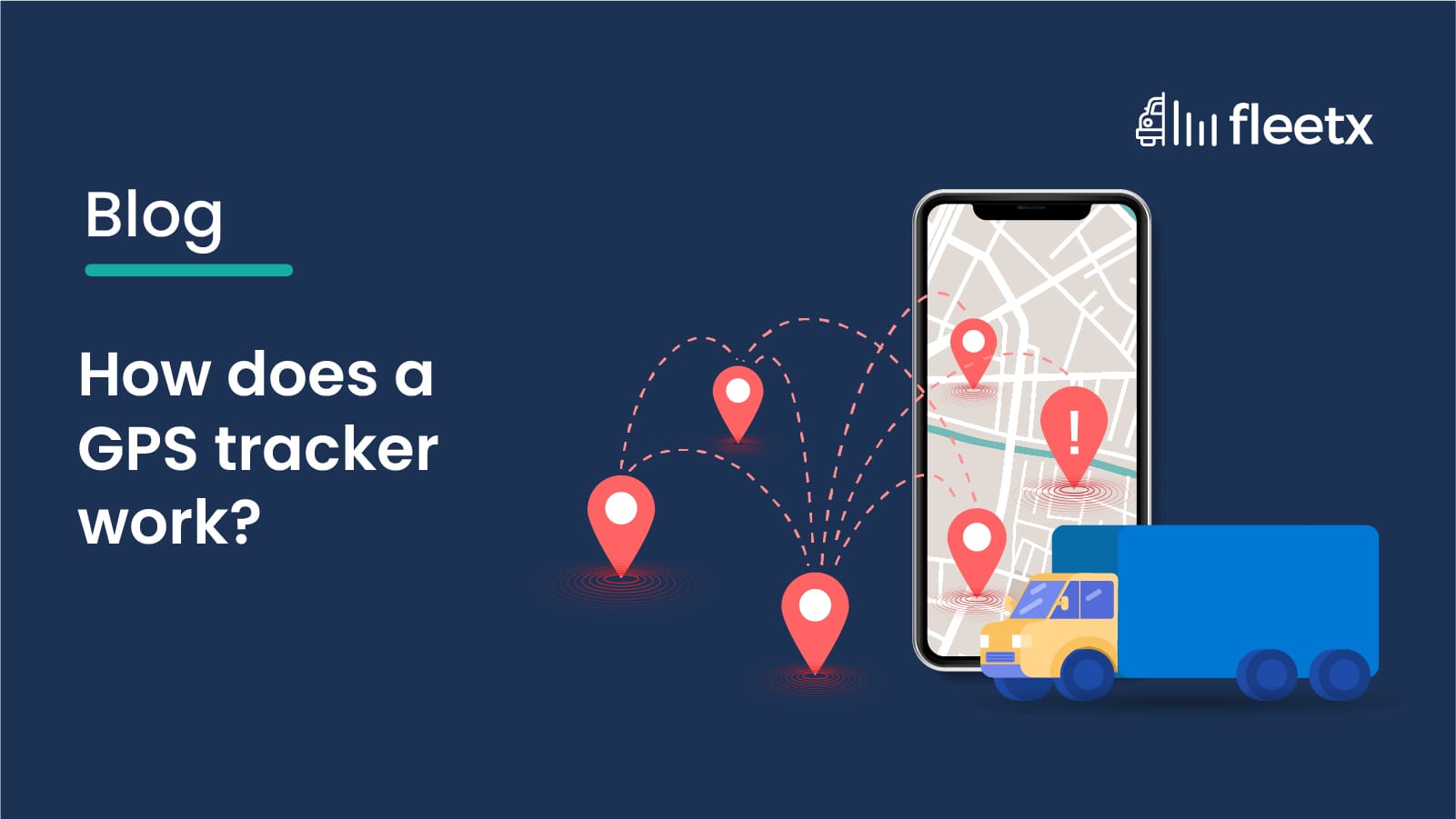

In this article, we focus on the problem of visibility and tracking in logistics & transport operations in India. Additionally, we explore how GPS-based tracking systems for truck tracking could make it possible for you as a business to track your truck making your operations more transparent and efficient.
Commercial Logistics & Transport operations in India are synonymous with an image of fully-loaded trucks lined up, moving at a constant speed on the highway. And rightly so, because over 60% of commercial transport in India is done via road and the primary vehicle used are trucks. Moreover, businesses in India rely heavily on trucking operations to meet their supply chain demand. Businesses either meet their transportation needs by owning a fleet of trucks and managing them internally or rely on third-party transporters that provide trucking services to businesses.
However, transportation in India is riddled with challenges and blind spots that have troubled businesses and transporters for decades. One of the key challenges companies and transporters face in India is the lack of transparency in trucking operations. It is primarily because a vast majority of logistics & transport operations are still done traditionally, relying on manually carrying out activities such as truck tracking—emergency response, communication, etc. As a result, issues like fuel theft, late deliveries, cargo theft, accidents, etc., are pretty common in trucking operations.
Even though vehicle tracking systems or GPS tracking systems for trucks that allows you to track your truck were introduced to the industry years ago; however, the adoption of tracking systems moreover technology in transport operations, in general, is still poor compared to other countries like the US, China, Europe, etc. Businesses and transporters outside India have largely integrated vehicle tracking systems and fleet management solutions in their fleet, primarily long-haul trucks, which has made their trucking operations much more transparent and efficient as it allows you as a business to track your truck among other features. As a result, cargo theft, fuel theft, and accidents are relatively lesser in these countries than in India. It is also why trucks in India operate with poorer mileage and high cost of transportation, affecting their revenues and profits.
Businesses and transporters can benefit extensively by adopting GPS tracking systems for trucks in India that allow you as a business to track your truck at convenience. For starters, it will allow fleet managers to track the movement of their entire truck fleet in real-time from a single place, eliminating the reliance on truck drivers for location updates during trips which is done mainly through phones.
Businesses and transporters often report vehicle breakdown during a trip or unforeseeable accidents causing major disruption in operations. Unfortunately, due to the lack of real-time tracking, response to such issues is often delayed resulting in major revenue losses for businesses. By equipping their fleet with a truck GPS tracker, companies can provide prompt support and emergency response in such cases, thus, saving crucial time and improving the safety of the overall operation.
Another use case of the GPS tracker for commercial vehicles in India is preventing cargo theft or fuel theft during their trips which is one of the most reported problems in India. Real-time tracking will allow fleet managers to get alerted in case of unwanted stops or drivers taking unplanned routes, which is usually a cause for concern unless notified. They can take prompt action by contacting the driver immediately when they notice the unusual movement of any of the vehicles in their fleet.
By using GPS tracking systems that allow you to track your truck, businesses and transporters can also improve the quality of service offered to their clients. It will allow them to provide accurate ETAs for deliveries and alert clients if they are expecting delays due to unforeseeable delays. Additionally, modern vehicle tracking systems also enable transporters to share tracking data with the clients directly, thus improving the customer experience.
Lastly, a truck GPS tracker for truck drivers allows them to navigate on route easily. And since navigation is directly integrated with either Google Maps or alternative mapping & navigation systems, routes can be more efficiently planned and followed to avoid under construction roads, traffic, etc. Real-time navigation also ensures that drivers follow the fastest and most efficient route during their trucking activities, making it economical and efficient for both businesses and drivers.
Track your truck with Fleetx
From the discussion so far, it is evident that there is a need to track your truck by using a GPS tracking system as a business. The ability to track your truck or fleet engaged in carrying out transportation activities for your business makes it convenient to monitor your fleet anytime and anywhere. Several technology-driven fleet management companies offer services both enterprise and individual that makes it possible for your business to track your truck and, in addition, several other services which can improve transparency across operations.
To track your truck or get started with the process, one can consult these fleet management service providers, which further assess your business requirements and budget and offer you plans or services that meet your criteria. To find the best service provider that provides the services to track your truck, one can google the respective services and schedule a free consultation or demo that most of these services providers offer. Scheduling a demo before you decide to purchase any services that allow you to track your truck is crucial as it helps you figure out which one suits your business and requirements the best.
How to Evaluate a Truck Tracking System Before Making an Investment
Many businesses understand the importance of truck tracking but struggle with one important question: How do you choose the right truck tracking system? The market offers dozens of GPS tracking providers, fleet management platforms, telematics companies, and IoT solutions, all promising real-time visibility and better operational efficiency. However, selecting software based only on price can often lead to poor adoption, limited functionality, and lower long-term value.
Instead of focusing only on hardware specifications or monthly subscription costs, businesses should evaluate how a truck tracking system improves operational decision-making across the entire transportation lifecycle.
The first factor to evaluate is tracking accuracy. A vehicle location update that refreshes every few minutes may not be sufficient for logistics businesses handling high-value cargo, express deliveries, or time-sensitive shipments. Businesses should look for systems capable of providing accurate live vehicle locations with minimal latency while maintaining consistent performance even on long-distance routes.
The second factor is route intelligence. Modern fleet tracking platforms should do more than display a vehicle on a map. They should provide historical route playback, route deviation analysis, trip summaries, stoppage reports, geofence-based alerts, and route comparison reports. These insights allow logistics managers to identify recurring inefficiencies instead of simply reacting to them.
Another critical area is driver performance analytics. Driver behaviour directly affects fuel consumption, vehicle wear, maintenance costs, and road safety. Businesses should evaluate whether the software provides insights into harsh acceleration, harsh braking, overspeeding, excessive idling, and night driving patterns. Instead of relying solely on manual supervision, managers can use objective performance data to improve driver training and establish measurable KPIs.
Scalability should also be considered. A small logistics company operating 20 trucks today may expand to 200 vehicles over the next few years. Choosing a scalable platform ensures that businesses do not need to migrate to another system later. Enterprise-ready solutions should support thousands of vehicles while maintaining dashboard performance, reporting speed, and data availability.
Integration capabilities are equally important. Many businesses already use ERP software, Warehouse Management Systems (WMS), Transport Management Systems (TMS), accounting software, customer portals, or dispatch applications. A truck tracking platform that offers APIs and integration support allows businesses to create a unified logistics ecosystem instead of managing multiple disconnected systems.
Businesses should also evaluate reporting capabilities. Decision-makers rarely have time to manually analyse raw GPS data. The best platforms convert operational data into actionable reports, such as:
- Fleet utilization reports
- Vehicle productivity reports
- Driver performance scorecards
- Route efficiency analysis
- Fuel consumption trends
- Trip completion reports
- Delivery SLA reports
- Idle time reports
- Vehicle availability reports
- Maintenance reminders
Cloud-based access has become another important consideration. Logistics operations rarely operate from a single office. Managers, regional coordinators, warehouse teams, customer support executives, and business owners often need access to fleet information from different locations. Cloud dashboards combined with mobile applications improve operational visibility across the organization.
Data security should never be ignored. Since vehicle tracking systems collect continuous operational data, businesses should ensure that providers offer secure cloud infrastructure, encrypted communication, user access controls, role-based permissions, and regular system backups.
Vendor support is another important differentiator. Implementation does not end after installation. Fleet operators frequently require hardware replacement, troubleshooting, driver onboarding, software training, report customization, and technical assistance. Choosing a provider with responsive customer support often delivers greater long-term value than selecting the lowest-priced solution.
Finally, businesses should evaluate measurable business outcomes instead of software features alone. The right truck tracking solution should help improve delivery performance, reduce transportation costs, increase fleet utilization, minimize manual reporting, improve customer communication, and provide actionable operational intelligence that supports business growth.
Truck Tracking System Comparison: Traditional Fleet Operations vs GPS-Enabled Fleet Management
| Operational Area | Traditional Fleet Operations | GPS Truck Tracking System |
|---|---|---|
| Vehicle Visibility | Driver phone calls | Live real-time tracking dashboard |
| Delivery Updates | Manual status updates | Automatic ETA calculation |
| Route Monitoring | Limited visibility | Route history and deviation alerts |
| Fuel Management | Difficult to monitor | Fuel analysis and consumption reports |
| Driver Accountability | Manual supervision | Driver behaviour analytics |
| Customer Communication | Estimated delivery times | Accurate live delivery updates |
| Dispatch Planning | Experience-based | Data-driven scheduling |
| Idle Time Monitoring | Mostly unknown | Automated idle alerts |
| Vehicle Utilization | Manual calculations | Automated utilization reports |
| Trip Documentation | Paper records | Digital trip reports |
| Maintenance Planning | Reactive maintenance | Preventive maintenance reminders |
| Theft Prevention | Limited visibility | Geofence and movement alerts |
| Operational Reporting | Spreadsheet-based | Automated dashboards |
| Decision Making | Historical assumptions | Real-time operational intelligence |
| Scalability | Difficult | Suitable for small to enterprise fleets |
Measuring ROI from a Truck Tracking System: Key Metrics Every Fleet Should Monitor
One of the biggest misconceptions about truck tracking is that its value lies only in knowing where a vehicle is located. While location visibility is important, the real business value comes from continuous operational improvement driven by data.
Organizations that successfully implement GPS truck tracking often establish performance metrics before deployment so that improvements can be measured objectively over time.
Fleet Utilization
Fleet utilization measures how effectively vehicles are being used. Trucks that remain idle for extended periods generate ownership costs without producing revenue. Tracking utilization helps businesses identify underused assets and improve dispatch planning.
Trip Completion Rate
A high trip completion rate indicates efficient scheduling and execution. Monitoring completed versus planned trips helps identify operational bottlenecks that affect customer service.
Average Delivery Time
Comparing delivery times before and after implementation allows businesses to quantify improvements in transportation efficiency.
Route Compliance
Businesses should monitor how frequently vehicles follow planned routes. Frequent deviations may indicate navigation problems, unauthorized trips, or operational inefficiencies.
Idle Time
Excessive idling contributes directly to fuel waste and unnecessary engine wear. Monitoring idle duration helps organizations reduce avoidable operating costs.
Fuel Efficiency
Although many external factors affect fuel consumption, comparing fuel efficiency trends across routes, drivers, and vehicle types helps identify improvement opportunities.
Driver Safety Performance
Monitoring speeding events, harsh braking, harsh acceleration, and aggressive driving enables businesses to improve driver safety programs while reducing accident risks.
Asset Availability
Vehicles undergoing unexpected maintenance reduce operational capacity. Tracking asset availability helps maintenance teams improve preventive servicing schedules.
Customer Service Metrics
Truck tracking improves customer satisfaction through:
- More accurate ETAs
- Faster issue resolution
- Better shipment visibility
- Reduced delivery disputes
- Improved communication
Cost Per Kilometer
Transportation businesses often use cost per kilometer as a key profitability indicator. Truck tracking contributes to reducing this metric through improved routing, better vehicle utilization, lower idle time, and optimized dispatch planning.
On-Time Delivery Percentage
Consistently measuring on-time deliveries provides a direct indication of operational reliability. Businesses with higher on-time delivery rates generally experience better customer retention and stronger service-level performance.
Fleet Productivity Dashboard
A mature logistics organization typically monitors multiple KPIs together rather than relying on a single metric. An ideal fleet productivity dashboard includes:
| KPI | Why It Matters |
|---|---|
| Fleet Utilization | Measures productive asset usage |
| Vehicle Availability | Tracks operational readiness |
| On-Time Delivery Rate | Measures customer service quality |
| Route Compliance | Reduces operational risk |
| Average Trip Duration | Identifies process improvements |
| Idle Time | Controls unnecessary fuel consumption |
| Fuel Efficiency | Improves operating costs |
| Driver Safety Score | Reduces accidents and maintenance |
| Delivery SLA Compliance | Improves customer satisfaction |
| Cost Per Kilometer | Measures transportation profitability |
Rather than evaluating truck tracking solely as a technology purchase, organizations should treat it as a business intelligence platform for logistics operations. The greatest value comes from continuously analysing operational data, identifying inefficiencies, and implementing measurable improvements across planning, execution, customer service, and resource utilization.
Conclusion
In conclusion, the ability to track your truck as a business or transporter is a crucial one that holds the capability to change the entire landscape of the logistics & transportation industry in India. As truck tracking systems get more industry-wide adoption, we will see a significant boost in revenues and businesses and transporters being able to operate their trucks with much more efficiency and transparency for the benefit of themselves and their clients.
Can we track trucks?
Yes, You can track your truck using GPS or Truck Tracking Software
How can I track a truck location?
Each vehicle or object you want to track should have a GPS tracking device installed. From the satellite to the receiver, signals are sent. Real-time distance calculations are made by the receiver between itself and the satellites.
Frequently Asked Questions About Truck Tracking Systems
What is a truck tracking system and how does it improve fleet efficiency? ▼
A truck tracking system is a GPS-enabled fleet management solution that helps businesses monitor trucks, drivers, routes, delivery status, fuel usage, stoppages, and vehicle movement in real time. In simple terms, it allows fleet owners, logistics managers, transporters, and supply chain teams to track where every truck is, whether it is moving on the planned route, and how efficiently it is performing during a trip.
For Indian logistics businesses, truck tracking is especially useful because road transport plays a major role in freight movement across India. A GPS truck tracking system improves fleet efficiency by reducing manual follow-ups with drivers, improving route visibility, preventing unnecessary detours, and helping teams respond faster to breakdowns or delays. It also supports better planning for deliveries across Delhi NCR, Gurgaon, Mumbai, Bengaluru, Pune, and other major logistics corridors.
The best truck tracking systems usually include live location tracking, route deviation alerts, geofencing, trip reports, driver behaviour insights, ETA sharing, fuel monitoring, and analytics dashboards. For businesses handling time-sensitive deliveries, these features help reduce operational blind spots and improve customer communication. A top fleet tracking solution also supports data-driven decision-making, which can help companies reduce cost per kilometre, improve asset utilisation, and make transportation operations more transparent.
How does GPS truck tracking work for commercial vehicles in India? ▼
GPS truck tracking works by installing a tracking device in a commercial vehicle and connecting it to satellites, mobile networks, and fleet management software. The device collects the truck’s real-time location and sends it to a dashboard or mobile app where fleet managers can monitor vehicle movement. Modern GPS tracking systems may also collect additional data such as ignition status, route history, speed, stoppage duration, fuel consumption, driver behaviour, and trip progress.
In India, GPS truck tracking is widely used by transporters, logistics companies, e-commerce delivery fleets, cold chain operators, construction fleets, cement fleets, FMCG distributors, and manufacturing companies. For example, a fleet moving goods between Gurgaon and Mumbai can use GPS tracking to monitor route compliance, check whether the vehicle has crossed major checkpoints, and estimate the delivery time more accurately. Similarly, companies operating in Delhi NCR can track vehicles through congested routes and plan better dispatch schedules.
The best GPS truck tracking systems are useful not only for live location visibility but also for operational control. They can send alerts for route deviations, long stoppages, harsh driving, overspeeding, unauthorised vehicle movement, or entry and exit from specific geofenced locations. For businesses in cities such as Delhi, Mumbai, Bengaluru, and Pune, these alerts help improve delivery reliability, reduce dependency on driver calls, and create a more accountable logistics process.
What are the top benefits of using a truck tracking system for logistics businesses? ▼
The top benefits of using a truck tracking system include real-time fleet visibility, better route planning, improved delivery accuracy, reduced fuel wastage, stronger driver accountability, faster issue resolution, and better customer communication. For logistics businesses, these benefits directly impact operational efficiency because every delay, route deviation, idle hour, or unplanned stoppage can increase cost and reduce service quality.
One of the biggest benefits is live tracking. Fleet managers no longer need to call drivers repeatedly for location updates. Instead, they can view truck locations on a dashboard and share accurate ETAs with customers. This is highly valuable for transport operations in India, where long routes, traffic congestion, toll delays, weather disruptions, and loading-unloading delays can affect delivery schedules.
Another important benefit is cost control. A good GPS truck tracking system can help identify inefficient routes, excessive idling, unnecessary stoppages, overspeeding, and possible fuel theft. These insights allow fleet operators to take corrective action and improve cost per trip. For commercial fleets in Delhi NCR, Mumbai, Bengaluru, Pune, and Gurgaon, where vehicle utilisation and delivery timelines are critical, tracking software can provide a strong competitive advantage.
The best truck tracking solutions also improve safety and compliance. Alerts for harsh braking, overspeeding, night driving, and route deviation help businesses protect drivers, vehicles, and cargo. Over time, these insights support better fleet planning, lower operational risk, and more reliable logistics performance.
How much does a truck tracking system cost in India? ▼
The cost of a truck tracking system in India depends on the type of GPS device, software features, number of vehicles, data plan, installation requirements, and whether the business needs basic tracking or advanced fleet management. As a general idea, a basic GPS tracker for trucks may cost around ₹2,000 to ₹6,000 per vehicle for the device, while monthly software or subscription charges may range from ₹150 to ₹800 per vehicle depending on the solution provider and feature set.
Advanced truck tracking systems with fuel monitoring, route optimisation, driver behaviour analytics, temperature monitoring, video telematics, geofencing, API integrations, and enterprise dashboards may cost more. For larger fleets, pricing is often customised based on fleet size, contract duration, support requirements, and integration needs. A top enterprise-grade fleet management platform may charge higher than a basic GPS device vendor, but it usually provides better analytics, reporting, automation, and operational visibility.
For businesses in Delhi, Delhi NCR, Gurgaon, Mumbai, Bengaluru, and Pune, cost can also vary based on installation support and service availability. Fleet owners should not choose only the cheapest option. The best truck tracking system is the one that reduces real operating costs by improving route compliance, reducing idle time, preventing misuse, lowering fuel wastage, and improving delivery performance. In many cases, the return on investment comes from better control over fleet movement, fewer manual follow-ups, and improved truck utilisation.
Which is the best truck tracking system for fleets in Delhi and Delhi NCR? ▼
The best truck tracking system for fleets in Delhi and Delhi NCR is one that can handle dense traffic, frequent route changes, multiple delivery points, industrial hubs, toll movement, and intercity transportation across nearby regions such as Gurgaon, Noida, Ghaziabad, Faridabad, Manesar, and Kundli. Delhi NCR has a high concentration of logistics, warehousing, e-commerce, FMCG, manufacturing, and distribution operations, so businesses need more than basic GPS location tracking.
A strong truck tracking solution for Delhi NCR should include live vehicle tracking, geofence alerts, route deviation alerts, trip history, driver behaviour monitoring, ETA calculation, stoppage reports, and mobile access for field teams. For companies moving goods from warehouses in Gurgaon or Manesar to customers in Delhi, Noida, or Ghaziabad, real-time tracking helps reduce delays and improves coordination between dispatchers, drivers, and customers.
Cost-wise, Delhi NCR businesses may find basic GPS tracking plans starting from affordable monthly subscriptions, while advanced fleet management platforms may be priced higher depending on features. The best approach is to compare providers based on uptime, accuracy, support, dashboard quality, reporting, integration capability, and scalability. A top truck tracking system should help fleet owners reduce manual calling, improve dispatch planning, and get better visibility across both local and long-haul trips.
For Delhi-based transporters, the right system should also support route-level analytics because congestion, entry restrictions, and delivery windows can significantly affect fleet productivity.
Why do logistics companies in Gurgaon need GPS truck tracking? ▼
Logistics companies in Gurgaon need GPS truck tracking because the region is one of the most important commercial, warehousing, and transport hubs in North India. Gurgaon and nearby industrial areas such as Manesar, Bilaspur, Dharuhera, Bhiwadi, and Sohna Road support large-scale movement of goods for automotive, e-commerce, retail, manufacturing, FMCG, and third-party logistics companies. In such a high-volume logistics environment, real-time fleet visibility becomes essential.
A GPS truck tracking system helps Gurgaon-based businesses monitor trucks from pickup to delivery, reduce route deviations, avoid unnecessary stoppages, and improve turnaround time. Fleet managers can track whether a vehicle has left the warehouse, crossed a checkpoint, reached the customer location, or remained idle for too long. This is especially useful for companies operating across Gurgaon, Delhi NCR, Jaipur, Mumbai, Pune, and other freight corridors.
The best truck tracking systems for Gurgaon fleets also provide geofencing, automated alerts, driver performance insights, trip reports, and ETA sharing. These features help businesses reduce dependency on manual driver updates and improve transparency with customers. Cost or price ranges can vary depending on fleet size and features, but basic GPS tracking may start at a few hundred rupees per vehicle per month, while advanced enterprise solutions may cost more.
For companies aiming to become more efficient, a top GPS fleet tracking platform can help improve asset utilisation, reduce fuel leakage, control delays, and create a more reliable logistics operation.
How can truck tracking help transporters in Mumbai improve delivery performance? ▼
Truck tracking can help transporters in Mumbai improve delivery performance by giving them real-time visibility over vehicle movement, route progress, stoppages, delays, and delivery status. Mumbai is a major logistics and port-connected market, with goods moving through areas such as Navi Mumbai, Bhiwandi, Thane, Panvel, JNPT, Andheri, Kurla, and other industrial and distribution hubs. Because of traffic congestion, port delays, loading-unloading queues, and strict delivery schedules, transporters need accurate tracking to manage operations efficiently.
A GPS truck tracking system allows fleet managers to know where each vehicle is and whether it is following the planned route. For example, if a truck moving from Bhiwandi to Pune or from JNPT to a warehouse in Mumbai is delayed, the tracking system can help identify whether the delay is due to traffic, stoppage, route deviation, or operational waiting time. This improves communication with customers and helps businesses provide realistic ETAs.
The best truck tracking solutions also support geofencing for warehouses, ports, customer locations, and delivery zones. This means businesses can automatically record entry and exit times without depending on manual updates. Cost can vary, but Mumbai transporters should consider both device cost and monthly software pricing. A top fleet management platform may cost more than basic GPS tracking but can deliver better value through analytics, alerts, route history, driver behaviour data, and improved delivery reliability.
What should businesses in Bengaluru and Pune look for in the best truck tracking software? ▼
Businesses in Bengaluru and Pune should look for truck tracking software that offers real-time GPS tracking, route optimisation, geofencing, driver behaviour monitoring, trip analytics, mobile access, fuel monitoring, alerts, and easy integration with existing logistics or transport management systems. Both Bengaluru and Pune have strong technology, manufacturing, automotive, retail, and distribution ecosystems, which makes reliable fleet visibility important for daily operations.
In Bengaluru, logistics teams often deal with traffic congestion, multiple delivery points, long intra-city routes, and movement between industrial areas such as Peenya, Whitefield, Electronic City, Hoskote, and nearby warehousing zones. In Pune, businesses may manage transport across Chakan, Pimpri-Chinchwad, Talegaon, Ranjangaon, Mumbai-Pune corridors, and automotive supply chains. A top truck tracking platform should help these businesses reduce delays, plan better routes, and improve dispatch coordination.
The best software should not only show vehicle location but also provide actionable insights. For example, fleet managers should be able to see which trucks are underutilised, which drivers frequently overspeed, which routes cause repeated delays, and where stoppages are happening. Cost-wise, basic tracking software may be affordable for small fleets, while advanced solutions with analytics, automation, and integrations may have higher monthly pricing.
For companies comparing truck tracking providers in Bengaluru or Pune, the key factors should include accuracy, dashboard usability, customer support, scalability, reporting quality, and whether the system can support both local and long-haul logistics operations.
Can truck tracking systems reduce fuel costs and route deviations? ▼
Yes, truck tracking systems can help reduce fuel costs and route deviations by giving fleet managers better visibility into how vehicles are being used on the road. Fuel is one of the largest operating expenses for logistics companies, and even small inefficiencies such as unnecessary idling, longer routes, unauthorised detours, poor driving behaviour, or delayed dispatch can increase total trip cost.
A GPS truck tracking system helps identify these issues through live tracking, route history, stoppage reports, idling alerts, and route deviation notifications. For example, if a truck assigned to a Delhi to Mumbai route takes an unplanned diversion or stops for an unusually long time, the fleet manager can receive an alert and take corrective action. Over time, these insights help businesses identify patterns and improve planning.
The best fleet tracking systems may also integrate with fuel monitoring solutions to detect sudden drops in fuel level, unusual consumption, or mismatch between distance travelled and fuel used. This is especially useful for long-haul fleets, construction fleets, cold chain logistics, and transporters operating across India. In cities such as Gurgaon, Mumbai, Bengaluru, and Pune, route optimisation can also help reduce time lost in traffic-heavy areas.
While the cost of a truck tracking system varies by provider and features, many businesses recover the investment through better fuel control, fewer route deviations, improved vehicle utilisation, and reduced manual supervision. A top solution turns vehicle data into practical cost-saving decisions.
How do I choose the best truck tracking system provider in India? ▼
To choose the best truck tracking system provider in India, businesses should evaluate accuracy, reliability, software features, device quality, customer support, pricing transparency, scalability, analytics, and integration capabilities. The cheapest GPS tracker is not always the best option, especially for businesses that manage multiple trucks, long routes, high-value cargo, customer delivery commitments, or strict operational timelines.
A good provider should offer real-time vehicle tracking, route deviation alerts, geofencing, trip reports, driver behaviour monitoring, mobile app access, ETA sharing, historical data, and easy-to-use dashboards. For larger fleets, advanced features such as fuel monitoring, maintenance alerts, transport management integration, API support, video telematics, and automated reporting can be very valuable.
Local service capability is also important. Businesses operating in Delhi, Delhi NCR, Gurgaon, Mumbai, Bengaluru, Pune, and other logistics hubs should check whether the provider offers installation support, quick issue resolution, training, and account management. Price ranges can differ depending on whether the business needs basic GPS tracking or a full fleet management platform. Basic solutions may be suitable for small fleets, while top enterprise solutions are better for companies that need automation, analytics, and operational control.
The best truck tracking system provider should help reduce real business problems such as late deliveries, poor visibility, fuel wastage, route deviations, and low vehicle utilisation. Before finalising, businesses should request a demo, compare features, check support quality, and calculate expected return on investment.