The transportation industry is seen as a gauge of every economy. If freight is on the rise, so is the economy. However, transportation industry restrictions, such as a lack of competent drivers, properly insured trucks, and increased insurance prices, are putting a burden on trucking companies.
So, if you operate a business that relies on the usage of vehicles on a daily basis, it's critical that you insure them. Many business owners rely on commercial vehicle fleets to accomplish essential duties and aid with day-to-day operations. These people should begin to rely on fleet insurance to help protect the safety of their critical assets and decrease overall risk.
Companies frequently purchase more vehicles as their businesses grow, and every vehicle is insured separately. It happens frequently for businesses to overlook renewal dates or misplace policy contracts. In these circumstances, fleet insurance is a great option for vehicle insurance because it is economical and easy to operate.
Fleet insurance is often regarded as the finest vehicle insurance plan for insuring commercial vehicles under a single policy. Obtaining fleet insurance saves company’s time, money, and reduces difficulty by removing the need to purchase insurance coverage for individual vehicles in their fleets.
What is Fleet insurance?
Fleet insurance is available to companies who have at least four or more commercial vehicles and utilize them for business purposes. Smaller organizations can fulfill these standards in other ways, such as including personal automobiles owned by founders. Taking up a fleet policy might save you money in the long run.
This insurance is a type of business vehicle insurance; whether you operate several company vehicles, a commercial vehicle, a fleet of delivery trucks, or a mix of different types of vehicles, a fleet policy has the flexibility to cover as many vehicles and vehicle types as your business operates. It enables you to cover all vehicles under one policy rather than separately, and you may either insure all drivers or assign named drivers to all vehicles.
Fleet vehicle insurance works similarly to personal automobile insurance, in that you pay a premium to an insurance company. Motor transporters typically have a significant financial burden in the absence of fleet insurance. Large vehicles accounted for 10% of fatal collisions and their claim costs are lower with fleet insurance since the insurer bears the majority of the expenses.
What Does Fleet Insurance Policy Cover?
According to the motor vehicles act, it is compulsory for all fleet vehicles used for commercial purposes to have a third party insurance or liability only policy. To assist your business maintain compliance and avoid hefty penalties for noncoverage, businesses should understand the acts standards. Policies can vary from provider to provider on what they do and do not permit.
Under a single policy, fleet insurance protects all of your vehicles. This makes the claims procedure more manageable. Businesses are not required to deal with several insurers. Another significant benefit of combining several insurance policies is that only one renewal date is required. As a result, the likelihood of missing a renewal reduces.
A fleet insurance policy also offers complete protection against liabilities under the law. This coverage will thus be useful if one of your vehicles is involved in an accident and the outcome is legal action. Both court costs and settlement expenses will be covered. Thus, the policy eliminates the risks related to fleet maintenance.
It also covers loss or damage to vehicles brought on by unpredictable events such as fire, accidents, break-ins, and natural disasters. Injury to the vehicle's driver is also covered by the plans. In the event that your vehicle gets into an accident, this is quite helpful. The insurance will pay for any injuries or medical care. In rare circumstances, you can even agree to cover personnel vehicles as part of the policy.
While basic auto insurance for fleets provides minimal legal need for businesses on the other hand fleet insurance provides much more than that, Instances of personal harm, property damage, or a combination of the two are covered by fleet liability coverage. There are three types of liability: Bodily Injury Liability, which often includes funds for a legal defense, Property Damage Liability, which covers money for property damage, and Combined Single Limit Liability, which covers both property damage and bodily injury.
How much does Fleet Insurance cost?
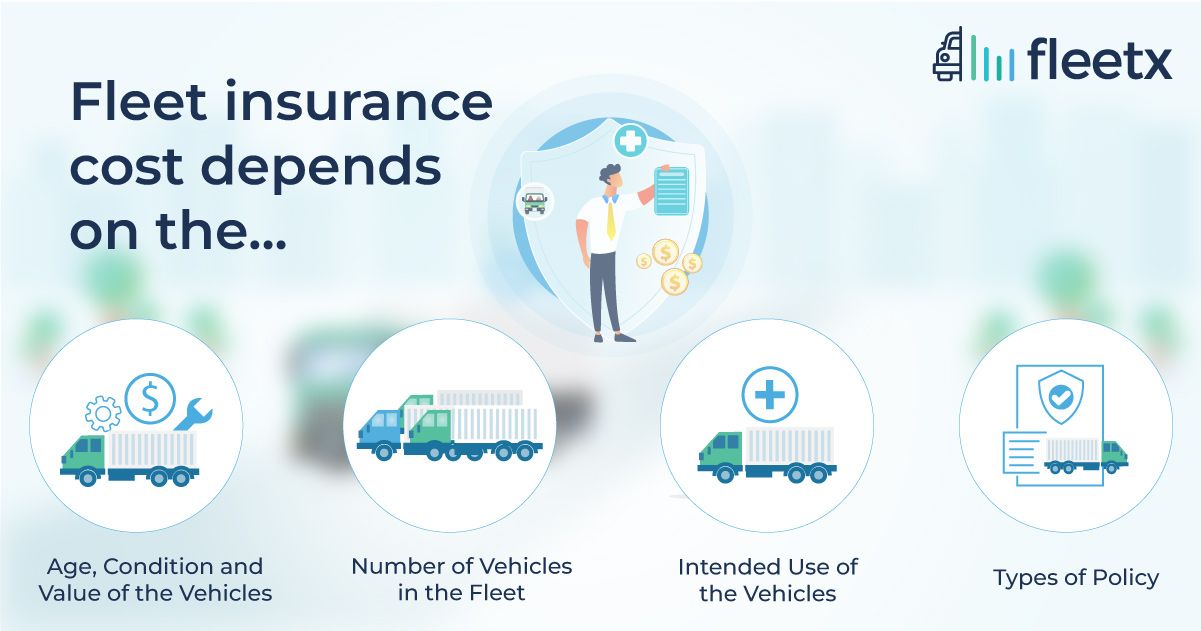
Fleet insurance cost primarily depends on fleet size, business size, and the company's carrier. The cost of the fleet insurance policy may also be influenced by other factors, such as the age of the vehicle, its intended use, and the insurance alternatives selected. Gross Vehicle Weight Rating is another factor that affects truck fleet insurance (GVWR). The most expensive fleet insurance rates often apply to trucks (such as 18-wheelers) with GVWRs greater than 26,001 lbs.
How does fleet insurance work?
Fleet insurance covers a variety of vehicles that a company leases or owns, and it can be registered in the name of the firm, a partner, or a director. Depending on the needs of the business, payments can be made monthly or annually. Deals can be acquired through insurance comparison websites or specialized brokers.
There are three types of coverage for fleet insurance: Comprehensive, which covers any injuries to you, your passengers, and third parties as well, Third party coverage covers only damage to third parties, Third party fire and theft insurance covers any damage to a third party vehicle against fire and theft.
There are two different types of policies: "Any Driver" and "Named Driver." The most flexible insurance are "Any Driver" policies, which have higher rates but may be preferable for bigger businesses. However, a "Named Driver" policy is ideal for a small business. It only pairs drivers with vehicles. Additionally, this is typically the most cost-effective choice.
What advantages does fleet insurance offer?
One policy, one renewal date: As was said above, fleet insurance enables you to cover every type of vehicle that is owned by your business under a single policy. You will just have to deal with one policy renewal date if you insure every vehicle in your fleet under the same policy.
Lower rates and more options: Instead of individually insuring each vehicle in your fleet, you may find that purchasing fleet insurance is more cost-effective. From an insurance standpoint, fleet insurances are significantly simpler and budget friendly for SMEs . Its coverage is more comprehensive and can spread out each individual's risk across the entire fleet.
Take a look at what usage-based telematics insurance has to provide in addition to fleet insurance
A traditional fleet insurance coverage allows you to have one policy that covers several vehicles, instead of having a separate policy in place for each of your cars. Although fleet insurance is useful, usage-based fleet insurance offers fleet owners considerably more. Your overall price for usage-based fleet insurance is based on how frequently you utilize your vehicle. This means that although your overall premium may change from month to month, you will always be charged according to how your vehicle has performed and how much coverage your vehicle has had.
You must pay a minimum base rate for your insurance in order to ensure that your vehicles are always insured in order to lawfully run your fleet. You then pay a variable premium based on the usage of your vehicles, which may be based on their mileage or the amount of time they are on the road. Telematics Insurance service providers assist companies in finding fleet-specific insurance that is flexible. Additionally, these devices provide you access to a wide number of advantages that may help you reduce fleet risk and boost operational effectiveness.
The Next Step
The latest innovation that will alter the way we see vehicle insurance in today's cutthroat business environment is fleet insurance. The necessity for fleet insurance is widely understood by fleet operators. However, in order for them to provide cost- and service-effective services, it is vital that the fleet is used to its full potential with the least amount of downtime possible for repairs and maintenance. Therefore, having high-quality insurance is crucial for their company's smooth operation. For your network of vehicles to remain secure, you must have fleet insurance. They must be handled with the utmost care, as they are essential to everyday operations.
Frequently Asked Questions
What is fleet insurance?
Fleet insurance is a commercial insurance policy that allows businesses to insure multiple vehicles under a single plan instead of purchasing individual insurance for every truck, van, or commercial vehicle. It is widely used by logistics companies, transporters, distributors, manufacturers, construction businesses, and eCommerce fleets. Fleet insurance generally includes third-party liability coverage, own-damage protection, theft, fire, natural calamities, accidental damage, and optional add-ons like roadside assistance, driver cover, and engine protection. Businesses can choose named-driver or any-driver policies depending on operational requirements. In India, fleet insurance is increasingly adopted because it simplifies renewals, reduces administrative effort, and often lowers overall insurance costs through bulk pricing. Companies operating fleets across Delhi NCR, Gurgaon, Mumbai, Bengaluru, Pune, and other major logistics hubs often combine fleet insurance with GPS tracking and telematics to improve driver safety, reduce accident claims, and negotiate better premiums. As insurers increasingly evaluate vehicle usage, driver behaviour, and maintenance records, companies using fleet management technology may qualify for lower insurance premiums compared to fleets with poor operational visibility.
How does fleet insurance work?
Fleet insurance covers all of the vehicles owned by your business under one insurance policy, eliminating the need to manage separate policies for every commercial vehicle. Businesses can insure trucks, trailers, pickups, vans, buses, or mixed fleets depending on the insurer's eligibility criteria. Policies may be issued under the company, partner, or director's name, while premiums are determined based on fleet size, vehicle age, usage, claim history, industry type, driver profile, and operating region. Payments can usually be made annually or monthly. Companies managing fleets across India frequently integrate telematics, GPS tracking, fuel monitoring, and driver safety systems to reduce accident risks and improve claim history. Many insurers also consider operational data while evaluating renewals. Fleet insurance therefore becomes much more than legal compliance—it becomes part of a broader fleet risk management strategy that helps businesses reduce downtime, improve safety, simplify policy administration, and better control long-term operating costs.
How many vehicles do you need for fleet insurance?
The minimum number of vehicles required for fleet insurance depends on the insurance provider. Some insurers in India offer fleet insurance for as few as two commercial vehicles, while others require four or five vehicles before businesses become eligible for a fleet policy. Larger logistics operators managing dozens or hundreds of trucks typically receive more competitive pricing because insurers can spread risk across a larger fleet. Small businesses, distributors, contractors, and regional transporters operating in cities such as Delhi, Gurgaon, Mumbai, Bengaluru, or Pune should compare different insurers because eligibility requirements, policy flexibility, and pricing vary considerably. Even if your business currently operates only a few commercial vehicles, choosing fleet insurance early can simplify future expansion by keeping renewals, documentation, and claims under one policy.
How much does fleet insurance cost in India?
Fleet insurance pricing in India depends on several factors including the number of vehicles, vehicle category, age, insured declared value (IDV), operating routes, driver experience, claim history, and the type of coverage selected. Small commercial fleets generally pay a few lakh rupees annually, while large transport companies operating hundreds of trucks may spend several crores every year on insurance. Businesses should also account for implementation costs associated with telematics devices, GPS tracking, dash cameras, or fleet management software, which can improve operational safety and potentially reduce insurance premiums over time. Companies operating in Delhi NCR, Mumbai, Bengaluru, Pune, and Gurgaon often compare insurers not only on premium costs but also on claim settlement efficiency, network garages, cashless repair facilities, roadside assistance, and digital claim processing. Requesting quotations from multiple insurers and maintaining strong safety records remain the best ways to reduce overall insurance expenses.
Which is the best fleet insurance solution for logistics companies?
The best fleet insurance solution depends on the size of your fleet, operating geography, cargo type, vehicle mix, and risk profile rather than simply choosing the cheapest premium. Modern logistics businesses increasingly combine commercial fleet insurance with transportation management software, GPS vehicle tracking, AI-powered video telematics, driver behaviour monitoring, predictive maintenance, and fuel management platforms. This integrated approach provides greater visibility into operational risks while helping reduce accidents and fraudulent claims. Large enterprises operating across India often prioritise insurers offering digital claims, nationwide service networks, and flexible commercial vehicle coverage. Businesses operating in Delhi NCR, Mumbai, Gurgaon, Bengaluru, and Pune should evaluate claim turnaround time, customer support, cashless garage availability, telematics compatibility, and policy customization before selecting an insurer. The ideal solution improves both financial protection and day-to-day fleet efficiency.
What are the top ways to reduce fleet insurance premiums?
Reducing fleet insurance costs requires improving operational safety rather than simply negotiating lower premiums. Businesses can lower insurance expenses by installing GPS tracking systems, video telematics, driver behaviour monitoring, route optimisation software, fatigue detection systems, and preventive maintenance programs. Regular vehicle inspections, compliance monitoring, driver training, and accurate documentation also contribute to lower claim frequency. Many insurers reward businesses that demonstrate strong fleet management practices because operational data indicates lower accident risk. Companies operating across Delhi, Mumbai, Bengaluru, Pune, Gurgaon, and other logistics-intensive regions increasingly use AI-powered fleet management platforms to improve safety scores and optimise maintenance schedules. Over time, these operational improvements can reduce both direct insurance premiums and indirect accident-related costs such as downtime, repairs, cargo losses, and legal expenses.
Why do transport companies in Delhi NCR and Gurgaon prefer fleet insurance?
Delhi NCR and Gurgaon are among India's busiest logistics corridors, supporting manufacturing, retail distribution, eCommerce, FMCG, pharmaceuticals, and third-party logistics providers. Fleet operators in these regions often manage large vehicle volumes, high daily mileage, and complex interstate operations, making fleet insurance an essential business requirement. A consolidated insurance policy simplifies administration while helping businesses remain compliant with commercial vehicle regulations. Fleet operators also benefit from easier renewals, faster claims management, and simplified documentation compared to managing multiple individual policies. When combined with GPS tracking, transport management software, electronic proof of delivery, and telematics, fleet insurance becomes part of a larger operational risk management strategy that improves safety, reduces downtime, and supports efficient logistics operations throughout North India.
Is fleet insurance beneficial for businesses operating in Mumbai, Bengaluru, and Pune?
Yes. Fleet insurance offers significant advantages for businesses operating across Mumbai, Bengaluru, Pune, and other major commercial cities where delivery frequency, urban traffic, and operational complexity increase vehicle risk. Companies involved in retail distribution, food delivery, manufacturing, construction, healthcare logistics, and last-mile transportation often manage diverse vehicle fleets requiring consistent insurance coverage. A fleet policy streamlines renewals, simplifies claims, reduces administrative work, and may offer better pricing compared to individual policies. Businesses that also implement route optimisation, predictive maintenance, AI-powered driver monitoring, and real-time fleet tracking improve operational safety while potentially lowering insurance costs over time. This combination enables companies to improve asset utilisation, minimise breakdowns, and maintain uninterrupted logistics operations despite increasingly demanding urban transport conditions.