

Businesses have evolved through decades of transformation into how they function today and most of the credit goes to technology and how it has made every aspect of conducting businesses better. Throughout history, whether it was automation in manufacturing or GPS tracking for supply chain efficiency, technology integration has withered several roadblocks to make business operations better, more efficient and transparent.
Today, we stand at the cusp of a new era where technologies like Artificial Intelligence, Automation, and Internet of Things (IoT), among others, will fundamentally change how businesses function. In the case of supply chain, what we are looking at is the fourth revolution or Supply Chain 4.0, but more on that later. However, the supply chain industry has had its own set of challenges with technology integration that are very much visible even today. In the Indian context, several businesses across industries have been adopting technology integration in supply chain management; however, a larger section of businesses continues to resist adopting technology and continues to manage their supply chain operations in the traditional way, which has been proven to be costlier, inefficient and lacks transparency in operations.
A brief history of industrial revolutions
Before understanding Supply Chain 4.0, it's important to understand how industries revolutionised over centuries into what we know today as Industry 4.0. Currently, business circles and conclaves are buzzed with terms like Industry 4.0 or 4IR, which experts use to define how industries function or will function in the 21st century. The term was first coined by Klaus Schwab, Founder-Chairman of the World Economic Forum, in 2015 and conceptualised the rapid change in technology, industries and societal patterns due to increasing interconnectivity and smart automation. Rapid change is guided by technologies like AI, robotics & automation, smart technologies, and IoT, among others. Moreover, the emphasis on machine-to-machine communication (M2M) to improve how different business processes integrate appears to be a key USP of industry 4.0.
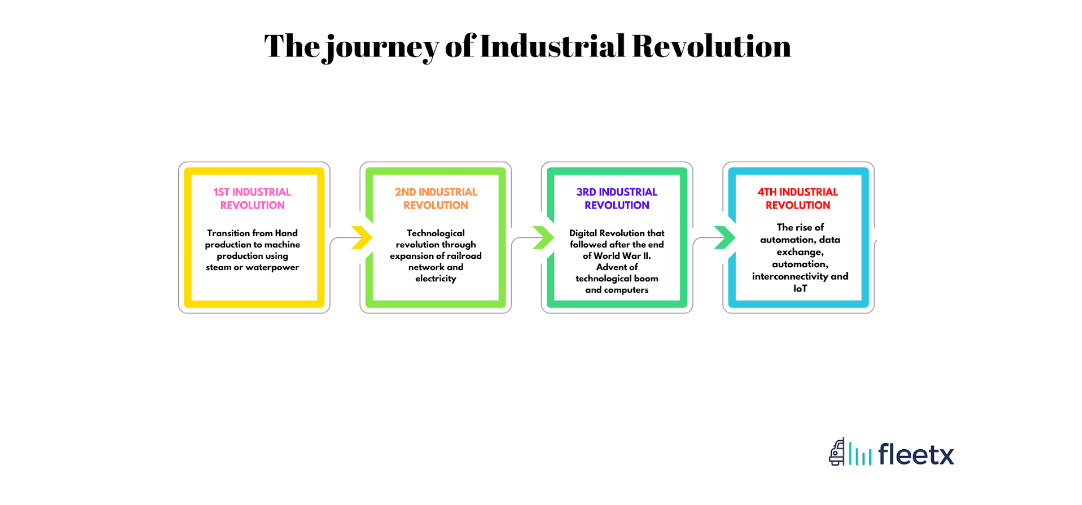
We have come a long way since the first industrial revolution, and subsequent industrial revolutions have transformed our lives unimaginably. And if history has taught us anything, technology will change things for the better. Speaking from a business perspective, the fourth industrial revolution or Industry 4.0, is about transparency, interconnectivity, and efficiency.
How technology revolutionised supply chain
The supply chain has been at the centre of industries and business operations. One of the biggest achievements of humankind is the ability to move goods from one part of the world to another. The second industrial revolution was about improving the way goods are transported, which led to the invention of railways which became the backbone of the modern supply chain as we know it today. Before that, ships were the only major source of transporting goods across different parts of the world.
The existence of supply chain networks across the world connecting every nook and corner allowed globalisation to materialise. Globalisation has become the centrepiece of modern society, making it possible for us to have goods that can be brought to us within such a short time and made using parts sourced from around the world. From a cost perspective, globalisation and efficient supply chain networks have made it possible for goods to be produced, shipped and consumed at scale while still ensuring their cost-effectiveness. For example, modern smartphones have hundreds of components produced, assembled and fitted across different parts of the world due to the comparative advantage each business, country or region would have in producing those parts. Comparative advantage allows businesses to produce goods they specialise in and, thus, helps make them cost-effective. The entire process, from sourcing materials to production to shipping to consumption, is made possible by a technology-driven supply chain functioning efficiently in the background.
Supply chain related challenges faced by businesses
Global supply chain networks have driven consumption, made business processes efficient and improved the quality of life. However, they have also increased complexities regarding logistics and transportation of goods. Modern supply chain management is extremely interdependent and complex. So much so that even a small hiccup or bottleneck could sometimes choke the entire supply chain. The most recent example is how the shortage of semiconductor chips has choked the entire supply chain of automobile manufacturers. It led to a severe global crisis affecting all aspects of the economy due to its interconnected nature. Even today, prices of almost every good that requires electronic chips have gone up in the past two years, giving an overview of how serious unforeseen circumstances could affect the supply chain across industries.
Similarly, complex supply chain networks have created several blind spots in business operations and transparency issues that have become harder to navigate as businesses scale their operations. These blind spots in supply chain management continue to create compounding problems for businesses and their operations, eventually causing a loss of efficiency and revenue either directly or indirectly. The inefficiencies in supply chain operations vary across different aspects of supply chain management. Some of the key supply chain inefficiencies include,
- Lack of supply chain visibility in operations
- Fuel and cargo theft
- Inefficient fuel management
- Route planning and navigation-related challenges
- Issues related to vehicle breakdown and fleet maintenance
- Issues with cold chain logistics
The list of supply chain issues is not comprehensive, and supply chain issues vary across industries and business functions. However, these issues are not incurable, and most of them can be resolved. As someone truly said, with the rise in complexities comes a rising number of solution providers. And indeed, there have been solutions to tackle these inefficiencies in supply chain operations.
Why Supply Chain 4.0 is the future of supply chain management
Solutions to tackle supply chain inefficiencies are deeply intertwined with technology integration in supply chain management. These discussions are not happening in silos, and businesses and supply chain providers worldwide are adopting technology to improve their supply chain operations. Amazon is a poster boy for championing the cause of technology integration in supply chain operations. It took 3PL logistics and built an empire on the backs of supply chain efficiency, thus pioneering processes and functions like same-day delivery, and lean logistics, among several others. What Amazon did to the supply chain industry through technology integration, data-driven decision-making, automation, and supply chain visibility are all by-products of Supply Chain 4.0. One could even go as far as to say they showed businesses around the world why businesses need to get their supply chain right.
However, businesses continue to resist technology integration, particularly in India, where the logistics sector is extremely unorganised. Several businesses and transporters are unwilling to shift to Supply Chain 4.0 for various reasons, such as the high acquisition cost and disregarding the long-term sustainability and benefits of making the shift.
Understanding a shift to Supply Chain 4.0 means for businesses
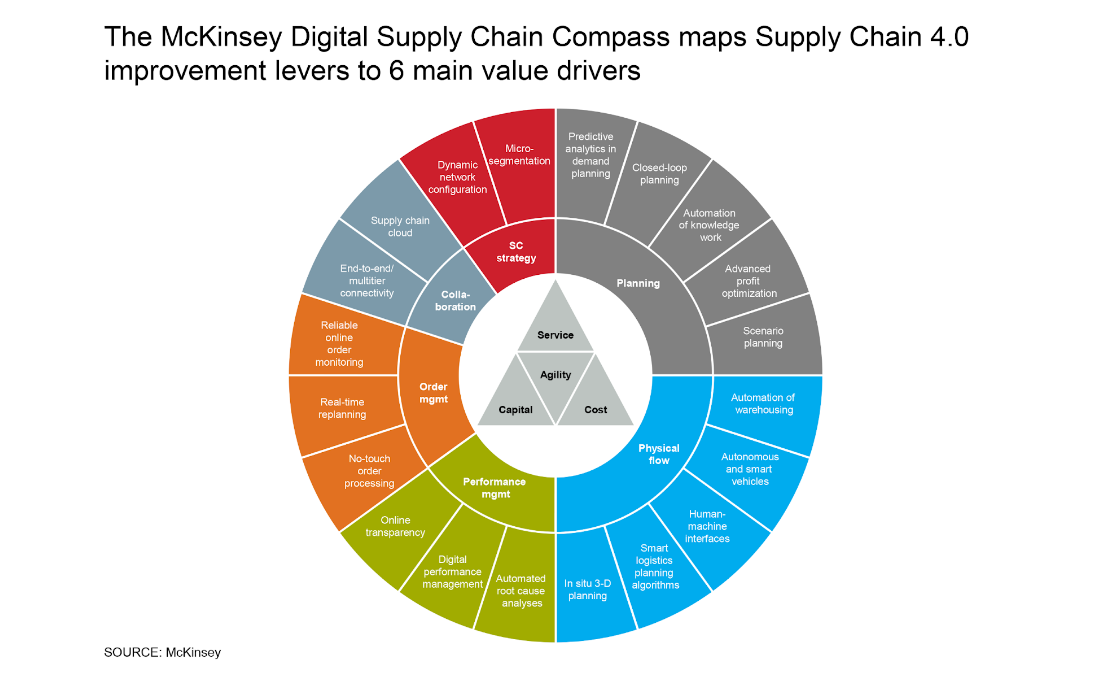
For simplicity, let’s understand Supply Chain 4.0 this way: consider a large mesh where everything is connected (IoT). Machine-to-Machine communication (M2M) is highly optimised. Every aspect of supply chain operations is interconnected, capturing data through hardware sensors and transmitting it. This large mesh dynamically collects data, processes it, and uses it to eliminate inefficiencies in supply chain operations. As a business owner, you have complete visibility of every business process and have access to terabytes of data collection from different aspects of the operations, which can be analysed to improve business forecasts, predict demand and use it as you see fit. That’s what supply chain 4.0 is all about.
Each system operates through hardware sensors, such as a BlackBox installed in each vehicle that collects, processes and transmits data. Through supply chain 4.0, businesses will be able to leverage all the data across different functions to be collected at a granular level, which would improve decision-making and provide complete transparency over the entire operation, thus improving efficiency and cost-effectiveness.
Conclusion
To conclude, Supply Chain 4.0, like industrial revolutions over centuries, will reshape how businesses manage their supply chain. Early adopters of the technology will greatly benefit from it, thus having a competitive edge over their competitors. In contrast, late adopters will be forced by circumstances to either adopt or risk losing revenue to their competitors.
Frequently Asked Questions
What is Supply Chain 4.0?
Supply Chain 4.0 refers to the next generation of supply chain management that combines digital technologies such as Artificial Intelligence (AI), Internet of Things (IoT), cloud computing, automation, machine learning, robotics, predictive analytics, GPS tracking, and real-time data sharing to create smarter, faster, and more connected supply chains. Unlike traditional supply chains that rely heavily on manual processes and historical reporting, Supply Chain 4.0 enables businesses to make proactive decisions using live operational data.
The concept is closely linked with Industry 4.0, where machines, software, warehouses, suppliers, transporters, and customers communicate continuously through connected digital systems. Businesses gain complete visibility into inventory, transportation, production, warehousing, and last-mile delivery while reducing delays, manual intervention, and operational costs.
In India, Supply Chain 4.0 adoption is increasing rapidly across manufacturing, FMCG, pharmaceuticals, retail, e-commerce, automotive, and logistics companies. Businesses operating across Delhi, Delhi NCR, Gurgaon, Mumbai, Bengaluru, and Pune are investing in digital supply chain platforms to improve operational efficiency and meet growing customer expectations for faster deliveries and better transparency.
A modern Supply Chain 4.0 ecosystem typically includes:
- Real-time shipment visibility
- AI-powered demand forecasting
- IoT-enabled fleet monitoring
- Predictive maintenance for vehicles and equipment
- Warehouse automation
- Automated route optimisation
- Digital documentation and analytics dashboards
For businesses looking to improve supply chain resilience, reduce logistics costs, and enhance customer satisfaction, Supply Chain 4.0 has become a strategic investment rather than simply another technology upgrade. It enables organisations to make faster decisions, minimise disruptions, optimise resources, and remain competitive in an increasingly digital global market.
How is Supply Chain 4.0 different from traditional supply chain management?
Traditional supply chain management primarily depends on manual planning, disconnected software systems, spreadsheets, delayed reporting, and limited operational visibility. Decisions are often based on historical information, making it difficult to respond quickly to unexpected disruptions such as shipment delays, inventory shortages, or changing customer demand.
Supply Chain 4.0 transforms this approach by integrating AI, IoT, cloud technology, automation, and predictive analytics into every stage of the supply chain. Instead of reacting after problems occur, businesses can identify potential issues early and take corrective action before operations are affected.
For example, an organisation transporting goods from Gurgaon to Mumbai can monitor every vehicle in real time, receive automated alerts for route deviations, predict maintenance requirements before vehicle breakdowns occur, and optimise deliveries using AI-generated routing recommendations. Similarly, manufacturers in Pune or Bengaluru can automatically adjust inventory levels based on changing customer demand rather than relying on fixed planning cycles.
Some of the major differences include:
- Real-time visibility instead of delayed reporting
- Predictive analytics instead of reactive decision-making
- Automated workflows instead of manual paperwork
- Connected IoT devices instead of isolated operations
- AI-based forecasting instead of historical estimates
- Digital collaboration across suppliers, transporters, warehouses, and customers
As Indian businesses continue expanding nationally and internationally, traditional supply chain methods often struggle to manage increasing complexity. Supply Chain 4.0 provides better transparency, improved operational efficiency, lower transportation costs, faster deliveries, and stronger resilience against disruptions, making it an essential capability for modern supply chain operations.
Why is Supply Chain 4.0 important for businesses in India?
Supply Chain 4.0 has become increasingly important for Indian businesses because supply chains are growing more complex while customer expectations continue rising. Companies today are expected to deliver products faster, reduce operational costs, maintain inventory accuracy, improve customer communication, and respond quickly to disruptions. Traditional systems often cannot support these expectations at scale.
Across India, businesses operating in Delhi NCR, Gurgaon, Mumbai, Bengaluru, Pune, Chennai, Hyderabad, and other industrial hubs are adopting digital supply chain technologies to improve competitiveness. Industries such as automotive, FMCG, pharmaceuticals, retail, manufacturing, e-commerce, food processing, and logistics are leveraging AI, IoT, transportation management systems, and advanced analytics to modernise operations.
For example, logistics providers in Delhi and Gurgaon often manage large transportation networks across North India. Real-time fleet visibility, automated route planning, fuel monitoring, and predictive maintenance help reduce transportation costs while improving delivery performance. Manufacturers in Pune and Bengaluru use digital supply chain platforms to coordinate suppliers, production schedules, warehouses, and distributors more efficiently.
Some of the biggest business advantages include:
- Lower logistics and fuel costs
- Higher supply chain visibility
- Reduced inventory carrying costs
- Improved customer service levels
- Better demand forecasting
- Faster order fulfilment
- Improved compliance and documentation
- Greater resilience during disruptions
As India's logistics sector continues evolving through digital transformation initiatives and infrastructure development, Supply Chain 4.0 enables organisations to scale efficiently while maintaining transparency, operational control, and profitability. Companies investing in modern supply chain technologies today are generally better positioned to compete in both domestic and global markets.
What is the implementation cost of Supply Chain 4.0 in India?
The implementation cost of Supply Chain 4.0 in India varies depending on the size of the organisation, the number of vehicles, warehouses, users, operational complexity, and the technologies being deployed. Unlike traditional software purchases, modern Supply Chain 4.0 platforms are often cloud-based and subscription-driven, making them more affordable for businesses of all sizes.
For small and medium-sized businesses, digital supply chain software may start from approximately ₹20,000–₹1 lakh per month depending on fleet size, features, and integrations. Mid-sized enterprises generally invest between ₹5 lakh and ₹25 lakh for implementation, while large organisations operating across multiple cities such as Delhi, Gurgaon, Mumbai, Bengaluru, and Pune may invest significantly more for enterprise-wide deployments involving ERP integration, IoT devices, AI-powered analytics, warehouse automation, transportation management systems (TMS), and predictive maintenance platforms.
The overall implementation cost may include:
- Software licensing or subscription fees
- IoT sensors and GPS hardware installation
- Cloud infrastructure
- ERP integration
- Employee training
- System configuration and onboarding
- Data migration from legacy systems
- Ongoing technical support and maintenance
While the initial investment may appear significant, businesses often recover costs through lower fuel expenses, improved route planning, reduced inventory carrying costs, fewer operational delays, better fleet utilisation, and increased customer satisfaction. Many Indian organisations view Supply Chain 4.0 as a long-term strategic investment because measurable operational savings frequently outweigh implementation costs within a relatively short period. Choosing a scalable solution also allows companies to expand their digital capabilities gradually as their business grows.
Which is the best Supply Chain 4.0 software for Indian businesses?
The best Supply Chain 4.0 software depends on a company's industry, operational scale, logistics network, and digital transformation goals. There is no single platform suitable for every organisation. Instead, businesses should evaluate solutions based on visibility, automation, scalability, analytics, integration capabilities, and customer support.
Leading businesses across India increasingly look for software that combines transportation management, fleet tracking, warehouse visibility, AI-powered forecasting, route optimisation, IoT integration, predictive maintenance, and business intelligence into one connected platform. Organisations operating across Delhi NCR, Gurgaon, Mumbai, Bengaluru, Pune, Chennai, and Hyderabad particularly benefit from cloud-based solutions that provide real-time monitoring across multiple locations.
When comparing the top Supply Chain 4.0 software platforms, decision-makers should evaluate:
- Real-time shipment tracking
- Transportation Management System (TMS)
- Warehouse Management System integration
- ERP compatibility
- Artificial Intelligence and predictive analytics
- IoT-enabled visibility
- Demand forecasting
- Automated reporting dashboards
- Scalability for future expansion
- Customer support and implementation services
Businesses should also assess total cost of ownership rather than focusing only on subscription pricing. Factors such as implementation speed, employee adoption, ongoing support, ease of integration, cybersecurity, and future scalability have a significant impact on long-term return on investment. Selecting the right Supply Chain 4.0 software enables organisations to improve operational efficiency, reduce logistics costs, increase supply chain visibility, and make data-driven business decisions while supporting sustainable growth.
How are businesses in Delhi, Gurgaon, Mumbai, Bengaluru, and Pune adopting Supply Chain 4.0?
Businesses across India's major commercial and manufacturing hubs are rapidly embracing Supply Chain 4.0 to improve efficiency, reduce logistics costs, and strengthen supply chain resilience. Although adoption levels vary by industry, digital transformation has become a strategic priority for organisations seeking greater operational visibility and faster decision-making.
In Delhi and Delhi NCR, wholesalers, retailers, logistics providers, and FMCG companies use digital transportation management platforms to coordinate high shipment volumes while improving last-mile delivery performance. Gurgaon, home to numerous manufacturing units, automotive companies, technology firms, and logistics headquarters, has seen increasing adoption of AI-powered fleet management, predictive maintenance, and IoT-enabled transportation monitoring.
Mumbai's import-export ecosystem, ports, and distribution networks benefit from real-time shipment visibility, warehouse automation, and supply chain analytics to minimise delays. Meanwhile, Bengaluru's technology-driven enterprises leverage AI, cloud computing, robotics, and machine learning to optimise planning, forecasting, and inventory management. Pune's automotive and industrial manufacturing sectors increasingly deploy smart factories integrated with connected supply chain platforms to improve production scheduling and supplier collaboration.
Common Supply Chain 4.0 initiatives across these cities include:
- Real-time fleet tracking
- Warehouse automation
- Predictive maintenance
- Demand forecasting using AI
- Digital proof of delivery
- IoT-enabled asset monitoring
- Integrated supplier collaboration
- Route optimisation for transportation
As businesses continue expanding nationally and globally, digital supply chain technologies help improve customer service, reduce operational risk, and support scalable growth. Companies investing early in Supply Chain 4.0 are generally better equipped to manage disruptions while maintaining efficiency across increasingly complex logistics networks.
What are the biggest challenges while implementing Supply Chain 4.0?
Although Supply Chain 4.0 offers significant business advantages, successful implementation requires careful planning, investment, and organisational readiness. Many businesses still face challenges while transitioning from traditional supply chain processes to digitally connected operations. These challenges are particularly common among organisations relying on legacy systems, manual documentation, or fragmented software platforms.
One of the primary barriers is integrating existing ERP systems, warehouse management software, fleet tracking platforms, and supplier databases into a unified digital ecosystem. Businesses may also encounter resistance to change from employees, limited digital skills, cybersecurity concerns, inconsistent data quality, and the need for substantial process redesign before technology can deliver its full value.
Indian organisations operating across Delhi NCR, Gurgaon, Mumbai, Bengaluru, Pune, Chennai, and Hyderabad also face unique operational complexities such as multi-state transportation regulations, diverse supplier networks, varying infrastructure quality, and rapidly changing customer expectations. These factors make phased implementation more practical than attempting complete transformation in a single project.
Some common implementation challenges include:
- Integration with legacy software
- High initial investment in digital infrastructure
- Employee training and change management
- Data security and privacy concerns
- Poor data quality across departments
- Limited interoperability between systems
- Supplier and transporter digital adoption
- Scaling technology across multiple locations
Businesses that approach Supply Chain 4.0 through phased implementation, clear performance metrics, and strong executive support generally experience smoother adoption. Working with experienced technology partners and focusing on measurable business outcomes rather than technology alone significantly improves long-term success and return on investment.
How can AI, IoT, and automation improve supply chain visibility and efficiency?
Artificial Intelligence (AI), the Internet of Things (IoT), and automation form the technological foundation of Supply Chain 4.0. Together, these technologies provide businesses with real-time operational visibility, predictive insights, and intelligent decision-making capabilities that significantly improve supply chain performance.
IoT devices continuously collect information from vehicles, warehouses, production equipment, and inventory locations. This data is transmitted in real time to cloud platforms, where AI analyses operational patterns, identifies potential disruptions, predicts equipment failures, and recommends corrective actions before problems affect business operations. Automation further improves efficiency by eliminating repetitive manual tasks such as inventory updates, dispatch scheduling, invoice processing, and shipment tracking.
For example, logistics companies operating between Delhi and Mumbai can automatically monitor vehicle health, optimise delivery routes based on traffic conditions, detect fuel anomalies, and notify customers of accurate delivery times. Manufacturers in Gurgaon, Bengaluru, and Pune can synchronise production schedules with inventory availability and supplier deliveries, reducing delays while improving resource utilisation.
Key business benefits include:
- Real-time shipment visibility
- Predictive maintenance for vehicles and equipment
- Improved inventory accuracy
- Lower fuel consumption
- Automated warehouse operations
- Smarter demand forecasting
- Faster response to supply chain disruptions
- Improved customer communication and service levels
As businesses continue digitising operations, AI, IoT, and automation are becoming essential rather than optional technologies. Organisations adopting these capabilities can reduce operating costs, improve productivity, increase supply chain transparency, and make faster data-driven decisions while building resilient and future-ready supply chain networks.
Is Supply Chain 4.0 and Industry 4.0 same?
No, Supply Chain 4.0 and Industry 4.0 are closely related but they are not exactly the same. Industry 4.0 is the broader industrial transformation driven by technologies such as Artificial Intelligence (AI), the Internet of Things (IoT), robotics, cloud computing, automation, machine learning, and advanced analytics. It focuses on creating smart factories, connected production systems, and digitally enabled manufacturing environments.
Supply Chain 4.0 is a specialised application of Industry 4.0 principles within supply chain and logistics operations. It extends digital transformation beyond manufacturing by connecting suppliers, warehouses, transportation networks, distributors, retailers, and customers into one intelligent ecosystem. The objective is to improve end-to-end visibility, reduce operational inefficiencies, enhance collaboration, and enable faster decision-making using real-time data.
For businesses across India, including Delhi, Gurgaon, Mumbai, Bengaluru, and Pune, Supply Chain 4.0 enables organisations to track shipments in real time, optimise transportation routes, predict maintenance requirements, automate warehouse operations, improve inventory planning, and respond quickly to market demand. Industry 4.0 provides the enabling technologies, while Supply Chain 4.0 applies those technologies specifically to logistics and supply chain management.
In simple terms, every Supply Chain 4.0 initiative uses Industry 4.0 technologies, but Industry 4.0 also covers manufacturing, production automation, smart factories, industrial robotics, and connected machines beyond the supply chain. Together, these concepts help organisations become more efficient, data-driven, resilient, and competitive in an increasingly digital business environment.
What is Supply Chain Management 4.0 and its benefits?
Supply Chain Management 4.0 refers to the integration of advanced digital technologies into every stage of supply chain planning, procurement, manufacturing, transportation, warehousing, inventory management, and customer delivery. Instead of operating through disconnected systems and manual workflows, organisations create an intelligent, connected ecosystem where information flows seamlessly across all business functions.
Modern Supply Chain Management 4.0 combines AI, IoT, cloud computing, predictive analytics, automation, robotics, GPS tracking, and real-time business intelligence to improve operational performance. These technologies help organisations monitor supply chain activities continuously, identify potential disruptions early, optimise resources, and make faster strategic decisions based on live operational data rather than historical reports.
Businesses operating across India, particularly in logistics hubs such as Delhi NCR, Gurgaon, Mumbai, Bengaluru, and Pune, increasingly use Supply Chain Management 4.0 to improve transportation efficiency, warehouse productivity, inventory accuracy, supplier collaboration, and customer satisfaction. The ability to access complete operational visibility also enables companies to respond more effectively to changing market conditions and unexpected disruptions.
Some of the most important benefits include:
- Improved supply chain visibility
- Lower transportation and logistics costs
- Faster delivery performance
- Better inventory optimisation
- AI-powered demand forecasting
- Reduced operational risks
- Higher customer satisfaction
- Improved sustainability through efficient resource utilisation
As supply chains become increasingly global and interconnected, Supply Chain Management 4.0 provides organisations with the flexibility, transparency, and intelligence needed to remain competitive. Companies investing in these digital capabilities today are better positioned to achieve long-term operational excellence while supporting scalable and sustainable business growth.