
The logistics sector is seen as a critical sector to enhance international trade as a result of digitization and globalization. A lot of business sectors rely on the logistics and freight industry, which is growing quickly and is considered as the foundation of the Indian economy since it provides cost-effective, and efficient transportation of goods throughout India. The logistics industry is responsible for 14.4% of the Indian economy's total contribution, a sizable share that is expected to grow at a CAGR of 15-20% in the coming years.
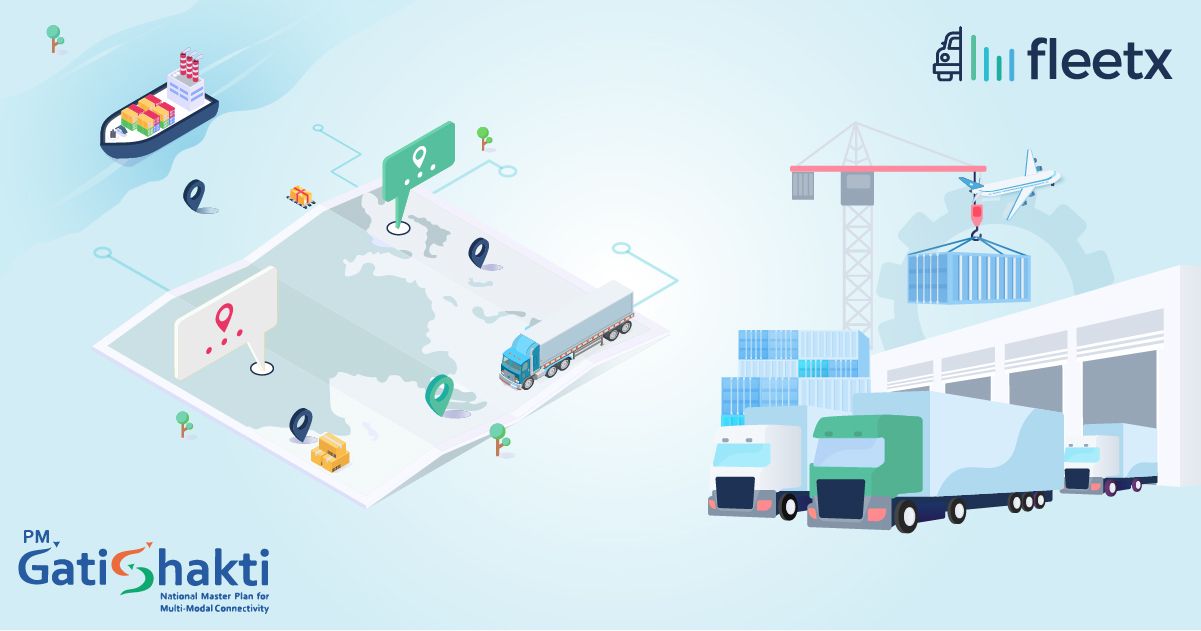
The logistics industry has now entered a new phase of expansion. The government wants to establish the market after seeing its potential for expansion and the government has taken many measures in the past few years to grow and prosper in the logistics sector making the logistics process accurate and cost effective. One of the major steps taken by the government in the previous budget last year was “The Gatishakti Masterplan” for providing multimodal connectivity infrastructure to various economic zones.
What is the National Logistics plan?
On September 17, 2022, Prime Minister Narendra Modi introduced the National Logistics Policy (NLP) in New Delhi. It is a comprehensive effort to establish an interdisciplinary, cross-sectoral, and multijurisdictional framework for the growth of the whole logistics ecosystem to solve the problem of high cost and inefficiency. The initiative seeks to improve both the efficiency with which items are transported around the nation and the competitiveness of Indian exports on both national and international markets. Additionally, it seeks to improve economic development and expand job options.
Currently, nations like Japan and Germany only spend 8 to 9 % of their GDP on logistics costs, compared to India's spending of close to 13 to 14%. A Comprehensive Logistics Action Plan (CLAP) will be used to implement the National Logistics Policy. According to Indian logistics, CLAP comprises eight key actions and we have talked about it in brief in the following points:
(i) Integrated Digital Logistics Systems: A unified logistics interface to link multiple data sources at one place.
(ii) Standardization of physical assets & benchmarking service quality standards: Improving ease of doing business in logistics including transportation infrastructure, warehousing, temperature-controlled logistics, packaging, etc.
(iii) Logistics Human Resources Development and Capacity Building: logistics human resource strategy and develop action plans to address skill development.
(iv) State Engagement: Encourage the development of state- or city-level logistics strategy.
(v) EXIM (Export-Import) Logistics: Creating an efficient and reliable logistics network, with transparent and streamlined cross-border trade facilitation.
(vi) Service Improvement framework: Enable seamlessness between sectors, promote standardization, formalization and eliminate fragmentation.
(vii) Sectoral Plan for Efficient Logistics: Sectoral Plans for Efficient Logistics (SPEL) lined up with PM GatiShakti.
(viii) Facilitation of Development of Logistics Parks: Promoting Logistics parks which acts as hubs for intermediary activities in the supply chain connected by a transportation network.
Purpose of drafting the NLP
- The National Logistics Policy (NLP) will aid in enhancing both Ease of Doing Business.
- The National Logistics Policy will work together with other programmes like the PM Gati Shakti Pariyojna and the Bharatmala Initiative to break down organizational structure and boost the nation's logistics efficiency.
- The goal of the policy is to expand job possibilities, boost economic growth, and promote the competitiveness of Indian commodities.
- With the help of the National Logistics Policy 2022, India has potential to increase its ability to compete internationally, generate more employment, and perform better in international rankings.
- The National Logistics Policy will facilitate speedy last-mile delivery while simultaneously aiming to reduce food waste.
Key Features of NLP 2022
The New Logistic Policy 2022 contains the four essential crucial characteristics:
Integration of Digital System (IDS): 30 distinct systems from seven different departments, including the road, rail, customs, aviation, foreign trade, and commerce ministries, would be digitally connected. The shorter freight transit will be improved.
Unified Logistics Interface Platform (ULIP): It would consolidate all digital services relating to the transportation industry into a single interface, relieving exporters of a number of extremely time-consuming and onerous procedures. Additionally, it will result in easy freight movement.
Ease of Logistics (ELOG): To make the laws clearer and the logistics industry easier to operate, a new policy will be put into place. Industry organizations can immediately address any such issues that are hindering their operations and performance with the government entities using this platform.Furthermore, a thorough system has been established for the quick handling of such matters.
System Improvement Group (SIG): frequent monitoring of all logistics-related initiatives and removal of any obstacles.
Let us look into the impact NLP has on Manufacturers , Transporters and Consumers:
Manufacturers: As the raw material in a manufacturing plant is the fundamental component utilized to begin the production process. To create the finished product, the raw material goes through several procedures and warehouses. However, the delay in shipping needs increases the cost to producers. Every additional expense and inefficiency reduces the profit margin as items move down a production line. NLP will make manufacturing simple and reduce difficulty in transportation connectivity will let all the enterprises thrive in the fiercely competitive global market.
Companies can categorize materials as they move through the process, from raw materials to works-in-progress, and finally, a finished product through the Integrated Logistics Interface and also they will be able to track costs and inefficiencies. Through this the entire process can become fast and accurate.
Manufacturers will be benefited because of the state engagement and better transportation networking around road , rail, foreign, custom, aviation and streamlined cross- border trade. This will allow them to transport goods across the world efficiently. The policy has the potential to fulfill the market needs.
Transporters: The National Logistics Policy encourages digitalization throughout the logistics industry, and the unified logistics interface may be considered the industry's ground-breaking policy. Since everything will be shown at one place, it will surely reduce time, increase visibility, aid in optimal truck usage, and make it simple to track the items at all times. It may eliminate the inbound and outbound logistics mistakes, resulting in a quick and effective procedure overall.
Consumers & Society: Consumers and society will benefit significantly if the policy is implemented. Firstly , market inflation will reduce as the manufacturers will be able to supply according to the desirable demand and this will also increase the purchasing power of the consumers. The increasing demand and cost- effective technique for manufacturers can motivate them for standardization and quality products. In the longer run increasing demand will also increase job opportunities.
Road Ahead
The most important step right now is to take India’s economic growth to the next level and to put India's logistic sector on the map globally. In this scenario, National Logistics Policy is the game-changing move. NLP (National logistics policy) is making it possible to go forward with the development of unified platforms that will offer a platform for logistics while also enhancing internal working and communication procedures.
Every day, the competition gets stronger, making it easier for success to emerge and evolve. Additionally, it is predicted that the Indian logistics sector would be worth about USD 215 billion in the next two years as opposed to roughly USD 160 billion at the moment, and realizing and working on NLP will make the logistics dream come true.
Frequently Asked Questions
What is the National Logistics Policy (NLP) in India?
The National Logistics Policy (NLP) is a Government of India initiative designed to improve the country's logistics ecosystem by reducing transportation costs, increasing operational efficiency, strengthening multimodal connectivity, and encouraging digital transformation across the supply chain. The policy complements initiatives such as PM Gati Shakti by integrating road, rail, ports, airports, and inland waterways into a unified logistics network.
For manufacturers, transporters, retailers, exporters, and logistics companies, the policy aims to reduce India's logistics costs—which have traditionally remained higher than many developed economies—through improved infrastructure, digital platforms like the Unified Logistics Interface Platform (ULIP), standardized processes, and better coordination between government departments.
Businesses operating in logistics hubs such as Delhi NCR, Gurgaon, Mumbai, Bengaluru, Pune, Chennai, Hyderabad, and Ahmedabad are expected to benefit from faster freight movement, improved warehouse connectivity, and better visibility across transportation networks. Companies adopting Transportation Management Systems (TMS), fleet management software, GPS vehicle tracking, and route optimization solutions can leverage these policy reforms more effectively.
Ultimately, the National Logistics Policy is not just about infrastructure development. It is a long-term strategy to make Indian supply chains globally competitive, improve export performance, lower logistics expenses, and encourage technology-driven logistics operations across industries ranging from manufacturing and FMCG to eCommerce and pharmaceuticals.
Why is the National Logistics Policy important for businesses in India?
The National Logistics Policy is particularly important because logistics directly impacts inventory costs, customer satisfaction, delivery timelines, and business profitability. Companies that experience transportation delays, warehouse bottlenecks, or poor shipment visibility often incur higher operational costs and lose competitiveness.
Through digital integration, multimodal transportation planning, standardized logistics infrastructure, and simplified regulatory coordination, the policy enables businesses to move freight faster and more efficiently. Industries such as FMCG, retail, automotive, manufacturing, construction, mining, pharmaceuticals, and agriculture stand to benefit significantly.
For businesses located in Delhi NCR, Gurgaon, Mumbai, Bengaluru, and Pune—regions that handle large freight volumes—the policy supports improved road connectivity, logistics parks, industrial corridors, and better access to ports and airports. This makes interstate transportation smoother while reducing delays caused by fragmented logistics operations.
Companies implementing intelligent Transportation Management Software, fleet telematics, AI-powered route optimization, and digital documentation can maximize the benefits of the National Logistics Policy. These technologies improve shipment planning, reduce empty miles, optimize fleet utilization, enhance compliance, and provide real-time visibility, making logistics operations faster, more transparent, and cost-efficient.
What are the major benefits of the National Logistics Policy for transport and logistics companies?
The National Logistics Policy offers several long-term benefits for transporters, fleet operators, third-party logistics providers (3PLs), freight forwarders, and supply chain companies operating across India. The primary objective is to simplify logistics operations while reducing transportation costs and improving service quality.
Some of the most significant benefits include improved multimodal connectivity, faster freight movement, digital documentation, integrated logistics platforms, better infrastructure planning, increased warehouse efficiency, and easier coordination between different government agencies. These improvements collectively reduce delays and improve asset utilization.
Transport companies operating large fleets across Delhi, Mumbai, Gurgaon, Bengaluru, Pune, Jaipur, Lucknow, and other logistics corridors can also benefit from improved route planning, lower idle time, reduced fuel consumption, and enhanced shipment visibility through digital logistics platforms.
When combined with fleet management software, GPS tracking systems, electronic proof of delivery (ePOD), automated trip management, AI-powered route optimization, and predictive maintenance solutions, transport businesses can significantly improve delivery performance while lowering operating costs. These operational efficiencies ultimately improve customer satisfaction, increase profitability, and help Indian logistics providers compete more effectively in domestic as well as global markets.
How does the National Logistics Policy support digital transformation in the logistics industry?
Digital transformation is one of the core pillars of the National Logistics Policy. Rather than relying on fragmented systems across multiple government departments, the policy promotes integrated digital platforms that simplify logistics planning, shipment tracking, documentation, and regulatory compliance.
The introduction of digital initiatives such as the Unified Logistics Interface Platform (ULIP) enables businesses to access logistics-related information through a connected ecosystem. This reduces paperwork, improves data sharing, minimizes manual errors, and creates greater visibility across supply chains.
For logistics companies operating in Delhi NCR, Mumbai, Bengaluru, Pune, Chennai, Hyderabad, and Gurgaon, digital logistics solutions are becoming essential for maintaining competitiveness. Businesses increasingly invest in Transportation Management Systems (TMS), Warehouse Management Systems (WMS), fleet management software, IoT-enabled GPS tracking, electronic invoicing, and AI-driven analytics to streamline operations.
These technologies help businesses automate dispatch planning, monitor vehicle health, optimize delivery routes, improve fuel efficiency, reduce detention time, and generate real-time business insights. Together, the National Logistics Policy and digital logistics technologies create a smarter, data-driven logistics ecosystem capable of supporting India's growing domestic and international trade while improving operational efficiency across the entire supply chain.
What is the cost of implementing the National Logistics Policy for businesses?
The National Logistics Policy (NLP) itself does not require businesses to pay any implementation fee because it is a government policy framework rather than a commercial product. However, organizations often invest in digital technologies, automation, and logistics software to fully leverage the policy's benefits. These investments help companies reduce transportation costs, improve shipment visibility, and enhance operational efficiency.
For small businesses and transporters, implementing digital logistics solutions may cost between ₹25,000 and ₹2 lakh annually depending on fleet size and business requirements. Mid-sized logistics companies generally spend between ₹3 lakh and ₹20 lakh on Transportation Management Systems (TMS), GPS vehicle tracking, warehouse integration, route optimization, and reporting dashboards. Large enterprises with nationwide operations may invest ₹50 lakh to several crores when integrating ERP systems, AI-powered analytics, IoT devices, and multiple warehouses.
Businesses in Delhi NCR, Gurgaon, Mumbai, Bengaluru, and Pune often see faster returns on these investments because of higher shipment volumes, better infrastructure, and stronger customer demand. Companies serving manufacturing, FMCG, pharmaceuticals, retail, and eCommerce sectors typically recover implementation costs through lower fuel consumption, fewer empty trips, improved vehicle utilization, and faster order fulfillment.
Instead of viewing implementation as an expense, organizations should consider it a long-term investment in operational efficiency. When aligned with the National Logistics Policy, modern logistics technology can significantly improve productivity while reducing overall logistics costs over time.
Which is the best logistics software to support businesses under the National Logistics Policy?
The best logistics software depends on your operational requirements, fleet size, shipment volumes, and business objectives. Under the National Logistics Policy, organizations are encouraged to adopt digital technologies that improve efficiency, transparency, and collaboration across the supply chain.
A comprehensive logistics platform should include Transportation Management System (TMS), GPS vehicle tracking, fleet management, route optimization, warehouse integration, electronic proof of delivery (ePOD), freight analytics, predictive maintenance, and automated reporting. AI-powered dashboards and real-time shipment visibility have also become essential for businesses managing large logistics operations.
Companies operating across Delhi NCR, Gurgaon, Mumbai, Bengaluru, Pune, Chennai, and Hyderabad typically prefer cloud-based logistics software because it scales easily, supports multiple warehouses, integrates with ERP systems, and provides centralized visibility across locations. Businesses handling interstate transportation also benefit from automated compliance management and digital documentation.
Rather than selecting software based solely on price, businesses should evaluate implementation support, ease of integration, customer service, reporting capabilities, mobile accessibility, and future scalability. Choosing the right logistics software allows organizations to maximize the advantages offered by the National Logistics Policy while improving delivery performance, reducing transportation costs, and increasing customer satisfaction.
How can businesses in Delhi NCR and Gurgaon benefit from the National Logistics Policy?
Delhi NCR and Gurgaon are among India's largest logistics and supply chain hubs, serving manufacturing, retail, automotive, pharmaceuticals, eCommerce, and export-oriented businesses. Because of their strategic location and strong road connectivity, these regions are expected to benefit significantly from the National Logistics Policy.
The policy promotes better multimodal connectivity, integrated logistics parks, digital freight management, and improved coordination between transportation authorities. This helps businesses reduce delays, improve shipment planning, and optimize freight movement across northern India. Companies transporting goods between Delhi, Gurgaon, Noida, Faridabad, Ghaziabad, Jaipur, Chandigarh, and Lucknow can benefit from faster transit times and improved operational visibility.
Organizations operating large fleets in Delhi NCR often face challenges such as congestion, fuel costs, route planning, and compliance management. By combining the National Logistics Policy with technologies like Transportation Management Systems, GPS tracking, route optimization software, AI-based fleet management, and digital documentation, businesses can improve fleet utilization while lowering operating expenses.
As logistics infrastructure continues to expand across industrial corridors and multimodal logistics parks, businesses in Delhi NCR and Gurgaon will be well positioned to increase productivity, support faster deliveries, strengthen customer experience, and compete more effectively in both domestic and international markets.
How will the National Logistics Policy improve logistics operations in Mumbai, Bengaluru and Pune?
Mumbai, Bengaluru, and Pune are among India's fastest-growing logistics ecosystems, supporting industries such as manufacturing, automotive, pharmaceuticals, IT hardware, retail, exports, and eCommerce. The National Logistics Policy aims to strengthen these markets by improving infrastructure, encouraging digital logistics adoption, and reducing transportation inefficiencies.
Mumbai benefits through stronger port connectivity, improved freight movement, and better integration between road, rail, and maritime logistics. Bengaluru gains from enhanced technology adoption, AI-enabled logistics platforms, and improved support for high-value manufacturing industries. Pune's automotive and industrial sectors benefit from better multimodal transportation, warehouse connectivity, and faster interstate freight movement.
Businesses across these cities increasingly rely on Transportation Management Software, Warehouse Management Systems, GPS fleet tracking, route optimization, predictive maintenance, and logistics analytics to support growing shipment volumes. These technologies complement the National Logistics Policy by providing real-time shipment visibility, reducing manual processes, improving asset utilization, and lowering logistics costs.
As investments in logistics parks, digital platforms, and transportation infrastructure continue, businesses operating in Mumbai, Bengaluru, and Pune can expect shorter delivery timelines, improved customer satisfaction, lower operating costs, and stronger competitiveness within India's rapidly evolving logistics landscape.
What are the biggest challenges in implementing the National Logistics Policy?
Although the National Logistics Policy (NLP) provides a strong roadmap for improving India's logistics sector, successful implementation depends on collaboration between government agencies, private enterprises, technology providers, infrastructure developers, and logistics companies. Businesses must adapt to digital workflows while investing in modern transportation and supply chain technologies.
Some of the most common implementation challenges include fragmented logistics networks, varying state-level regulations, legacy IT systems, shortage of skilled logistics professionals, limited technology adoption among smaller transporters, and resistance to operational change. Small and medium-sized businesses may also face budget constraints when upgrading their logistics infrastructure.
Companies operating in Delhi NCR, Gurgaon, Mumbai, Bengaluru, Pune, Chennai, and Hyderabad can overcome these challenges by adopting cloud-based Transportation Management Systems (TMS), GPS vehicle tracking, warehouse automation, AI-powered route optimization, electronic proof of delivery (ePOD), and digital freight management platforms. These solutions reduce manual work while improving shipment visibility and decision-making.
Organizations should also focus on employee training, phased technology implementation, data standardization, and integration with ERP systems. Businesses that proactively embrace digital logistics practices are likely to gain the greatest competitive advantage as India's logistics ecosystem becomes increasingly connected, automated, and data-driven under the National Logistics Policy.
What is the National Logistics Policy 2022?
The National Logistics Policy (NLP) 2022 is a Government of India initiative introduced to create an integrated, technology-driven logistics ecosystem that improves supply chain efficiency while reducing logistics costs. The policy aims to bring India's logistics expenses closer to global benchmarks by improving multimodal connectivity, simplifying regulations, and encouraging digital transformation throughout the logistics sector.
One of its primary objectives is to lower logistics costs, which have traditionally been around 13–14% of India's GDP. The policy introduces several key initiatives, including Integrated Digital Logistics Systems, the Unified Logistics Interface Platform (ULIP), standardization of logistics infrastructure, development of logistics parks, state-level logistics planning, export-import logistics improvements, human resource development, and sector-specific logistics strategies.
The National Logistics Policy works alongside PM Gati Shakti and other infrastructure initiatives to improve coordination between road, rail, ports, airports, and inland waterways. Together, these reforms are expected to strengthen India's competitiveness in global trade while improving ease of doing business for manufacturers, transporters, exporters, logistics providers, and supply chain organizations.
What is logistics policy?
A logistics policy is a structured framework of rules, strategies, regulations, and initiatives that guide how goods move efficiently across a country's supply chain. It focuses on improving transportation infrastructure, reducing logistics costs, enhancing operational efficiency, promoting digital technologies, and strengthening coordination between different logistics stakeholders.
In India, the National Logistics Policy serves as a comprehensive framework that supports manufacturers, transporters, exporters, importers, warehouse operators, and logistics service providers. By encouraging digital integration, multimodal transportation, infrastructure development, and standardized logistics practices, the policy aims to make supply chains faster, more transparent, and more cost-effective.
A strong logistics policy not only reduces transportation costs but also improves customer satisfaction, supports economic growth, boosts exports, generates employment, and encourages innovation across the logistics ecosystem. Businesses adopting modern logistics technologies such as Transportation Management Systems, fleet management software, warehouse management systems, and GPS tracking solutions are better positioned to benefit from these policy initiatives.
What percentage of India's GDP does the logistics sector contribute?
The Indian logistics industry contributes approximately 14.4% of the country's GDP, making it one of the most significant sectors supporting economic growth. The industry plays a critical role in manufacturing, retail, agriculture, pharmaceuticals, automotive, eCommerce, mining, infrastructure development, and international trade.
As India's economy continues to expand, the demand for efficient transportation, warehousing, freight management, and supply chain services is growing rapidly. Government initiatives such as the National Logistics Policy and PM Gati Shakti aim to improve logistics infrastructure while reducing overall logistics costs and increasing global competitiveness.
Businesses operating in logistics hubs including Delhi NCR, Gurgaon, Mumbai, Bengaluru, Pune, Chennai, Ahmedabad, and Hyderabad are expected to benefit from stronger infrastructure, improved multimodal connectivity, faster freight movement, and greater adoption of digital logistics technologies. These improvements are expected to increase productivity while helping India strengthen its position as a global manufacturing and logistics destination.