

From technological advancements to a successful funding round, Fleetx ended its year 2022 on a great note. And with another year flying by, we have seen many ups and downs in our journey. But undoubtedly, 2022 has been a year full of achievements and recognitions for Fleetx because we, as a team, made sure of conquering and achieving our mission.
Our year started with a very proud moment, as we took a step further and announced a raise of $19 million in Series B led by IndiaMart with existing investors (Beenext and IndiaQuotient) also participating. This funding helped us accelerate our vision and mission of digitizing fleet and logistics operations to improve efficiency, safety, and reduce costs, as well as solve supply chain process problems with automation.
2022 Highlights at Fleetx
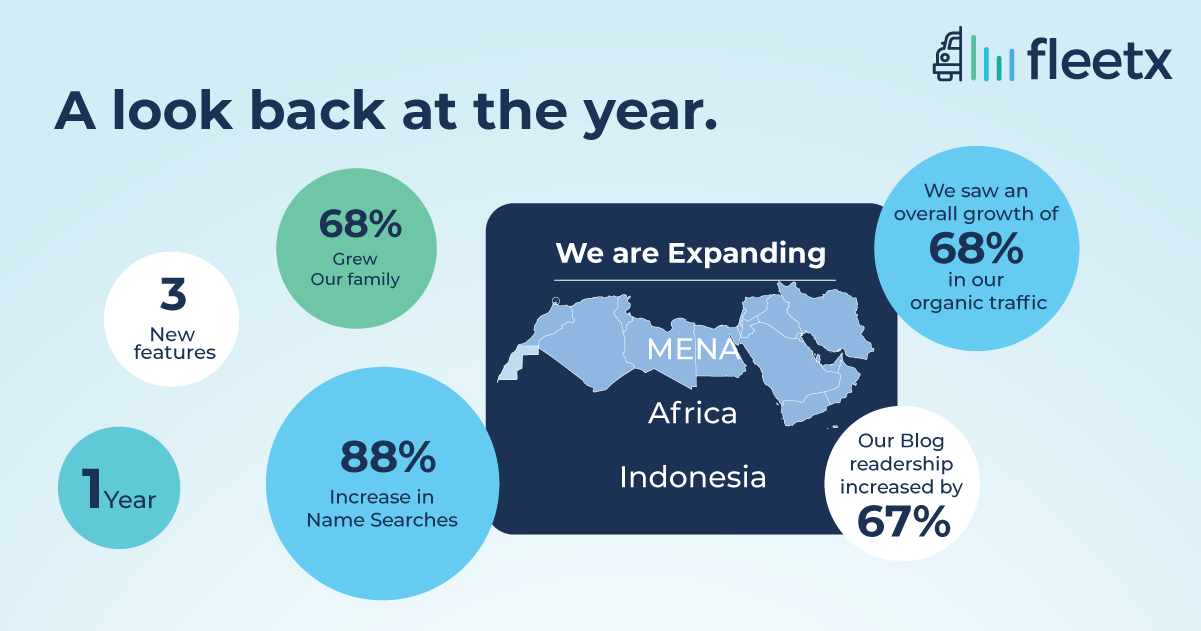
Growth at Fleetx
We have always maintained our commitment to a customer-centric approach, and this year we continued working on our mission and vision of removing all the barriers and fragility from supply chain processes and logistics. Our approach helped our customers save money while improving overall operational efficiency. Additionally, we expanded internationally and conquered every stream, be it a strong hike in Fleetx searches, organic searches, or the growth of our Fleetx family.
Awards
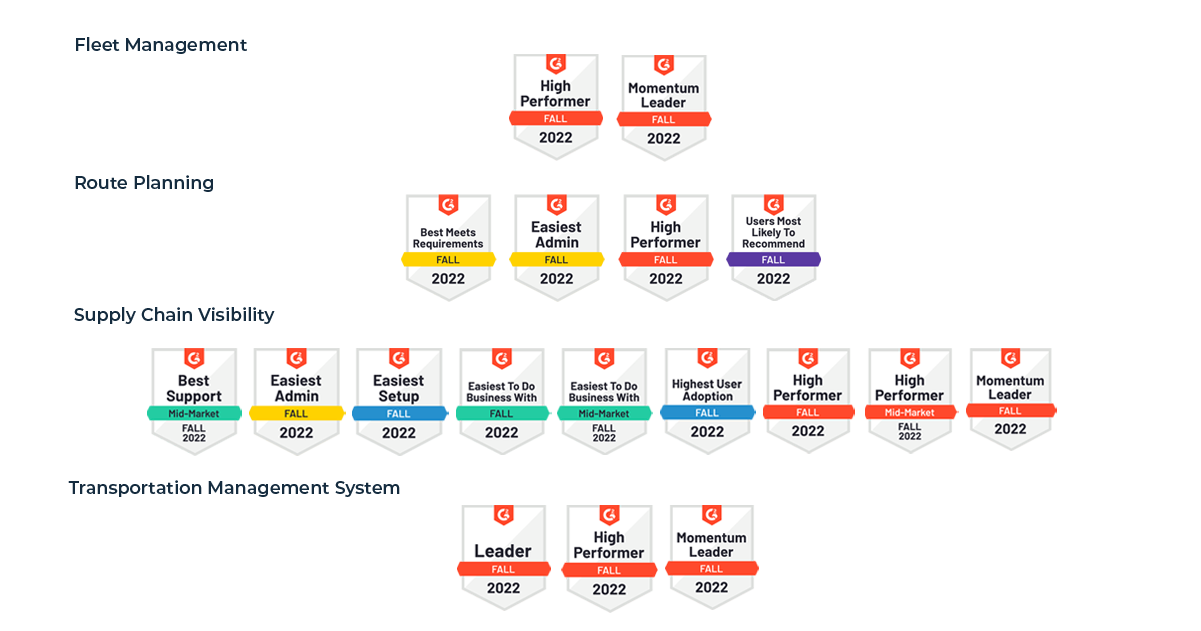
As always, we maintained our position in our customers' hearts by helping them solve their problems. With clients' support and love for us, we got recognised with the maximum G2 badges this year. This recognition not only made us proud, but it gave us the courage to do much better in the coming future.
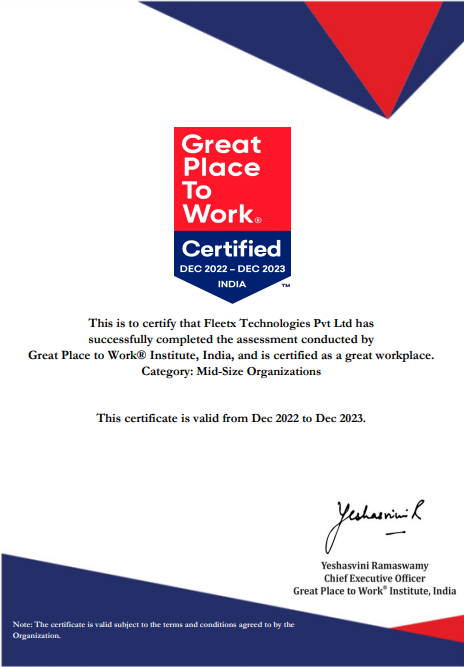
It is not wrong to say that "happy employees make happy customers." We could achieve client satisfaction because our team could deliver. This year, once again, we received the "Great Place to Work" award as we made sure that our team got a better, peaceful, joyful, and supportive environment to work in, so that they could deliver the best to our clients and also love the workplace.
Media Presence
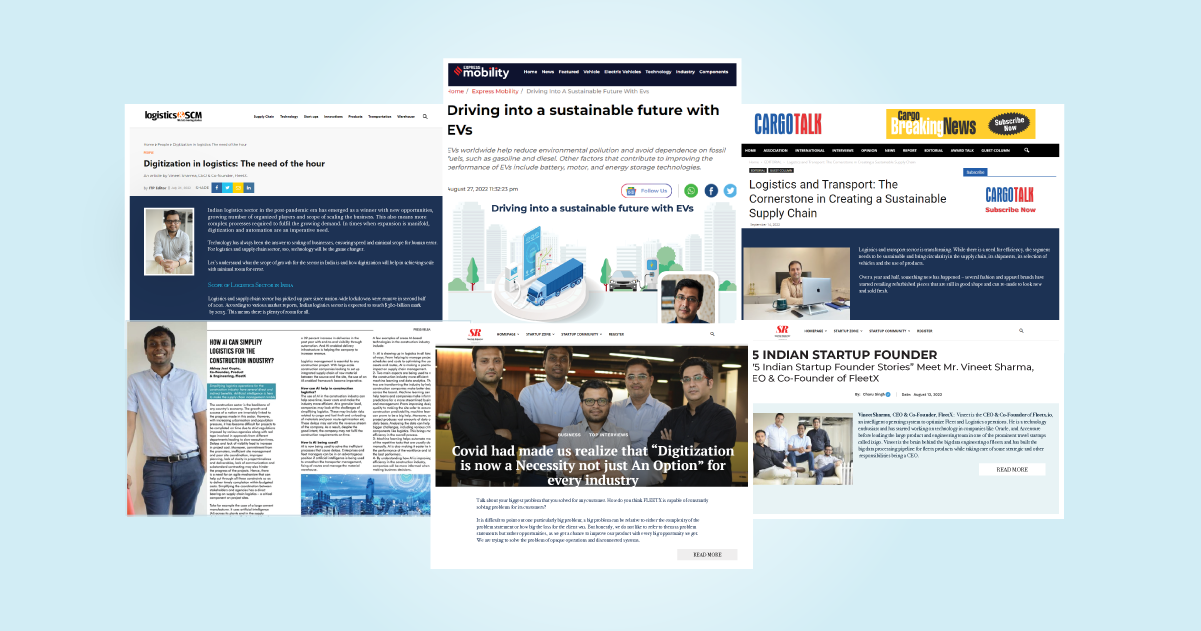
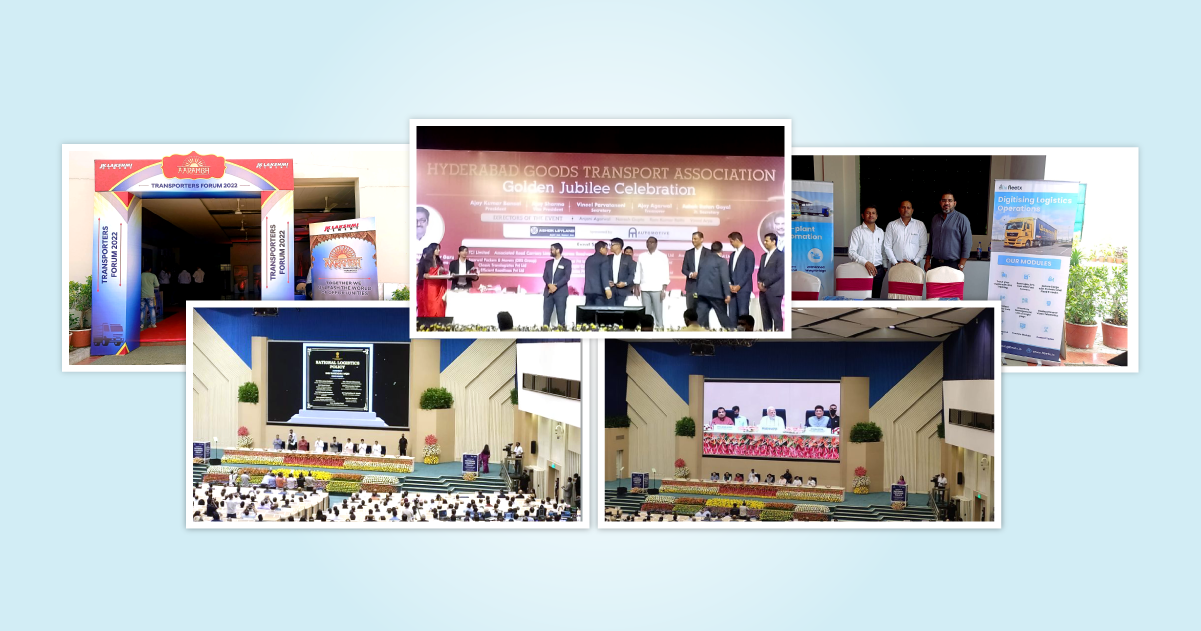
Our media presence grew this year at a very high rate; we saw a lot of features during the closing of the funding round, and our founders got featured in several renowned publications. We also got featured in a bunch of review sections and all over again got opportunities to be part of events like the Golden Jubilee Celebration of the Hyderabad Goods and Transport Association and The JK Laksmi Cement Aarambh Transporters Forum 2022.
Aside from that, we were honored to be a part of the much-needed and long-awaited National Logistics Policy at Vigyan Bhawan. The policy was a significant step forward for India's logistics industry, and its implementation does have the potential to change the supply chain landscape.
Product Upgradation
Transport Management Software (TMS): As our most important software, we upgraded its features and use cases to make it a one-stop solution for enterprises and manufacturers for more accurately managing driver contracts, better load and dispatch, increased safety, making indents and freight invoices, reducing turnaround time, and increasing ROI.
Enterprise Resource Planning: This platform will benefit transporters by optimizing their operational processes and assisting various departments in better collaboration and relationship management. ERP is focused on storing, collecting, and accurately analyzing data across the operations on one centralized platform, which will lead to increased efficiency and end-to-end visibility of operations.
Video Telematics: We unveiled Video Telematics, a cutting-edge solution made by the integration of cameras, analytics, and fleet tracking. Video Telematics can make it possible to monitor vehicles end-to-end, help in driver coaching, driver behavior monitoring, and provide effective feedback to prevent loss of drivers, pedestrians, cargo, or vehicles with the help of combining fields like computer vision, pattern recognition, data analytics, and the Internet of Things(IOT).
Until next year
Year 2022 has been full of energy, blessings, and enthusiasm for Fleetx. Another noteworthy event that took place in 2022 is that Fleetx turned 5 years old! We, as a team, couldn’t be more thankful for all the love, support, and recognition we have received. So, are you excited for what’s coming up in 2023?
Frequently Asked Questions
What is Fleetx and why was the company's 2022 journey significant for the logistics industry?
Fleetx is an AI-powered fleet management and transportation management technology company that helps businesses digitize logistics operations, improve fleet visibility, reduce transportation costs, increase vehicle utilization, and make supply chains more efficient. The company's 2022 journey was particularly significant because it highlighted rapid product innovation, international expansion, major funding, industry recognition, and continuous investment in technologies such as Transport Management Systems (TMS), Enterprise Resource Planning (ERP), and Video Telematics.
Rather than being just a yearly corporate recap, the milestones demonstrate how digital transformation is reshaping logistics across India. Businesses operating in Delhi, Delhi NCR, Gurgaon, Mumbai, Bengaluru, Pune, and other logistics hubs increasingly rely on intelligent software platforms that automate dispatch planning, freight management, vehicle tracking, safety monitoring, and driver performance.
The recap also reflects larger industry trends including automation, AI adoption, predictive analytics, connected vehicles, and real-time supply chain visibility. These technologies have become increasingly important as Indian manufacturers, transporters, FMCG companies, cement businesses, retail chains, and e-commerce firms continue modernizing logistics operations.
For business leaders researching the future of logistics technology, Fleetx's 2022 achievements provide insight into how digital fleet management is evolving from basic GPS tracking into comprehensive operational intelligence. This makes the blog relevant not only for existing Fleetx customers but also for organizations evaluating transportation technology solutions to improve efficiency, reduce operational costs, and strengthen supply chain resilience.
Why are AI-powered fleet management and transport management platforms becoming essential for businesses in India?
AI-powered fleet management platforms have evolved into strategic business tools because transportation has become one of the largest operational expenses for manufacturers, distributors, logistics providers, and retailers. Manual processes often lead to delayed deliveries, inefficient routing, fuel wastage, poor fleet utilization, compliance issues, and limited operational visibility.
Modern Transport Management Software combines GPS tracking, route optimization, predictive maintenance, video telematics, freight planning, proof of delivery, analytics dashboards, and automated reporting into a single platform. This allows businesses to make data-driven decisions while improving customer satisfaction and reducing costs.
The demand is especially high across logistics-intensive regions including Delhi NCR, Gurgaon, Mumbai, Bengaluru, and Pune where companies manage large fleets, multiple warehouses, urban deliveries, and interstate transportation. AI helps fleet managers identify risky driving behavior, optimize dispatch schedules, reduce idle time, improve turnaround time, and monitor vehicles in real time.
Organizations are also increasingly choosing platforms that integrate with ERP systems and warehouse operations, enabling end-to-end visibility across the supply chain. As businesses expand nationally, AI-powered fleet solutions become critical for maintaining operational consistency, improving delivery performance, and supporting long-term growth. This is one of the major themes reflected throughout Fleetx's 2022 achievements and product enhancements.
What are the key benefits of implementing a modern Transport Management System (TMS) for enterprises?
A modern Transport Management System (TMS) is designed to simplify and automate transportation planning, execution, and performance monitoring. Instead of relying on spreadsheets, phone calls, and manual paperwork, organizations gain a centralized platform that manages every stage of logistics operations.
The biggest advantages include automated load planning, freight management, dispatch scheduling, real-time vehicle tracking, driver management, freight invoice processing, analytics, compliance monitoring, route optimization, and performance reporting. These capabilities help organizations reduce transportation costs while improving delivery accuracy and customer experience.
Industries such as manufacturing, FMCG, cement, steel, pharmaceuticals, retail, e-commerce, and construction increasingly use TMS platforms because they handle large shipment volumes across multiple locations. Companies operating from Delhi, Gurgaon, Mumbai, Bengaluru, and Pune particularly benefit from route optimization and live visibility due to high traffic congestion and complex delivery networks.
Many leading platforms now integrate with ERP software, warehouse management systems, fuel management tools, IoT devices, and video telematics, creating a unified logistics ecosystem. This enables businesses to measure KPIs such as turnaround time, vehicle utilization, on-time deliveries, driver productivity, and operating costs. The continued investment in TMS capabilities highlighted in Fleetx's 2022 recap demonstrates why transportation software has become a critical competitive advantage rather than simply another operational tool.
What is the approximate cost of implementing fleet management or transport management software in India?
The cost of implementing a fleet management or Transport Management System (TMS) in India depends on several factors, including fleet size, number of users, required modules, integrations, and deployment complexity. Small businesses with fewer than 50 vehicles typically require only GPS tracking, route optimization, and reporting, while medium and large enterprises often need advanced capabilities such as ERP integration, freight management, proof of delivery, fuel monitoring, AI-powered analytics, and video telematics.
For most businesses, cloud-based SaaS platforms offer flexible subscription pricing rather than significant upfront investments. Small fleets generally spend a few hundred to a few thousand rupees per vehicle each month depending on features. Enterprise deployments across manufacturing, FMCG, cement, logistics, and retail companies may involve custom implementation, API integrations, user training, and change management, increasing the total project cost.
Businesses operating in Delhi, Delhi NCR, Gurgaon, Mumbai, Bengaluru, and Pune should evaluate software based on long-term return on investment instead of simply choosing the lowest price. Features like reduced fuel consumption, lower turnaround time, improved vehicle utilization, better compliance, fewer manual processes, and enhanced customer satisfaction often generate savings that outweigh implementation expenses.
Before selecting any platform, request a live demonstration, discuss implementation timelines, verify customer support quality, and understand future scalability. Choosing a solution that supports growing fleets and additional modules helps organizations avoid expensive migrations later while ensuring continuous operational improvement.
Which are the best fleet management and transport management software solutions for businesses in India?
The best fleet management software depends on an organization's operational requirements rather than a single feature or price point. Manufacturing companies, transporters, logistics service providers, distributors, and retailers often evaluate solutions based on scalability, real-time visibility, analytics, automation, customer support, and integration capabilities.
Leading platforms generally provide GPS vehicle tracking, Transport Management Systems (TMS), route optimization, fuel monitoring, driver behavior analysis, predictive maintenance, freight management, proof of delivery, dashboards, ERP connectivity, and mobile applications. Businesses should also consider AI capabilities, reporting flexibility, uptime, implementation support, and product innovation when comparing vendors.
Organizations in logistics hubs such as Delhi, Gurgaon, Mumbai, Bengaluru, Pune, and Chennai typically require software capable of handling large shipment volumes, multiple warehouses, interstate transportation, and high-frequency deliveries. Companies managing hundreds or thousands of vehicles benefit from platforms that provide centralized visibility across all operations while reducing manual intervention.
Instead of searching only for the "top fleet management software" or "best transport management software," decision-makers should prepare a checklist covering operational challenges, expected ROI, integration requirements, regulatory compliance, implementation support, and future expansion plans. The ideal software is one that aligns with business objectives, simplifies logistics processes, improves decision-making, and delivers measurable operational improvements over time.
How can businesses in Delhi NCR and Gurgaon use logistics technology to improve fleet efficiency?
Delhi NCR and Gurgaon are among India's busiest logistics corridors, serving manufacturing plants, corporate offices, warehouses, e-commerce distribution centres, industrial parks, and transportation hubs. High traffic density, delivery deadlines, toll management, and interstate movement make logistics operations significantly more complex than in many other regions.
Fleet management software helps businesses address these challenges through intelligent route planning, live vehicle tracking, automated dispatching, geofencing, driver performance monitoring, fuel analytics, digital documentation, and predictive maintenance. Managers gain real-time visibility into deliveries while reducing delays caused by congestion and inefficient planning.
Organizations operating across Delhi, Noida, Faridabad, Ghaziabad, and Gurgaon can also improve communication between transport teams, warehouses, and customers by using centralized dashboards and mobile applications. AI-powered analytics help identify bottlenecks, improve fleet utilization, reduce idle time, and optimize vehicle allocation during peak demand periods.
Manufacturers, FMCG companies, pharmaceutical distributors, retailers, and logistics providers benefit from these technologies because they improve delivery reliability while lowering operational costs. As supply chains become increasingly digitized, businesses throughout Delhi NCR and Gurgaon are investing in modern transportation platforms that provide data-driven decision-making, automation, and end-to-end operational visibility to remain competitive in fast-moving markets.
How can businesses in Mumbai improve supply chain visibility using AI-powered fleet management solutions?
Mumbai is one of India's busiest logistics and commercial hubs, handling high volumes of imports, exports, retail distribution, pharmaceuticals, manufacturing, FMCG, and e-commerce shipments every day. Managing transportation efficiently in a city known for heavy traffic congestion, tight delivery schedules, and complex urban logistics requires more than conventional GPS tracking. Businesses increasingly rely on AI-powered fleet management and Transport Management Systems (TMS) to gain complete visibility across their supply chain.
Modern fleet management platforms provide live vehicle tracking, estimated arrival times (ETA), automated dispatch planning, digital proof of delivery, route optimization, driver behavior monitoring, fuel analytics, and centralized dashboards. These capabilities allow fleet managers to identify bottlenecks before they affect customers while improving delivery accuracy and reducing operating costs. AI-based recommendations also help optimize routes based on traffic conditions, delivery priorities, and vehicle capacity.
For logistics providers operating in Mumbai and surrounding industrial regions such as Navi Mumbai and Thane, these platforms help coordinate warehouses, transport partners, and customers on a single interface. Real-time notifications improve communication while predictive maintenance reduces vehicle downtime and unexpected repair costs.
Businesses looking to improve operational efficiency should evaluate fleet management software that offers strong analytics, ERP integration, mobile accessibility, and scalability. Choosing an AI-enabled logistics platform enables organizations to make faster decisions, improve customer satisfaction, increase vehicle utilization, and build a more resilient supply chain in one of India's most demanding logistics environments.
How are Bengaluru and Pune driving innovation in fleet management and logistics technology?
Bengaluru and Pune have emerged as major technology and manufacturing centres, making them important markets for digital logistics transformation. Both cities host large automotive companies, industrial manufacturers, IT enterprises, third-party logistics providers, and rapidly growing e-commerce businesses that require advanced transportation solutions capable of handling increasing shipment volumes and complex delivery networks.
Fleet management platforms powered by artificial intelligence, IoT devices, and cloud technology enable organizations to digitize transportation planning while improving visibility across operations. Businesses benefit from real-time vehicle tracking, predictive maintenance, intelligent route optimization, automated dispatch planning, driver safety monitoring, freight analytics, and centralized reporting. These technologies reduce manual intervention while improving operational efficiency and decision-making.
Companies operating across Bengaluru, Pune, and nearby industrial corridors increasingly integrate Transport Management Systems with ERP, Warehouse Management Systems, finance software, and customer service platforms. This creates a connected logistics ecosystem that improves collaboration between departments and provides management with actionable business intelligence.
As sustainability and operational efficiency become strategic priorities, organizations are also adopting video telematics, fuel optimization, and performance analytics to lower emissions and reduce transportation costs. Businesses planning future expansion should prioritize scalable software capable of supporting multiple locations, larger fleets, advanced analytics, and automation. This approach helps companies remain competitive while adapting to evolving customer expectations and increasingly digital supply chain operations.
What lessons can logistics businesses learn from Fleetx's 2022 achievements and future vision?
Fleetx's 2022 journey demonstrates that sustainable growth in the logistics technology industry is driven by continuous innovation, customer-centric product development, and long-term investment in digital transformation. The company's milestones—including funding, product enhancements, industry recognition, media visibility, and expansion—reflect broader trends shaping the future of transportation and supply chain management.
One important lesson is that logistics technology is no longer limited to vehicle tracking. Modern businesses increasingly require integrated platforms that combine Transport Management Systems, ERP connectivity, AI-powered analytics, video telematics, predictive maintenance, driver safety, digital documentation, and operational intelligence. Organizations that adopt these technologies are better positioned to improve efficiency while responding quickly to changing customer expectations.
Businesses across India—including Delhi, Delhi NCR, Gurgaon, Mumbai, Bengaluru, Pune, Chennai, Hyderabad, and Ahmedabad—can use these insights to evaluate their own digital transformation strategies. Rather than investing in isolated software tools, companies should build integrated logistics ecosystems that support scalability, automation, collaboration, and data-driven decision-making.
Fleetx's progress also highlights the importance of investing in employees, customers, innovation, and technology simultaneously. Organizations that embrace AI-powered logistics platforms, prioritize operational visibility, and continuously optimize transportation processes are more likely to achieve long-term growth, stronger customer relationships, and improved competitiveness in India's rapidly evolving logistics landscape.