
Supply chains are the backbone of modern-day commerce; whether transporting goods across cities or continents, ensuring the safety and timely delivery of cargo is critical. However, despite taking precautions, unforeseen events like theft, damage, or delays can disrupt operations and lead to financial losses. In situations like these, cargo insurance can ensure your company recovers from a setback.
A well-thought-out cargo insurance strategy not only reduces risks but also strengthens the overall efficiency of supply chains. For Indian businesses navigating a dynamic logistics landscape, understanding cargo insurance is a step toward smoother operations and financial security.
The Need for Cargo Insurance
Cargo transportation is inherently risky. Goods can be exposed to hazards such as:
- Natural Disasters: Cyclones, floods, fires, and earthquakes can damage shipments, especially in vulnerable and remote regions.
- Theft: Cargo theft remains a significant concern, and it is especially hard to control when employees are involved with external conspirators.
- Human Errors: Mistakes in loading, unloading, or handling cargo can lead to damages.
- Transit Delays: Unexpected delays can result in spoilage (for perishable goods) and penalty fees, not to mention customer dissatisfaction.
For fleet managers and business owners, these risks translate to potential financial losses, customer dissatisfaction, and operational inefficiencies. Without reliable cargo insurance, businesses are left exposed and are forced to rely on reactive measures rather than proactive solutions. Additionally, many companies underestimate the importance of strategic cargo insurance, viewing it as an added cost rather than a necessary investment.
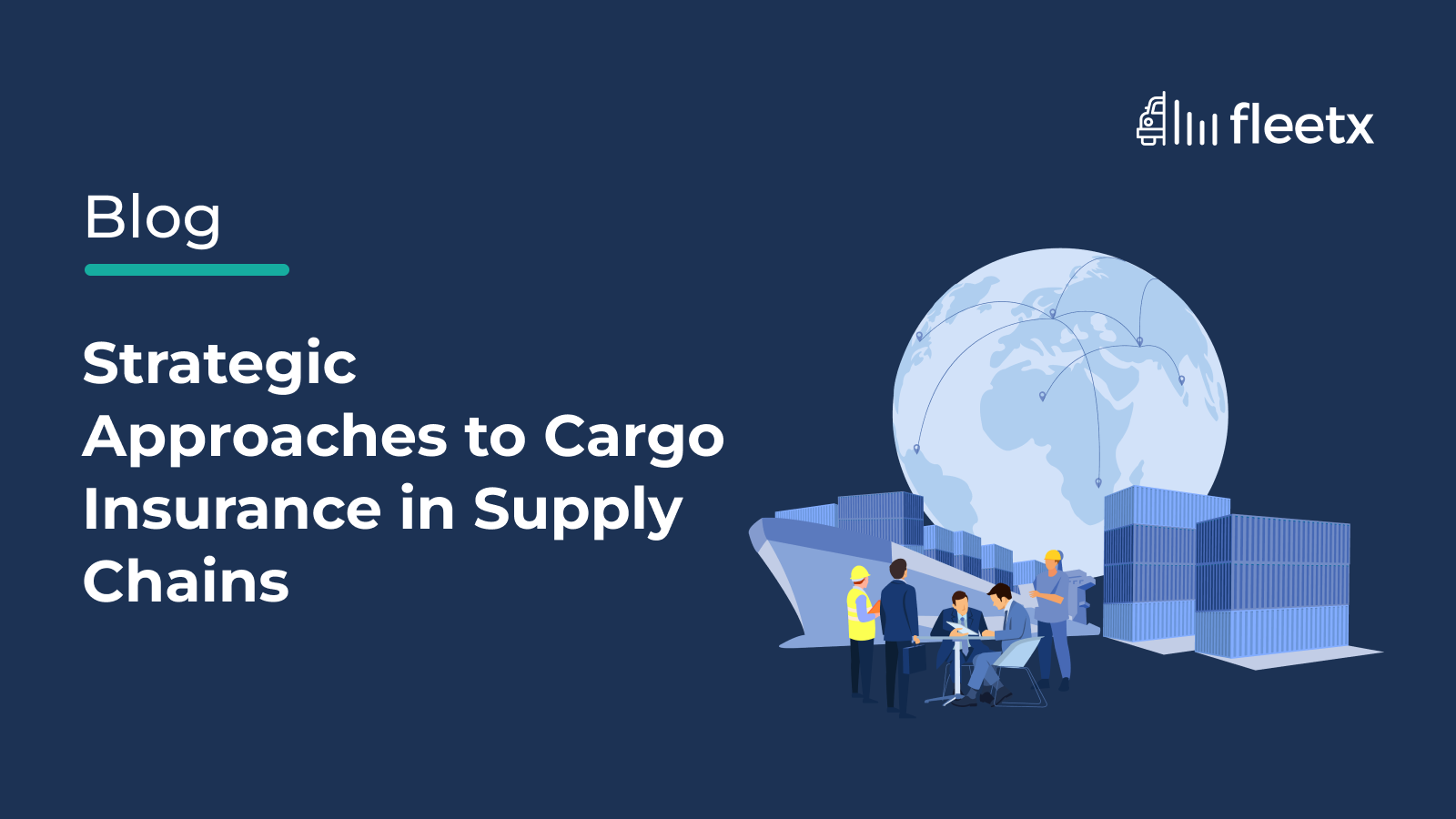
Strategic Approaches to Cargo Insurance
To address these challenges, businesses should adopt a strategic approach to cargo insurance. Here are some things to keep in mind while exploring options:
1.Evaluate Coverage Needs
- Start by understanding the specific risks associated with your supply chain. For example, if you frequently transport perishable items, consider policies that cover spoilage due to delays or cold-chain failures.
- Assess the value of your shipments to determine the appropriate coverage amount. Under-insuring or over-insuring can lead to financial inefficiencies.
2.Leverage Technology for Risk Assessment
- The collected data can be used by smart technologies and AI solutions to identify high-risk areas and routes. These insights allow businesses to take preventive measures and choose relevant insurance policies.
- Dashcams and real-time monitoring tools can provide data to insurers, and potentially lower premiums by demonstrating proactive risk management.
3.Understand Policy Inclusions and Exclusions
- Cargo insurance policies vary widely in their terms. Ensure you clearly understand what is covered (e.g., theft, natural disasters, transit delays) and what is not (e.g., poor packaging or pre-existing damages).
- Work with your insurance provider to negotiate terms that align with your business’s unique risks.
4.Partner with Reliable Insurers
- Choose an insurance provider with a good track record in the logistics industry. Reliable insurers can offer faster claim settlements and better customer support.
- Consider insurers who provide value-added services, such as risk assessment consultations or tools for monitoring shipment conditions.
5.Adopt a Proactive Claims Management System
- Simplify and streamline the claims process by maintaining proper documentation, such as bills of lading, packing lists, photographs of goods, etc.
- AI-powered platforms can help digitize and automate claim submissions, reducing processing time and increasing transparency.
6.Collaboration Across Stakeholders
- Effective cargo insurance strategies require collaboration between shippers, carriers, insurers, and technology providers to improve overall risk management.
7.Continuous Monitoring and Improvement
- Regularly review your insurance strategy based on changes in your business operations, cargo types, or supply chain routes.
- Utilize analytics tools to identify trends and refine your approach.
- Ensure compliance with regulatory requirements, particularly for cross-border shipments, to avoid legal complications.
Why Cargo Insurance Delivers Long-Term Business Value
Many businesses consider cargo insurance only after a shipment has been damaged or lost. However, organizations that view cargo insurance as a strategic investment rather than a reactive expense often experience stronger operational resilience and improved customer confidence. A comprehensive cargo insurance strategy supports business continuity by protecting working capital, reducing financial uncertainty, and enabling businesses to recover quickly from unexpected disruptions.
For companies operating across multiple transportation modes—road, rail, air, or sea, the financial impact of cargo loss extends beyond the value of the goods. Missed delivery commitments, production delays, contractual penalties, emergency replacement shipments, and reputational damage can significantly increase the overall cost of an incident. Cargo insurance helps businesses minimize these indirect losses by ensuring faster claim settlements and reducing financial exposure.
As supply chains become increasingly interconnected, businesses also face evolving risks such as geopolitical disruptions, climate-related events, cyber-enabled logistics attacks, port congestion, and changing regulatory requirements. While these challenges cannot always be prevented, they can be managed more effectively when supported by the right insurance coverage and real-time shipment visibility.
Integrating cargo insurance with digital logistics platforms further strengthens risk management. Fleet tracking, shipment monitoring, electronic proof of delivery, geofencing, and predictive analytics provide insurers and businesses with accurate shipment data, improving transparency during claims while encouraging proactive risk mitigation. Companies using technology-driven logistics systems often experience improved operational efficiency alongside stronger insurance outcomes.
Ultimately, cargo insurance contributes to more resilient supply chains by allowing businesses to focus on growth rather than uncertainty. Instead of absorbing unexpected financial shocks, organizations can maintain service continuity, protect customer relationships, and strengthen long-term business sustainability.
Cargo Insurance vs Self-Insurance: Which Risk Management Strategy Is Better?
Selecting the right risk management approach depends on shipment value, transportation frequency, operational scale, and financial capacity. While some businesses attempt to absorb losses internally through self-insurance, many logistics-intensive organizations find that comprehensive cargo insurance provides greater financial stability and operational confidence.
| Parameter | Cargo Insurance | Self-Insurance |
|---|---|---|
| Financial Protection | Covers insured losses arising from covered transit risks | Business bears the complete financial loss |
| Cash Flow Stability | Minimizes unexpected financial impact | Large losses can disrupt working capital |
| Risk Distribution | Risk is transferred to the insurer | Entire risk remains with the business |
| Claims Assistance | Professional claim handling and documentation support | Internal resources manage all recovery efforts |
| Business Continuity | Faster recovery after shipment incidents | Recovery depends on available financial reserves |
| Suitable For | Businesses transporting goods regularly or handling high-value shipments | Businesses with limited shipment frequency and sufficient financial reserves |
| Long-Term Risk Management | Predictable protection against unforeseen events | Financial exposure increases with shipment volume |
For most growing logistics businesses, manufacturers, distributors, and exporters, cargo insurance provides greater predictability than relying solely on internal reserves. As shipment volumes increase, even a single major incident can outweigh the annual cost of maintaining comprehensive insurance coverage. Combining insurance with modern transportation management systems creates a balanced approach that reduces operational risk while improving visibility across the supply chain.
Best Practices to Reduce Cargo Insurance Claims and Improve Supply Chain Reliability
While insurance protects businesses financially after an incident, reducing the likelihood of claims should remain the primary objective. Organizations that combine preventive logistics practices with technology-driven monitoring generally experience fewer disruptions, lower insurance-related costs, and stronger customer satisfaction.
- Improve shipment visibility with real-time tracking: Continuous monitoring enables logistics teams to identify route deviations, unexpected stoppages, excessive idle time, or unauthorized vehicle movement before they develop into larger operational issues. Early intervention helps prevent cargo theft, delivery delays, and avoidable damage.
- Use high-quality packaging and standardized handling procedures: Appropriate packaging materials, secure load placement, and recommended handling practices significantly reduce the risk of product damage during transportation. Businesses should also implement standardized loading and unloading processes to minimize handling errors across warehouses and distribution centres.
- Invest in regular driver training: Drivers should be trained on safe driving practices, emergency response procedures, documentation requirements, cargo handling protocols, and theft prevention measures. Well-trained drivers play a vital role in maintaining shipment integrity throughout transit.
- Maintain accurate digital documentation: Keep complete records, including invoices, transport documents, inspection reports, photographs, GPS logs, and proof of delivery. Digital documentation simplifies insurance claims while strengthening regulatory compliance, audit readiness, and record accessibility across departments.
- Review operational risks regularly: Periodically assess transportation routes, recurring incident locations, seasonal risks, and historical claim trends. Analysing operational data helps businesses improve routing decisions, strengthen preventive measures, negotiate better insurance terms, and build a more resilient logistics network.
Rather than treating cargo insurance as an isolated financial product, integrating it into a broader supply chain risk management strategy creates long-term operational advantages, improves business resilience, and strengthens customer trust.
To Conclude
Cargo insurance is more than just a safety net; it is an indispensable asset in today's logistics landscape. Beyond protecting shipments from financial losses, it enables businesses to build resilient supply chains, maintain operational continuity, and manage risks with greater confidence. When combined with preventive measures such as real-time shipment visibility, standardized cargo handling, accurate documentation, and data-driven decision-making, cargo insurance becomes an integral part of a proactive risk management strategy rather than merely a post-incident solution. As India's logistics sector continues to evolve, businesses that combine comprehensive insurance coverage with modern transportation technologies and continuous operational improvements will be better positioned to minimize disruptions, strengthen customer trust, and achieve sustainable growth. Start by evaluating your current insurance strategy and explore how Fleetx can help optimize your logistics operations through greater visibility, smarter risk management, and improved supply chain efficiency. After all, investing in prevention and preparedness today can help avoid significant operational and financial challenges tomorrow.
Frequently Asked Questions
What is cargo insurance, and why is it important for modern supply chains?
Cargo insurance is a policy that protects businesses against financial losses arising from the theft, loss, or damage of goods while they are being transported by road, rail, air, or sea. Unlike standard vehicle insurance, which covers the transport vehicle itself, cargo insurance specifically safeguards the value of the goods being shipped. It plays an important role in ensuring business continuity by reducing the financial impact of unexpected events during transit.
In today's supply chains, shipments often pass through multiple warehouses, carriers, distribution hubs, and transport modes before reaching the customer. Every transfer introduces new risks, including accidents, weather disruptions, mishandling, theft, and delays. Without adequate cargo insurance, businesses may have to absorb these losses directly, affecting profitability, customer satisfaction, and operational efficiency.
For Indian businesses operating across cities such as Delhi, Gurgaon, Mumbai, Bengaluru, Pune, and other logistics hubs, cargo insurance has become increasingly important because shipment volumes continue to grow alongside e-commerce, manufacturing, retail, and exports. Companies transporting electronics, pharmaceuticals, FMCG products, industrial equipment, and temperature-sensitive goods particularly benefit from comprehensive coverage.
Modern logistics companies also combine cargo insurance with technologies such as GPS tracking, transportation management systems (TMS), electronic proof of delivery, and AI-powered shipment monitoring. These tools improve shipment visibility, reduce operational risks, and simplify claim documentation. Rather than viewing cargo insurance as merely an expense, businesses increasingly consider it a strategic investment that protects revenue, strengthens customer confidence, and supports resilient supply chain operations.
How does cargo insurance work for domestic and international shipments in India?
Cargo insurance works by providing financial compensation when insured goods are damaged, stolen, or lost during transportation, subject to the policy's terms and conditions. Businesses first select a policy based on shipment value, transportation mode, cargo type, and operational requirements. Once the shipment is insured, any covered incident occurring during transit can be reported through the insurer's claims process along with supporting documentation.
For domestic transportation across India, cargo insurance generally covers shipments moving between manufacturing plants, warehouses, distribution centres, retailers, and customer locations. Companies operating across Delhi NCR, Gurgaon, Mumbai, Bengaluru, Chennai, Pune, and other industrial corridors frequently insure high-value shipments to minimise financial risk arising from accidents, theft, or natural disasters.
International cargo insurance follows a similar process but considers additional factors such as customs clearance, port handling, multimodal transportation, international regulations, and overseas logistics partners. Depending on business requirements, coverage may extend from the supplier's warehouse to the buyer's destination, commonly referred to as warehouse-to-warehouse coverage.
Businesses should carefully review policy inclusions, exclusions, deductibles, documentation requirements, and liability limits before purchasing coverage. Integrating cargo insurance with digital logistics platforms further improves transparency because shipment tracking, GPS records, electronic proof of delivery, and digital documentation can significantly streamline claim investigations. This combination enables businesses to recover more efficiently while maintaining uninterrupted supply chain operations.
What are the different types of cargo insurance policies available for businesses?
Businesses can choose from several types of cargo insurance policies depending on shipment frequency, cargo value, transportation mode, and operational scale. Selecting the right policy helps balance risk protection with insurance costs while ensuring business continuity.
One of the most common options is a specific shipment policy, which provides coverage for a single shipment. This option is suitable for businesses that transport goods occasionally or handle project-based deliveries. Another popular option is an annual open cargo policy, designed for companies that transport goods regularly throughout the year. Instead of purchasing insurance separately for every shipment, businesses receive continuous coverage for multiple consignments.
Businesses involved in international trade may also choose marine cargo insurance, which protects goods transported through sea freight while often extending coverage to inland transportation before and after ocean transit. Air cargo insurance is available for high-value or time-sensitive shipments transported by air, whereas multimodal cargo insurance protects goods moving across different transportation modes under a single policy.
Companies should also understand the difference between basic and comprehensive coverage. Basic policies may protect against limited risks, while comprehensive policies generally include broader protection against theft, accidental damage, fire, natural disasters, and certain transit-related incidents. For manufacturers, logistics providers, distributors, exporters, and retailers across India, selecting the appropriate policy requires evaluating shipment frequency, supply chain complexity, regulatory obligations, and overall business risk exposure rather than focusing solely on premium costs.
How much does cargo insurance cost in India for businesses?
The cost of cargo insurance in India varies depending on multiple factors, including cargo value, shipment frequency, transportation mode, destination, commodity type, packaging quality, historical claim records, and overall business risk profile. Because every shipment presents different levels of exposure, insurers typically calculate premiums based on individual operational requirements rather than offering a fixed standard price.
For many domestic shipments, premiums may range from approximately 0.05% to 0.30% of the declared cargo value, although specialised goods, hazardous materials, international shipments, or high-risk routes may attract higher premiums. Businesses transporting electronics, pharmaceuticals, chemicals, luxury products, or temperature-sensitive cargo generally require more comprehensive coverage than companies transporting lower-risk commodities.
Businesses operating across Delhi, Gurgaon, Mumbai, Bengaluru, Pune, and other logistics-intensive markets should evaluate insurance costs alongside potential financial losses resulting from theft, accidents, weather events, or delayed deliveries. While comprehensive coverage may appear more expensive initially, it often proves significantly more cost-effective than absorbing major uninsured losses.
Several insurers also consider operational practices before determining premiums. Companies using GPS-enabled fleet tracking, transportation management systems, electronic proof of delivery, secure warehouses, and preventive risk management processes may qualify for more competitive pricing because these technologies reduce shipment risks. Instead of focusing only on the premium amount, businesses should compare claim settlement efficiency, coverage scope, exclusions, customer support, and insurer reputation before selecting a cargo insurance provider.
What is the best cargo insurance strategy for logistics companies and manufacturers?
The best cargo insurance strategy extends beyond purchasing the broadest available policy. Instead, businesses should develop a comprehensive risk management framework that combines insurance coverage with operational best practices, technology adoption, and continuous monitoring of supply chain risks.
Logistics companies and manufacturers should begin by assessing shipment values, transportation routes, customer commitments, cargo sensitivity, and seasonal demand fluctuations. These factors help determine the most suitable level of coverage while preventing both underinsurance and unnecessary premium expenses. Businesses moving high-value products across multiple states or international markets should periodically review policy limits as shipment volumes grow.
Technology also plays an increasingly important role in strengthening insurance outcomes. GPS tracking, geofencing, AI-powered transportation management systems, electronic proof of delivery, vehicle telematics, and predictive analytics provide greater shipment visibility throughout transit. These capabilities enable logistics teams to identify operational risks earlier, maintain better documentation, improve regulatory compliance, and support faster insurance claims whenever incidents occur.
For organisations operating in major logistics hubs such as Delhi NCR, Gurgaon, Mumbai, Bengaluru, and Pune, integrating cargo insurance with digital fleet management creates additional operational advantages by improving delivery reliability and customer confidence. Rather than treating insurance as a reactive safeguard, leading businesses include it within broader supply chain resilience strategies that focus equally on prevention, operational efficiency, compliance, and continuous improvement. This proactive approach helps reduce disruptions while supporting sustainable long-term business growth.
Which factors should businesses compare before choosing the top cargo insurance policy?
Selecting the right cargo insurance policy involves much more than comparing premium costs. Businesses should evaluate the insurer's coverage scope, claim settlement history, exclusions, customer support, turnaround time, and ability to handle industry-specific risks. The objective is to choose a policy that aligns with operational requirements rather than simply selecting the least expensive option.
One of the first considerations is the type of goods being transported. High-value electronics, pharmaceuticals, automotive components, chemicals, and perishable products each face different transit risks and may require specialised coverage. Businesses should also assess transportation modes, shipment frequency, geographic coverage, and whether domestic, international, or multimodal transportation is involved.
Another important factor is how efficiently the insurer handles claims. Faster claim processing minimises business disruption and improves cash flow after an incident. Companies should also understand policy exclusions, deductibles, documentation requirements, and maximum liability limits before purchasing coverage. Hidden exclusions can significantly reduce claim eligibility if they are not reviewed carefully.
Technology compatibility has become another differentiator. Many insurers recognise businesses that use GPS vehicle tracking, transportation management systems (TMS), electronic proof of delivery, and shipment monitoring because these tools improve visibility and reduce operational risks. For businesses across India—including Delhi NCR, Gurgaon, Mumbai, Bengaluru, and Pune—choosing an insurer that supports digital documentation and proactive risk management creates long-term operational value. Comparing these factors together helps businesses identify the top cargo insurance solution based on reliability, service quality, and overall protection rather than premium cost alone.
Why do businesses in Delhi NCR, Gurgaon, and Mumbai need a stronger cargo insurance strategy?
Delhi NCR, Gurgaon, and Mumbai are among India's busiest logistics and commercial hubs, handling significant volumes of manufacturing, retail, e-commerce, automotive, pharmaceutical, FMCG, and export shipments every day. While these regions offer excellent infrastructure and connectivity, they also present unique transportation challenges that increase operational risks.
Heavy traffic congestion, long transit times, multiple warehouse transfers, urban delivery complexities, weather-related disruptions, and cargo theft can all increase the likelihood of shipment delays or damage. Businesses transporting valuable goods across these metropolitan regions often manage multiple deliveries simultaneously, making comprehensive cargo insurance an important component of overall supply chain risk management.
For example, manufacturers in Gurgaon supplying automotive components, retailers serving customers across Delhi NCR, or exporters transporting goods through Mumbai's ports all face different operational exposures. Appropriate cargo insurance helps protect businesses from financial losses while maintaining customer commitments during unexpected incidents.
Modern logistics technology further strengthens insurance effectiveness. GPS tracking, AI-powered route optimisation, geofencing, digital proof of delivery, and transportation management software provide real-time shipment visibility while generating documentation that supports faster claim processing. Businesses combining technology with comprehensive cargo insurance are generally better positioned to reduce disruptions, improve customer satisfaction, and maintain operational continuity. As logistics activity continues to grow across India's major commercial centres, adopting a proactive cargo insurance strategy has become an important competitive advantage rather than simply a compliance requirement.
Can fleet management and transportation management software help reduce cargo insurance claims?
Yes. Modern fleet management software and transportation management systems (TMS) play a significant role in reducing both shipment risks and insurance claims. While these platforms do not replace cargo insurance, they help businesses minimise the frequency and severity of incidents that typically result in financial losses.
Real-time GPS tracking enables logistics teams to monitor vehicle locations continuously and respond immediately to route deviations, unauthorised stoppages, delays, or suspicious movement. Geofencing alerts, driver behaviour monitoring, fuel analytics, and predictive maintenance further reduce accident risks by improving overall fleet performance. Better operational control directly contributes to safer cargo transportation.
Transportation management software also improves planning by optimising routes, scheduling deliveries efficiently, reducing idle time, and coordinating shipments across multiple locations. Electronic proof of delivery, digital trip records, automated documentation, and centralised shipment data create an accurate audit trail that simplifies insurance claims whenever incidents occur.
Businesses across India—including Delhi, Mumbai, Bengaluru, Gurgaon, and Pune—are increasingly integrating digital logistics platforms with their cargo insurance strategies to improve operational resilience. Companies using advanced solutions such as Fleetx gain better shipment visibility, stronger compliance, and more reliable documentation while reducing preventable disruptions. As insurers continue recognising the value of technology-driven risk management, organisations that invest in digital fleet operations may also strengthen their overall insurance profile and improve long-term operational efficiency.
How can businesses in Bengaluru, Pune, and other growing logistics hubs reduce cargo risks?
Bengaluru, Pune, Hyderabad, Chennai, Ahmedabad, and several other emerging logistics hubs are experiencing rapid growth due to expanding manufacturing, technology, automotive, pharmaceutical, and e-commerce sectors. As shipment volumes increase, businesses must proactively manage transportation risks to maintain reliable supply chain operations.
The first step is identifying operational vulnerabilities through regular risk assessments. Businesses should evaluate transportation routes, warehouse operations, cargo handling procedures, seasonal weather patterns, and historical incident data to identify opportunities for improvement. Standardising packaging methods, implementing secure loading practices, and training drivers on cargo handling also help reduce avoidable shipment damage.
Technology further strengthens cargo protection. Real-time vehicle tracking, AI-powered route planning, geofencing, predictive maintenance, electronic proof of delivery, and transportation analytics enable logistics teams to detect issues before they escalate into costly disruptions. These tools improve shipment visibility while generating valuable operational data that supports insurance claims and compliance requirements.
Comprehensive cargo insurance should complement these preventive measures rather than replace them. Businesses that integrate insurance with modern logistics technology, digital documentation, and continuous performance monitoring generally experience fewer claims, faster recovery after disruptions, and stronger customer confidence. As India's logistics infrastructure continues to expand, organisations adopting proactive risk management strategies will be better positioned to support sustainable growth while protecting valuable shipments throughout the supply chain.