
The Indian logistics sector is no stranger to road unpredictability. Juggling driver fatigue, reckless overtakes, and cargo theft, safety often feels like a moving target. But AI-powered dashcams are changing that narrative. By merging telematics data with real-time video intelligence, fleets can see, analyze, and act on every second of road activity - transforming reactive management into predictive safety.
The Importance of AI in Fleet Safety
Guesswork to Data-Driven Precision
Traditional fleet safety relied heavily on manual supervision and post-incident reports. AI telematics flips this approach by detecting and predicting risky behaviors before they turn into accidents. Real-time alerts on speeding, tailgating, or distraction provide fleet managers with instant visibility and drivers with immediate feedback - creating a closed loop of safety enforcement.
Preventing Loss Before It Happens
With India’s logistics losses due to accidents and theft running into thousands of crores annually, proactive monitoring isn’t optional. AI dashcams ensure incidents are detected early - reducing downtime, protecting assets, and ensuring operational continuity.
Integral Features of AI Dashcams
Much like an extra set of intelligent eyes on the road, AI integrated dashcams analyze every frame of footage using machine learning (ML) algorithms.
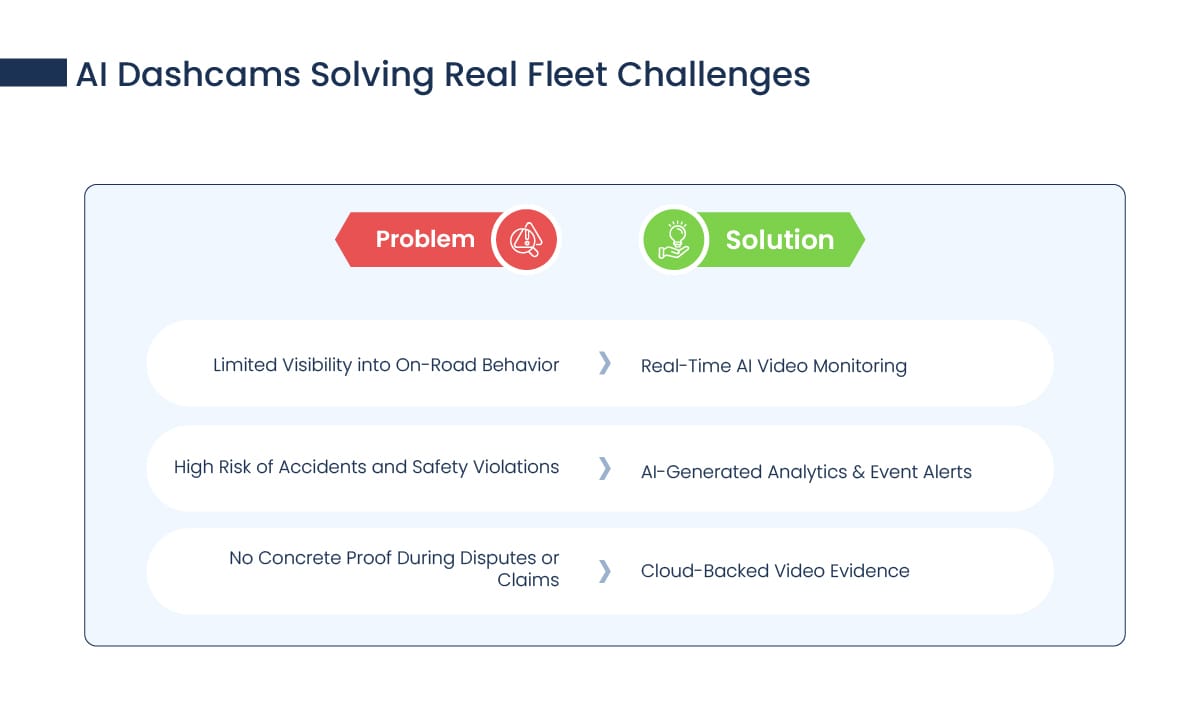
Fleetx’s dashcam powered by video telematics intelligence brings these capabilities together:
1. Real-Time Video Monitoring
AI-powered dashcams provide 24x7 HD video streaming and playback, whether the engine is running or not. Fleet managers can instantly view multiple camera angles to assess live incidents, verify driver behavior, or investigate claims.
2. AI-Generated Analytics
A common feature of smart dashcams is the automatic detection of risky behaviors such as distracted driving, drowsiness, or mobile phone use. The system doesn’t just record - it interprets, sending actionable alerts to both drivers and fleet managers.
3. Instant Event Alerts
When the AI system identifies sudden braking, sharp turns, or harsh acceleration, alerts are triggered instantly. These micro-moments provide critical context for coaching and incident prevention.
4. Driver Behavior Scoring
Integrating driver scoring models that evaluate behavior over time allows managers to identify high-risk drivers, incentivize safer ones, and align fleet operations with safety KPIs.
5. Comprehensive Cargo Monitoring
AI dashcams extend beyond cabins and roads. Integrated cargo cameras ensure tampering alerts, unauthorized access detection, and visibility during loading/unloading - offering full-trip security assurance.
Accident Prevention and Cargo Safety with Smart Dashcams
AI dashcams aren’t just about recording what happened; they help prevent it.
Detecting and Preventing Collisions
AI algorithms monitor driver focus, lane movement, and proximity to other vehicles. By identifying early signs of distraction or tailgating, the system issues immediate in-cabin warnings, allowing drivers to correct their behavior before impact. This proactive intervention can drastically reduce collision rates across large fleets.
Evidence-Based Accountability
Post-incident, the system automatically uploads relevant footage to the cloud, giving managers unbiased evidence. This helps resolve insurance disputes faster and shields drivers from false claims. The outcome? Reduced administrative friction and better protection for both drivers and assets.
Securing Cargo in Real Time
In India’s logistics landscape, cargo safety is often as critical as driver safety. A video telematics system uses IoT sensors and visual analytics to secure shipments end-to-end. Real-time GPS and driver-based alerts detect unauthorized, prolonged idling near unplanned stops and potential cargo tampering.
24x7 Cargo Visibility
Fleet managers can monitor containers from anywhere - ensuring that goods in transit are safe, routes are followed, and delivery SLAs are met. This level of transparency minimizes pilferage and boosts customer confidence in high-value logistics operations.
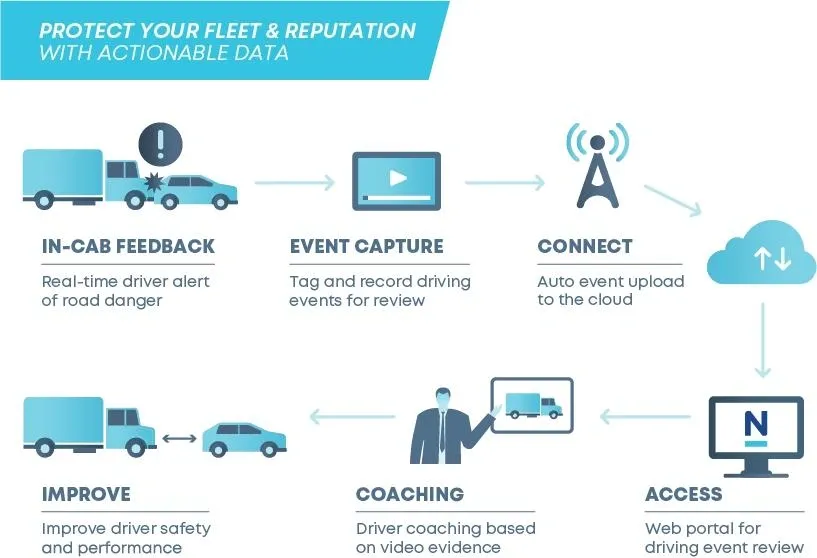
AI Dashcams as a Smart Driver Coaching Tool
The true power of smart dashcams lies not in penalizing drivers but in improving them.
From Surveillance to Support
AI dashcams transform the way driver performance is assessed. Instead of relying solely on telematics numbers, managers can use actual footage and behavioral analytics to identify areas of improvement like frequent lane changes, tailgating, or inconsistent braking.
Real-Time Feedback Loops
When unsafe behavior is detected, AI dashcams deliver immediate in-cabin alerts. This on-the-spot feedback conditions safer driving habits over time, creating a natural coaching mechanism without micromanagement.
Data-Driven Performance Reviews
Automated systems provide detailed driver reports that blend telematics data with video insights. These reports can be used in performance evaluations, training sessions, or incentive programs, turning safety compliance into a measurable outcome.
Positive Reinforcement
The system encourages recognition of safe drivers, not just penalization of errors. Fleet managers can easily identify and reward drivers maintaining excellent safety records - fostering accountability and motivation across the fleet.
Fleetx AI Dashcams: For Enhanced Cargo Safety & Driver Accountability
Fleetx’s AI-powered video telematics system is purpose-built for the complex realities of Indian logistics. Beyond standard GPS tracking, it integrates IoT, AI analytics, and multi-angle visibility into one unified platform - bridging the gap between on-ground operations and managerial control.
Comprehensive Visibility
Fleetx dashcams provide live and recorded video access, 24x7. Managers can see events unfold in real time, even when the vehicle is parked. Side-by-side channel views help correlate internal and external camera data for better situational analysis.
Driver Accountability Through Vision AI
AI analytics detect distraction, fatigue, and rule violations - turning subjective behavior into objective, timestamped data. This empowers fleet managers to coach drivers based on facts, not assumptions.
Cargo and Asset Protection
From detecting tampering to tracking route deviations, Fleetx ensures that both goods and drivers are protected. Cargo monitoring modules integrate GPS-based and driver-based alerts, providing complete security for high-value consignments.
Operational Efficiency and Cost Reduction
By reducing accidents and fuel wastage, fleets using Fleetx video telematics have reported up to 11% improvement in delivery times and measurable reductions in operational costs.
Cloud Storage and Data Security
Every captured event is stored securely on the cloud, ensuring evidence preservation, compliance, and easy retrieval for audits or insurance purposes.
Summing Up: Transform Vision into Vigilance
AI dashcams are redefining what “visibility” means for fleet operations. They don’t just watch - they learn, predict, and coach. In an industry where a single incident can cost lakhs in repairs, claims, and downtime, having an intelligent, always-alert co-pilot is no longer a luxury - it’s an operational necessity.
Fleetx’s AI-driven dashcams put the power of predictive safety directly in the hands of fleet managers. By combining real-time video, behavioral analytics, and IoT-backed insights, they help logistics businesses move from reactive firefighting to proactive prevention - driving safer roads, smarter fleets, and stronger bottom lines.
Frequently Asked Questions
1. What are AI dashcams and how do they improve fleet safety?
AI dashcams are intelligent vehicle cameras that combine traditional video recording with artificial intelligence, computer vision, and video telematics. Unlike conventional dashcams that simply capture footage, AI-powered dashcams actively monitor driver behaviour and surrounding road conditions in real time. They can identify risky events such as distracted driving, mobile phone usage, fatigue, harsh braking, tailgating, lane departures, and speeding before these incidents lead to accidents.
For logistics businesses across India, especially in Delhi NCR, Gurgaon, Mumbai, Bengaluru, and Pune where traffic congestion and long-distance freight movement are common, AI dashcams have become an important safety technology. Fleet managers receive instant alerts whenever unsafe behaviour is detected, allowing immediate intervention instead of waiting until after an accident has occurred.
Modern AI dashcams also integrate with GPS tracking, telematics platforms, driver scoring systems, and cloud storage to create a complete fleet safety ecosystem. This enables companies to investigate incidents quickly, reduce insurance disputes, improve driver coaching, and increase accountability.
Businesses implementing AI dashcams often report lower accident rates, fewer insurance claims, better compliance, improved customer confidence, and reduced vehicle downtime. Rather than functioning as surveillance devices alone, AI dashcams act as proactive safety assistants that continuously help drivers make safer decisions while improving operational efficiency.
2. How do AI dashcams differ from traditional vehicle cameras?
Traditional dashcams primarily function as recording devices. They capture video footage that can later be reviewed after an accident or incident. While useful for evidence collection, these systems cannot analyse driver behaviour or provide immediate alerts during a journey.
AI dashcams, on the other hand, continuously analyse live video using machine learning algorithms. They recognise dangerous driving patterns including fatigue, distracted driving, smoking, seatbelt violations, harsh acceleration, sudden braking, and unsafe following distances. Instead of simply recording an incident, AI dashcams actively help prevent one.
For commercial fleets operating in Indian cities such as Delhi, Gurgaon, Mumbai, Bengaluru, and Pune, this difference is significant because congested roads demand continuous monitoring and faster decision-making. AI-powered video telematics also integrates with GPS tracking, route optimisation, driver scorecards, and fleet management software, giving operations teams a complete view of every trip.
Another major advantage is automated event tagging. Instead of manually searching through hours of footage, fleet managers receive timestamped video clips whenever a safety event occurs. This reduces investigation time, simplifies insurance claims, and supports data-driven driver coaching. The combination of real-time intelligence and recorded evidence makes AI dashcams considerably more valuable than conventional recording cameras.
3. Can AI dashcams actually help reduce accidents, fuel costs, and operating expenses?
Yes. AI dashcams have become one of the most effective fleet safety technologies because they influence driver behaviour before accidents happen. Real-time audio alerts notify drivers whenever unsafe actions such as overspeeding, harsh braking, distracted driving, or unsafe following distances are detected. Continuous coaching encourages safer driving habits that reduce accident frequency over time.
Safer driving also contributes directly to lower operating costs. Smooth acceleration, controlled braking, and reduced speeding improve fuel efficiency while decreasing tyre wear, brake wear, and overall vehicle maintenance expenses. Logistics companies operating across India frequently use AI dashcams alongside telematics systems to monitor these improvements and generate measurable performance reports.
For fleets operating in Delhi NCR, Mumbai, Bengaluru, Pune, and Gurgaon where traffic conditions vary significantly, AI-powered monitoring provides valuable insights into city-specific driving risks and route performance. Companies can identify recurring safety issues, optimise driver training programmes, and improve compliance across their entire fleet.
Besides lowering repair and maintenance expenses, AI dashcams reduce fraudulent insurance claims by providing clear visual evidence during disputes. Faster claims processing, reduced vehicle downtime, improved driver accountability, and lower accident frequency collectively deliver substantial long-term savings. Many fleet operators therefore view AI dashcams not simply as safety equipment but as an investment that improves profitability while protecting drivers, cargo, and business reputation.
4. How do Fleetx AI dashcams ensure cargo safety during transit?
Fleetx AI dashcams do much more than monitor drivers—they provide complete visibility into cargo movement throughout the journey. By combining AI-powered video telematics, GPS tracking, cloud storage, and intelligent alerts, the platform helps logistics companies monitor vehicles, drivers, and cargo simultaneously. This integrated approach is particularly valuable for industries transporting high-value goods, pharmaceuticals, FMCG products, electronics, automotive components, and cold-chain shipments across India.
For businesses operating in Delhi NCR, Gurgaon, Mumbai, Bengaluru, and Pune, cargo theft, route deviations, unauthorized stoppages, and delivery delays remain common operational challenges. Fleetx AI dashcams detect unusual behaviour such as prolonged halts, unauthorized door openings, sudden route deviations, or suspicious activities around the vehicle. Fleet managers receive instant notifications, allowing them to verify incidents immediately through live or recorded video instead of relying solely on driver communication.
The system also creates timestamped video evidence that simplifies insurance claims and dispute resolution while improving customer confidence. Managers can monitor loading and unloading activities, verify delivery conditions, and investigate complaints using recorded footage stored securely on the cloud.
By integrating video intelligence with telematics data, Fleetx helps organizations reduce cargo losses, improve compliance, increase shipment visibility, and strengthen operational control. Rather than reacting after losses occur, businesses gain the ability to proactively protect valuable consignments throughout the transportation lifecycle.
5. What is the best AI dashcam software for commercial fleets in India?
The best AI dashcam software depends on fleet size, operational complexity, and integration requirements. Businesses should look for solutions that combine AI video analytics, GPS tracking, driver behaviour monitoring, cloud storage, telematics integration, live streaming, event detection, and comprehensive reporting instead of standalone recording devices.
For commercial fleet operators across India, especially in Delhi, Gurgaon, Mumbai, Bengaluru, and Pune, enterprise-grade platforms offer considerably more value than basic dashcams. Modern AI-powered fleet management systems allow companies to monitor risky driving behaviours, coach drivers using real incident footage, reduce accident rates, improve compliance, and protect valuable cargo through intelligent video analytics.
When evaluating the best AI dashcam software, organizations should compare features such as real-time alerts, driver fatigue detection, distraction monitoring, ADAS capabilities, cloud-based video storage, multi-camera support, mobile accessibility, route history, fleet dashboards, and integration with transportation management software (TMS).
Businesses should also consider vendor support, implementation assistance, software updates, data security, analytics capabilities, and scalability. Investing in a comprehensive AI video telematics platform provides greater long-term value than purchasing low-cost recording devices because it supports safety improvement, operational efficiency, insurance management, regulatory compliance, and measurable ROI across the entire fleet.
6. What is the cost of implementing AI dashcams for fleets in India?
The cost of implementing AI dashcams varies depending on fleet size, hardware specifications, cloud storage requirements, AI capabilities, and software subscription plans. Small fleets generally require a lower investment, while enterprise logistics companies often deploy advanced multi-camera systems integrated with telematics, GPS tracking, transportation management software, and cloud analytics.
In India, businesses should budget for hardware installation, software licensing, cloud video storage, SIM connectivity, implementation services, and ongoing technical support. Depending on the deployment model and feature set, implementation costs typically range from approximately ₹15,000 to ₹40,000 per vehicle for enterprise-grade AI dashcam solutions, with additional recurring software subscription charges where applicable. Actual pricing varies by vendor, required features, storage capacity, and fleet volume.
For logistics operators in Delhi NCR, Gurgaon, Mumbai, Bengaluru, and Pune, the investment often pays for itself through reduced accident frequency, lower insurance costs, decreased vehicle downtime, improved fuel efficiency, better driver behaviour, and stronger cargo security. Companies managing hundreds of vehicles may also benefit from volume-based pricing and customized enterprise implementation packages.
Rather than focusing only on initial purchase cost, businesses should evaluate total return on investment by considering reductions in operational expenses, maintenance costs, insurance claims, cargo losses, compliance risks, and administrative workload over several years of fleet operations.
7. Which industries benefit the most from AI dashcams and video telematics?
AI dashcams deliver value across nearly every industry that depends on commercial vehicles, but they are especially beneficial for logistics, transportation, e-commerce, FMCG, pharmaceuticals, construction, mining, oil and gas, cold chain logistics, cement, steel, retail distribution, and passenger transportation. These industries often manage large fleets operating over long distances, making driver safety, cargo protection, and operational visibility top priorities.
In India, businesses operating in Delhi NCR, Gurgaon, Mumbai, Bengaluru, Pune, Chennai, Hyderabad, and other logistics hubs face heavy traffic, challenging road conditions, and increasing compliance requirements. AI-powered dashcams help organizations reduce accident risks by monitoring driver fatigue, distracted driving, speeding, harsh braking, and unsafe lane changes in real time. Fleet managers receive immediate alerts that allow faster intervention and continuous driver coaching.
Industries transporting high-value or temperature-sensitive cargo particularly benefit from AI video telematics because live video monitoring helps prevent cargo theft, route deviations, and unauthorized stoppages. Construction and mining companies also use AI dashcams to improve heavy equipment safety and monitor vehicle movement in hazardous environments.
Beyond safety, organizations gain operational advantages including improved driver accountability, reduced insurance disputes, simplified incident investigations, better regulatory compliance, lower maintenance costs, and increased customer confidence. As Indian businesses continue investing in digital fleet management, AI dashcams have become an essential technology for organizations seeking higher productivity, safer operations, and measurable cost savings.
8. How can businesses in Delhi, Gurgaon, and Mumbai use AI dashcams to improve fleet operations?
Fleet operators in Delhi, Gurgaon, and Mumbai face unique transportation challenges including heavy congestion, frequent stop-and-go traffic, high accident exposure, urban delivery schedules, and increasing customer expectations. AI dashcams help businesses overcome these challenges by providing real-time visibility into driver behaviour, vehicle movement, and road incidents throughout every trip.
For logistics companies operating across Delhi NCR and Gurgaon, AI-powered video telematics helps monitor last-mile deliveries, interstate freight movement, and urban distribution routes while reducing accident risks caused by distracted driving or fatigue. Fleet managers receive instant alerts whenever unsafe behaviour is detected, allowing immediate corrective action before minor issues become costly incidents.
In Mumbai, where dense traffic and narrow roads often increase operational complexity, AI dashcams provide valuable video evidence during accidents, insurance disputes, and delivery verification. Companies can also use driver performance reports to identify training opportunities and reward consistently safe drivers.
When integrated with GPS tracking and fleet management software, AI dashcams provide route visibility, driver scorecards, historical trip analysis, and automated incident reporting. These insights help businesses optimize fleet productivity while lowering operational expenses. Whether managing e-commerce deliveries, FMCG distribution, construction vehicles, or long-haul transportation, organizations across India's largest commercial hubs can significantly improve safety, compliance, customer satisfaction, and overall fleet efficiency.
9. Is recorded AI dashcam footage secure, and who can access it?
Enterprise AI dashcam platforms are designed with strong security measures to protect sensitive fleet data. Video footage is typically encrypted during transmission and storage, ensuring that only authorized personnel can access recordings through secure cloud-based platforms. This makes AI dashcams suitable for businesses handling valuable cargo, confidential deliveries, or regulated transportation operations.
Fleet managers can configure user roles so that operations teams, safety managers, compliance officers, and administrators receive access only to the information relevant to their responsibilities. Most enterprise platforms also maintain detailed audit logs that record who viewed, downloaded, or shared specific video clips, helping organizations maintain accountability and comply with internal governance policies.
For logistics companies operating across Delhi, Mumbai, Bengaluru, Gurgaon, Pune, and other Indian cities, secure cloud storage ensures that important footage remains available even if the physical dashcam is damaged or stolen. This capability is particularly useful for accident investigations, insurance claims, customer disputes, legal proceedings, and driver coaching.
Businesses should evaluate vendors based on encryption standards, cloud infrastructure, retention policies, data privacy compliance, backup capabilities, and access controls before implementation. Choosing a trusted enterprise AI dashcam provider helps organizations balance operational visibility with strong cybersecurity and long-term data protection.
10. How should businesses choose the top AI dashcam solution for their fleet?
Selecting the right AI dashcam solution requires more than comparing hardware specifications. Businesses should evaluate whether the platform supports AI-powered driver monitoring, ADAS features, GPS tracking, video telematics, cloud storage, fleet analytics, real-time alerts, driver scorecards, and integration with existing transportation management or fleet management systems.
Organizations operating in India should also consider local implementation support, after-sales service, software updates, cloud infrastructure, data security, multilingual support, and deployment experience across industries. Companies managing fleets in Delhi NCR, Gurgaon, Mumbai, Bengaluru, and Pune often require scalable solutions capable of supporting hundreds or even thousands of vehicles while maintaining consistent performance.
Requesting live demonstrations, pilot deployments, customer references, and ROI assessments before implementation can help businesses compare vendors objectively. Decision-makers should evaluate total ownership cost rather than hardware pricing alone, considering software subscriptions, installation, cloud storage, maintenance, analytics capabilities, and long-term scalability.
The best AI dashcam platform is one that improves fleet safety, reduces operating costs, supports regulatory compliance, simplifies insurance claims, enhances driver coaching, protects cargo, and integrates seamlessly with existing business workflows. Investing in a comprehensive AI video telematics ecosystem enables organizations to build safer, more efficient, and data-driven transportation operations for long-term growth.