
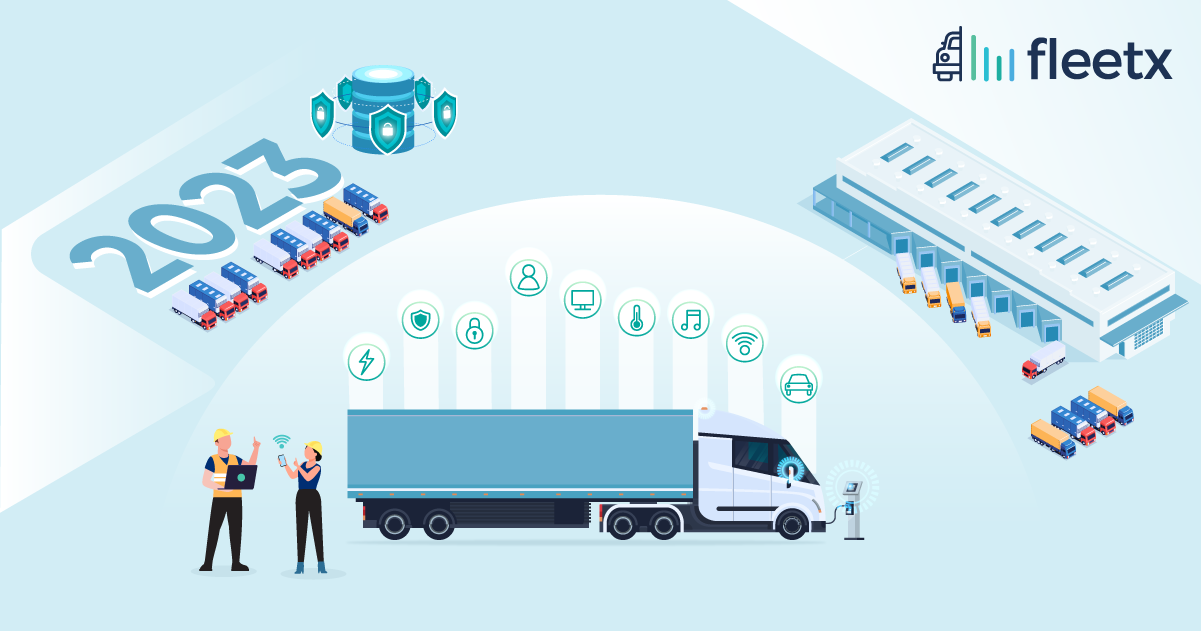
The logistics sector has witnessed a rough time in the past few years, becoming fragmented, volatile, and unpredictable. However, with the aid of the new dynamics of the future logistics market, it has begun to stand up again. In order to guarantee the satisfaction of business needs, it is now crucial to predict, change, and adapt to the dynamics of the logistics industry.
The logistics and fleet industry has seen significant change, which has increased efficiency, reduced costs, and enhanced customer service. The adoption of new business models and operational procedures, along with the use of emerging technologies like automation, data analytics, and the Internet of Things (IoT), have all contributed to this success. Additionally, transformation has aided businesses in meeting customer demands and remaining competitive in a market that is constantly changing.
Fleet managers, transporters, and businesses must build new technologies and modules for their operations in order to be ready for such a market. In the upcoming years, it is anticipated that the constantly changing transportation and logistics sector would bring about some important changes. In 2023, the fleet and logistics industries are expected to see the following major changes:
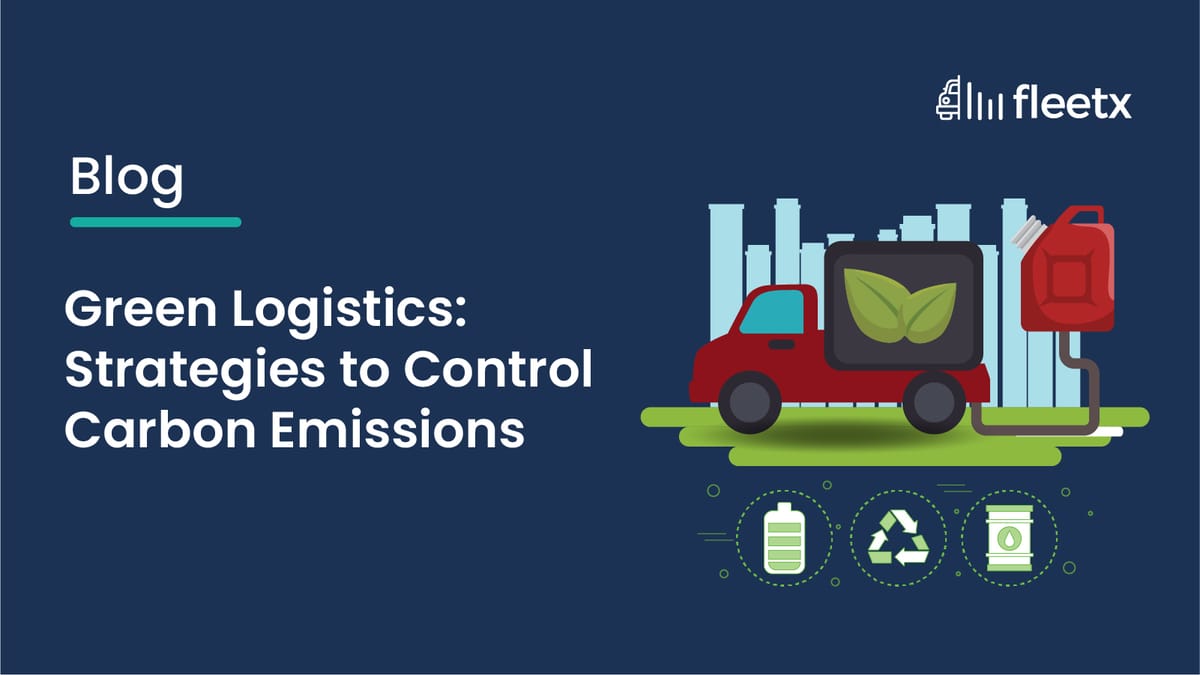
- Increased Adoption of Electric Vehicles (EVs) and Alternative Fuel Vehicles (AFVs) in Fleet Operations: Governments around the world are enacting stricter emissions regulations to reduce pollution and tackle climate change. As a result, fleets are expected to increasingly adopt EVs and AFVs, such as hydrogen fuel cell vehicles and natural gas vehicles, to meet these regulations and reduce their environmental footprint. In addition, major global firms from around the world have banded together to decrease carbon emissions. Advanced route optimization, which employs AI to discover the quickest path, further reduces fuel costs, carbon emissions, and improves fleet utilization.
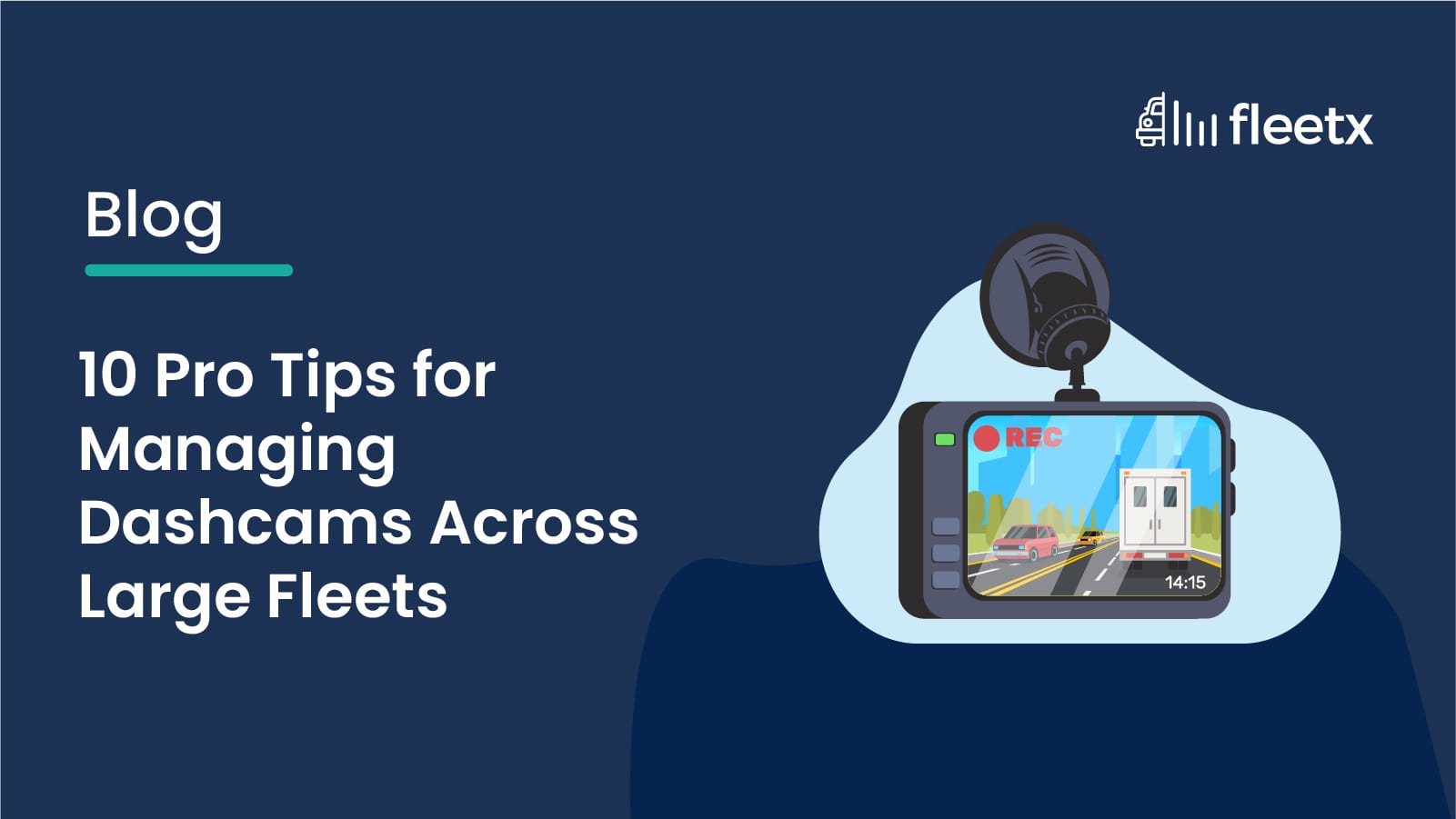
- Greater Use of Video Telematics and Connected Vehicle Technology: Video telematics systems with camera integration, vehicle telemetry data, GPS, and other sensors to track and monitor vehicle performance and driver safety and coaching have become increasingly popular in recent years. In 2023, it's expected that more fleets will use telematics to optimize their operations, including real-time data on vehicle location, fuel consumption, and driver behavior.
- Cloud-Based TMS: Businesses that deal with transportation are increasingly turning to cloud-based TMS solutions as their preferred option. A TMS solution that is cloud-based provides total visibility across the logistics network. This assists the operations team in better managing supply chains by providing a platform for enhanced dispatch and load capabilities, indent insights, real-time bidding, and 3rd party AI integration, among other things. TMS, with its capacity to scale as needed, provides organizations with a scalable solution to address new industry trends and market movements. Businesses that implement digital logistics solutions can help bridge essential gaps for seamless data sharing and centralized control, facilitating strategic decision-making.
- Advanced financial reporting & analytics: To keep up with the modern trends and understand customer expectations, real-time analytics holds the key. ERP solutions can help transporters and fleet managers manage data most efficiently. This centralized and integrated solution can help transporters improve efficiency and reduce costs by automating and streamlining processes such as inventory management, order tracking, maintenance, driver salaries, toll charges, fuel charges, etc. Advanced analytics can help with insights on the overall revenue rate.
- Increased Focus on Safety and Compliance: Fleet operators are facing increased scrutiny from regulators and insurance companies as concerns about vehicle safety and compliance continue to grow. In 2023, fleet operators will need to focus on safety and compliance to stay competitive and avoid penalties.
- Emergence of New Business Models: The fleet and logistics industry is ripe for innovation, and new business models such as pay-per-mile insurance, video telematics, GPS based tolls and subscription-based vehicle access are expected to emerge.
- More Use of Data Analytics: Data analytics can help fleet operators make better-informed decisions, optimize operations, and improve their bottom line. In 2023, more fleet operators are expected to adopt data analytics to gain insights into their operations and improve performance.
- More Intense Competition: The fleet and logistics industry is becoming increasingly competitive, as traditional automakers and rental car companies compete with new entrants like ride-hailing companies and technology startups. In 2023, fleet operators will need to stay agile and adapt to changing market conditions to stay competitive.
Key Takeaways: The Future of Fleet and Logistics
The fleet and logistics industry is moving toward more connected, automated, data-driven, and sustainable operations. For businesses evaluating the latest fleet management trends, the most important developments include:
- AI and automation are helping logistics teams identify operational exceptions, analyse large datasets, and support faster decision-making.
- IoT and connected vehicle technologies are improving real-time visibility into vehicle movement and fleet activity.
- Electric and alternative-fuel vehicles are becoming increasingly relevant as businesses evaluate emissions reduction and long-term operating costs.
- Video telematics is expanding the role of fleet technology from basic vehicle tracking to contextual safety and incident analysis.
- Cloud-based TMS and fleet platforms are helping businesses centralize transportation data and connect previously fragmented workflows.
- Data quality and integration are becoming critical as fleets adopt multiple digital systems.
- Measurable ROI should guide technology investments, with businesses tracking fuel efficiency, utilization, downtime, delivery performance, safety, and cost per trip.
For fleet operators in India, the best technology strategy depends on fleet size, vehicle type, routes, operational challenges, and existing digital infrastructure. Companies operating across Delhi NCR, Gurgaon, Mumbai, Bengaluru, and Pune should prioritize solutions that address measurable business problems rather than adopting technology solely because it is an emerging trend.
What Will Define Fleet and Logistics Operations Beyond 2026?
The next phase of fleet and logistics transformation is likely to be defined less by individual technologies and more by how effectively businesses connect vehicles, transportation workflows, operational data, and human decision-making.
From Vehicle Tracking to Intelligent Exception Management
Traditional fleet digitization focused heavily on answering one question: where is the vehicle? Modern fleet operations increasingly need technology to answer more complex questions, such as:
- Which vehicles or shipments require immediate attention?
- Where are recurring delays affecting turnaround time?
- Which routes consistently generate unnecessary operating costs?
- Which vehicles are showing patterns associated with higher maintenance requirements?
- Where are operational processes creating avoidable manual work?
This shift from continuous monitoring to exception-based fleet management can help operations teams focus on situations requiring intervention instead of manually reviewing every vehicle and journey.
Greater Integration Between Fleet, Transport, and Business Systems
The future of digital logistics will also depend on interoperability. GPS tracking, telematics, transportation management, ERP, maintenance, and financial systems can generate valuable information, but disconnected data limits its usefulness.
A more integrated operating environment can help businesses connect:
- Vehicle movement with shipment status.
- Route performance with transportation costs.
- Maintenance information with vehicle utilization.
- Driver and safety indicators with operational performance.
- Delivery outcomes with customer service metrics.
For businesses evaluating the top fleet management technologies, integration capability should therefore be considered alongside individual product features.
Human Decision-Making Will Remain Important
AI and automation can process large amounts of information and identify patterns, but fleet operations take place in complex real-world environments. Traffic disruptions, weather conditions, customer requirements, driver availability, vehicle restrictions, and unexpected events can all influence transportation decisions.
The strongest fleet management models are therefore likely to combine automated insights with experienced operational decision-making. Technology can identify exceptions and provide relevant information, while fleet managers determine the appropriate response based on business context.
How to Evaluate Whether a Fleet Technology Trend Is Worth Investing In
Not every emerging logistics technology will deliver the same value for every business. Before investing in a new fleet management solution, companies should evaluate whether the technology addresses a clearly defined operational requirement.
Five Questions to Ask Before Investing
1. What specific problem will the technology solve?
Businesses should identify whether the investment is intended to reduce fuel consumption, improve visibility, decrease downtime, strengthen safety, automate manual processes, or address another measurable challenge.
2. Can its impact be measured?
Relevant KPIs should be established before implementation. Without baseline data, it becomes difficult to determine whether a technology has genuinely improved operations.
3. Will it integrate with existing systems?
A new platform that creates another isolated source of information may increase administrative complexity. Integration requirements should therefore be evaluated early.
4. Can the solution scale with the business?
A technology suitable for a small fleet may become restrictive as vehicle numbers, users, locations, and transportation complexity increase.
5. What is the total cost of ownership?
Businesses should evaluate more than the advertised subscription price. The total investment may include:
- Hardware and installation.
- Software subscriptions.
- Connectivity and data usage.
- Cloud or video storage.
- System integrations.
- Training and implementation.
- Device replacement and maintenance.
Fleet Technology Evaluation Framework
| Evaluation Factor | Question to Ask | Why It Matters |
|---|---|---|
| Business problem | What operational issue does it address? | Prevents investment in unnecessary technology |
| Measurable outcome | Which KPI should improve? | Makes ROI easier to evaluate |
| Data quality | Is reliable operational data available? | Poor data can weaken analytics and automation |
| Integration | Can it connect with existing systems? | Reduces information silos and manual work |
| Scalability | Can it support future fleet growth? | Avoids frequent platform replacement |
| User adoption | Can operational teams use it effectively? | Technology creates limited value without consistent adoption |
| Total cost | What are the complete implementation and operating costs? | Enables a more accurate ROI calculation |
| Security | How is operational data managed and protected? | Becomes increasingly important as fleets become connected |
The best fleet management technology is not necessarily the newest or most feature-rich solution. A stronger investment is one that addresses a measurable operational problem, fits existing workflows, provides reliable information, and produces sustainable improvements in fleet performance.
How Fleet and Logistics Companies Can Prepare for the Next Phase of Digital Transformation
Knowing which technologies are shaping the logistics industry is only the first step. The larger challenge for fleet operators is deciding how to integrate new technologies into existing operations without creating disconnected systems, unnecessary costs, or additional complexity.
For logistics businesses in India, digital transformation should begin with clearly defined operational priorities. A company managing last-mile deliveries in Delhi NCR may need better route intelligence and delivery visibility, while a long-haul transporter operating between Mumbai, Pune, Bengaluru, and northern India may prioritize fuel efficiency, vehicle uptime, driver safety, and centralized fleet monitoring.
Build a Connected Fleet Technology Ecosystem
Fleet operators increasingly use multiple digital systems for tracking, transportation planning, maintenance, fuel management, finance, and driver management. When these systems operate independently, teams may still need to manually transfer information between platforms.
A connected technology ecosystem can help businesses create a more unified flow of operational information. Key areas to consider include:
- System integration: Connect fleet management, transportation management, ERP, finance, and other relevant business platforms where practical.
- Centralized visibility: Provide operations teams with access to important fleet and shipment information through consolidated dashboards.
- Automated workflows: Reduce repetitive manual processes such as status updates, report preparation, and exception identification.
- Data standardization: Maintain consistent information across vehicles, drivers, routes, customers, and shipments.
- Scalable infrastructure: Select systems capable of supporting additional vehicles, locations, users, and operational complexity as the business grows.
The objective is not simply to digitize existing manual processes. Businesses should use technology to redesign workflows so that operational teams can identify exceptions faster and spend less time collecting basic information.
Start With High-Impact Operational Use Cases
Fleet operators do not necessarily need to implement every emerging technology simultaneously. A phased approach can make digital transformation easier to manage and measure.
Companies can begin by identifying operational areas where inefficiencies have the greatest financial or service impact. Examples include high empty kilometres, excessive vehicle detention, recurring delivery delays, unplanned maintenance downtime, or inconsistent vehicle utilization.
Once a priority is identified, businesses can establish a baseline, implement the relevant technology, and measure whether performance improves. This approach helps distinguish technology that produces genuine operational value from solutions that add features without solving important business problems.
Traditional Fleet Operations vs Data-Driven Fleet Management
The transition from traditional fleet management to data-driven operations represents a broader change in how logistics decisions are made. Traditional operations often depend heavily on periodic reports, manual coordination, and individual experience. Data-driven fleet management supplements operational expertise with continuous information and structured performance measurement.
| Area | Traditional Fleet Operations | Data-Driven Fleet Management |
|---|---|---|
| Vehicle visibility | Periodic driver updates and manual follow-ups | Centralized digital visibility based on connected vehicle data |
| Decision-making | Primarily based on experience and historical reports | Supported by current and historical operational data |
| Route management | Routes planned manually and changed reactively | Routes evaluated using operational and journey information |
| Maintenance | Often based mainly on fixed schedules or breakdowns | Maintenance decisions supported by usage and vehicle information |
| Driver management | Limited visibility beyond delivery outcomes | Performance can be assessed using defined safety and operational indicators |
| Exception handling | Problems identified after manual escalation | Alerts can highlight selected operational exceptions earlier |
| Performance reporting | Spreadsheet-based and periodically compiled | Automated dashboards can provide recurring KPI visibility |
| Scalability | Additional vehicles increase administrative workload | Digital workflows can support larger operations more efficiently |
Why Data Quality Matters as Much as Technology
A sophisticated analytics platform cannot produce reliable insights if the underlying information is incomplete, inconsistent, or inaccurate. As fleet operations become increasingly digital, data governance becomes an important part of technology adoption.
Businesses should establish clear processes for:
- Maintaining accurate vehicle and driver records.
- Defining consistent operational KPIs.
- Reviewing unusual or incomplete data before making major decisions.
- Controlling access to commercially sensitive information.
- Integrating information from different platforms without unnecessary duplication.
- Periodically reviewing whether dashboards and alerts remain relevant to operational priorities.
High-quality data can help fleet managers move from simply observing what happened to understanding why performance changed and where corrective action may be required.
Measuring the Business Impact of Emerging Fleet Technologies
The success of fleet technology should ultimately be measured through business outcomes rather than the number of features deployed. AI, IoT, telematics, automation, and cloud-based platforms can generate large amounts of information, but their value depends on whether that information leads to measurable operational improvements.
Key Metrics Fleet Operators Should Track
Before implementing a new fleet technology, businesses should establish baseline performance and identify the metrics the investment is expected to influence.
Important fleet and logistics KPIs can include:
- Vehicle utilization: Measures how effectively available fleet capacity is being used.
- Empty kilometres: Tracks vehicle movement that generates operating costs without directly carrying productive loads.
- Fuel efficiency: Helps businesses monitor fuel consumption relative to distance, vehicle type, route, and operating conditions.
- Vehicle downtime: Measures the time vehicles remain unavailable because of maintenance or operational issues.
- On-time delivery performance: Evaluates whether shipments consistently reach destinations within committed delivery windows.
- Turnaround time: Measures how long vehicles spend completing key operational cycles at plants, warehouses, hubs, or customer locations.
- Safety indicators: Can include speeding events, harsh driving patterns, incidents, or other defined risk metrics.
- Cost per kilometre or trip: Provides a clearer view of the overall economics of fleet operations.
Create a Practical Technology ROI Framework
Businesses evaluating fleet management software or logistics technology should compare the total cost of implementation with measurable improvements over an appropriate period.
A practical evaluation can consider three categories:
1. Direct financial impact
This includes measurable changes in fuel expenditure, maintenance costs, administrative effort, detention costs, or other operational expenses.
2. Productivity improvements
Technology may help teams manage more vehicles or shipments without a proportional increase in manual coordination. Reduced reporting effort and faster exception management can also contribute to productivity.
3. Risk and service improvements
Some benefits are not immediately reflected as direct cost savings. Better visibility, safer driving practices, improved delivery consistency, and stronger operational records can reduce business risk and improve customer service.
For fleet operators comparing technology investments in India, the best solution is not necessarily the platform with the highest number of features or the lowest initial price. The stronger choice is generally the technology that addresses clearly defined operational challenges, integrates effectively with existing workflows, and demonstrates measurable value over time.
As the logistics industry continues to evolve, businesses that combine emerging technologies with structured implementation and performance measurement will be better positioned to adapt. The competitive advantage will increasingly come not simply from collecting more fleet data, but from converting reliable information into faster decisions and consistent operational improvements.
To Conclude
With the digitization of the logistics industry, there will be more changes in the upcoming years. The key takeaway for fleet and logistics industry trends in 2023 is the increasing adoption of advanced technologies such as autonomous vehicles, internet of things (IoT) and artificial intelligence (AI) to optimize operations, improve efficiency, and reduce costs. The industry will also see a growing focus on sustainability and green initiatives such as electric vehicles and carbon footprint reduction. Companies that can effectively leverage these trends will be well-positioned for success in the coming year.
To thrive in the fast changing logistics sector, even logistics organizations will need to reevaluate their business plans. The key for today's leaders to overcome the difficulties will be integrating cutting-edge technologies and being adaptable to the changing environment, even while uncertainty continues to be a major problem.
Frequently Asked Questions
What are fleet and logistics industry trends? ▼
Fleet and logistics industry trends are the technological, operational, regulatory, and commercial developments that influence how businesses transport goods, manage vehicles, control costs, and serve customers. Major trends include artificial intelligence, Internet of Things or IoT connectivity, electric vehicles, video telematics, transportation management systems, route optimization, predictive maintenance, automation, and advanced data analytics.
For businesses in India, these developments are particularly important because logistics operations often involve long-distance transportation, dense urban traffic, fuel-price fluctuations, driver management challenges, and complex delivery networks. Companies operating fleets across Delhi, Delhi NCR, Gurgaon, Mumbai, Bengaluru, and Pune are increasingly using digital fleet management platforms to improve real-time visibility and operational control.
Modern fleet technology can help businesses monitor vehicle location, driver behaviour, fuel consumption, delivery performance, maintenance requirements, and route efficiency from a centralized system. AI-powered analytics can also identify patterns that would be difficult to detect through manual reporting.
The most important trends shaping the sector include:
- Greater use of GPS, IoT sensors, and connected vehicles.
- Increasing adoption of AI-based route and fleet optimization.
- Expansion of electric and alternative-fuel commercial vehicles.
- Growing demand for cloud-based transportation management systems.
- Higher adoption of video telematics for driver and road safety.
- Greater focus on sustainability, compliance, and measurable efficiency.
Businesses should evaluate these trends according to fleet size, operating geography, delivery complexity, and return on investment rather than adopting technology only because it is new.
What is smart fleet management and how does it improve logistics operations? ▼
Smart fleet management is the use of connected technology, automation, telematics, artificial intelligence, and real-time data to manage commercial vehicles more efficiently. Instead of relying primarily on phone calls, spreadsheets, manual registers, and driver updates, fleet operators can use centralized digital platforms to monitor vehicles and make faster operational decisions.
A smart fleet management system may combine GPS tracking, fuel monitoring, vehicle diagnostics, route planning, driver behaviour analysis, maintenance alerts, video telematics, and reporting. For logistics companies operating across multiple cities in India, this creates a single source of information for fleet performance.
For example, a transporter operating between Delhi, Gurgaon, Mumbai, Bengaluru, and Pune may use real-time tracking to identify delays, route deviations, excessive idling, or unplanned stoppages. Managers can then take action before these issues significantly affect delivery schedules or customer commitments.
Key benefits can include:
- Better visibility of vehicles and shipments.
- Reduced dependence on manual communication.
- More efficient routing and vehicle utilization.
- Improved preventive maintenance planning.
- Greater control over fuel-related operating costs.
- Data-driven driver safety and performance management.
The best smart fleet management approach depends on business requirements. A small regional fleet may primarily need GPS tracking and basic reporting, while a large enterprise fleet may require transportation management, advanced analytics, API integrations, automated workflows, and video telematics. Businesses should therefore compare solutions based on measurable operational problems and integration requirements rather than selecting a platform solely on price.
What are the top fleet management trends businesses in India should prepare for? ▼
The top fleet management trends in India are increasingly centred on connected operations, automation, safety, cost control, and sustainability. Logistics businesses are moving beyond basic GPS tracking toward integrated platforms that connect transportation planning, vehicle monitoring, driver management, maintenance, financial reporting, and analytics.
One major trend is the growing use of AI-powered decision support. Fleet managers can use analytics to identify inefficient routes, excessive idling, recurring maintenance problems, risky driving patterns, and underutilized vehicles. Another important development is video telematics, which combines camera footage with vehicle and driving data to provide greater context around road incidents and driver behaviour.
Businesses should also prepare for:
- Cloud-based transportation management systems for centralized logistics control.
- Greater use of electric vehicles for suitable commercial applications.
- Predictive and preventive maintenance using vehicle data.
- Digital freight and documentation workflows.
- More advanced fuel monitoring and expense analytics.
- Increased emphasis on safety, compliance, and sustainability reporting.
The importance of each trend varies by operating environment. A last-mile fleet in Delhi NCR may prioritize congestion-aware routing and electric vehicles, while a long-haul transporter serving Mumbai, Pune, and northern India may focus more heavily on fuel management, driver safety, maintenance, and shipment visibility.
The best strategy is to adopt technologies that solve clearly defined operational problems. Businesses should establish baseline metrics such as fuel cost per kilometre, vehicle utilization, delivery delays, maintenance downtime, and accident frequency before evaluating whether new fleet technologies deliver measurable improvements.
How much does fleet management software cost in India? ▼
The cost of fleet management software in India varies considerably depending on fleet size, required hardware, software modules, subscription structure, integrations, analytics capabilities, and support requirements. There is no single standard price because a basic GPS tracking platform and a comprehensive enterprise fleet management system provide very different functionality.
As a broad indicative range, basic GPS-based tracking solutions may start from a few hundred rupees per vehicle per month, excluding or including hardware depending on the vendor. More advanced platforms incorporating fuel analytics, maintenance management, driver behaviour monitoring, route optimization, video telematics, or transportation management capabilities can cost significantly more.
Businesses may also need to budget for:
- GPS or IoT tracking hardware.
- Dashcams and video storage for video telematics.
- Installation and device maintenance.
- Software subscriptions or enterprise licences.
- API integrations with ERP, TMS, or accounting systems.
- Training, implementation, and customized reporting.
For a small fleet, annual expenditure could range from tens of thousands of rupees for basic monitoring to several lakhs for advanced functionality. Large enterprise deployments across hundreds or thousands of vehicles may require customized commercial quotations and substantially larger budgets.
Businesses in Delhi, Gurgaon, Mumbai, Bengaluru, Pune, and other major logistics hubs should compare total cost of ownership rather than only the monthly subscription. The best fleet management software should deliver measurable value through reduced fuel waste, improved utilization, lower downtime, better safety, or administrative savings. A structured pilot involving a representative group of vehicles can help businesses evaluate potential return on investment before committing to a larger deployment.
Which is the best fleet management software for logistics companies in Delhi and Delhi NCR? ▼
The best fleet management software for logistics companies in Delhi and Delhi NCR is a platform that addresses the specific operational challenges of the fleet rather than simply offering the longest feature list. Companies operating in the region commonly deal with heavy traffic, complex urban routes, interstate movements, delivery time windows, driver coordination, fuel costs, and high vehicle utilization requirements.
A suitable system should provide real-time GPS tracking and actionable alerts while also supporting deeper operational requirements. Depending on fleet type, businesses may need route planning, geofencing, fuel monitoring, maintenance management, driver behaviour analytics, video telematics, shipment visibility, and transportation management capabilities.
When comparing top fleet management solutions for Delhi NCR operations, businesses should evaluate:
- Accuracy and reliability of real-time vehicle tracking.
- Ability to handle urban and interstate fleet operations.
- Configurable alerts for route deviation, stoppage, speeding, and idling.
- Reporting and analytics that support business decisions.
- Integration with existing ERP, TMS, or logistics systems.
- Implementation support and scalability.
Cost can vary from basic per-vehicle tracking subscriptions to customized enterprise contracts. Companies should request transparent information about software fees, hardware costs, installation, integrations, video storage, and ongoing support.
For businesses operating from Delhi, Gurgaon, Noida, Faridabad, and other parts of Delhi NCR, the most effective platform is generally one that improves measurable KPIs such as on-time delivery, fuel efficiency, driver safety, vehicle utilization, and maintenance downtime. A live product demonstration and limited pilot can help identify whether a solution fits real operating conditions before a larger rollout.
How are AI, IoT, and video telematics changing fleet operations in Gurgaon? ▼
AI, IoT, and video telematics are changing fleet operations in Gurgaon by giving transporters greater visibility into vehicles, drivers, routes, and operational risks. Gurgaon is a major corporate and logistics centre within Delhi NCR, where fleets frequently manage a combination of urban deliveries, employee transportation, interstate movement, and commercial supply-chain operations.
IoT-enabled devices collect vehicle information such as location, movement, ignition status, and other operational parameters. When this data is processed through fleet management software, managers can identify delays, unplanned stops, route deviations, or inefficient vehicle utilization.
Artificial intelligence can further improve these systems by identifying patterns within large volumes of fleet data. Depending on the platform and available data, AI can support route optimization, risk identification, predictive maintenance, and automated exception detection.
Video telematics adds visual context through connected cameras. It can help fleet operators investigate incidents and identify risky driving behaviours when used responsibly and in accordance with applicable privacy and workplace policies.
For Gurgaon-based businesses, these technologies can support:
- Real-time visibility across Delhi NCR routes.
- Faster response to operational exceptions.
- Better driver safety coaching.
- Reduced unnecessary idling and route deviation.
- More informed maintenance planning.
- Improved documentation of road incidents.
Costs depend heavily on the technology stack. Basic IoT tracking may be relatively affordable, while AI analytics and multi-camera video telematics can require higher hardware, connectivity, cloud storage, and subscription costs. Businesses should prioritize measurable use cases before investing in advanced systems and calculate potential savings against total ownership costs.
What are the best fleet technology solutions for logistics companies in Mumbai? ▼
The best fleet technology solutions for logistics companies in Mumbai are those designed to improve visibility, routing, vehicle utilization, safety, and delivery reliability in a dense and complex operating environment. Mumbai-based fleets frequently face congestion, restricted delivery windows, high operating costs, long waiting times, and coordination challenges across the Mumbai Metropolitan Region.
Real-time GPS tracking is typically the foundation of a digital fleet system, but businesses with more complex operations may benefit from combining several technologies. Route optimization tools can help planners create more efficient journeys, while geofencing can automatically record arrivals and departures from warehouses, customer sites, and distribution centres.
Other useful technologies include:
- Transportation management systems for planning and shipment coordination.
- Fuel management and consumption analytics.
- Video telematics for safety and incident investigation.
- Preventive maintenance scheduling and digital service records.
- Driver performance monitoring.
- Automated reports and operational dashboards.
Businesses operating between Mumbai, Navi Mumbai, Thane, Pune, and other logistics corridors should also consider system scalability and integration. A fleet platform that works effectively for 20 vehicles may not necessarily meet the needs of a business managing hundreds of vehicles and multiple warehouses.
Pricing depends on the number of vehicles and features selected. Basic tracking may involve relatively low recurring costs, while integrated enterprise systems can require significant annual investment. The best approach is to compare vendors using actual operating KPIs, including delivery turnaround time, fuel cost, idle hours, maintenance downtime, and safety incidents. Businesses should select technology that can demonstrate measurable operational improvement rather than adopting every available feature.
How can logistics companies in Bengaluru and Pune use electric vehicles and alternative fuels? ▼
Logistics companies in Bengaluru and Pune can use electric vehicles and alternative-fuel vehicles by matching the vehicle technology to specific routes, payload requirements, charging availability, and daily operating patterns. Electrification is not automatically suitable for every logistics operation, but it can be particularly relevant for predictable urban and last-mile delivery routes.
A business considering electric commercial vehicles should first study daily kilometres travelled, average payload, idle time, parking locations, charging opportunities, and expected vehicle utilization. Routes that begin and end at a fixed depot may be easier to electrify because charging infrastructure can be installed at a centralized location.
Fleet management technology can support the transition by monitoring:
- Vehicle location and daily distance travelled.
- Energy consumption and operating efficiency.
- Charging schedules and vehicle availability.
- Route suitability for different vehicle types.
- Maintenance and utilization trends.
In Bengaluru, high levels of urban traffic can make route planning and charging coordination particularly important. Pune-based logistics businesses may need to evaluate a mix of urban routes, industrial corridors, and regional transportation requirements.
The cost of adopting electric vehicles depends on vehicle category, battery capacity, charging equipment, financing, electricity tariffs, and available incentives. Upfront acquisition costs may be higher than equivalent conventional vehicles in some categories, but total operating economics can differ because of energy and maintenance costs.
Companies should therefore calculate total cost of ownership over the planned vehicle life instead of comparing only purchase prices. A phased pilot on predictable routes is often the most practical way to determine whether electric or alternative-fuel vehicles can deliver operational and financial benefits.
How does a cloud-based TMS improve fleet and logistics management? ▼
A cloud-based Transportation Management System, or TMS, improves fleet and logistics management by centralizing transportation planning, execution, visibility, documentation, and performance data within a digital platform. It is particularly useful for businesses that coordinate multiple vehicles, transporters, shipments, customers, routes, and delivery locations.
Instead of managing transport activity across spreadsheets, phone calls, emails, and disconnected systems, a TMS can create more structured workflows for tasks such as shipment planning, vehicle allocation, dispatch, tracking, freight management, and reporting.
Depending on the platform, a cloud-based TMS may support:
- Shipment and load planning.
- Vehicle and transporter allocation.
- Real-time shipment visibility.
- Digital documentation and workflow automation.
- Freight rate and expense management.
- Performance reporting and analytics.
- Integration with ERP and other enterprise systems.
Cloud deployment can make systems easier to access across multiple offices and locations without requiring every user to work from the same physical network. This can be valuable for businesses operating across Delhi, Gurgaon, Mumbai, Bengaluru, Pune, and other cities.
The cost of a TMS varies significantly according to shipment volume, number of users, modules, integrations, customization, and deployment complexity. Smaller businesses may use standard subscription-based solutions, while enterprise implementations can involve customized pricing and substantial implementation costs.
The best TMS should reduce manual coordination and make transportation performance easier to measure. Before selecting a platform, businesses should identify current process gaps and track KPIs such as vehicle utilization, freight cost, turnaround time, on-time delivery, and manual processing effort to determine whether implementation produces meaningful improvement.
How should businesses choose the top fleet management technology for future logistics operations? ▼
Businesses should choose the top fleet management technology by starting with operational problems, measurable goals, and future scalability rather than selecting software based only on trends or feature comparisons. The right platform for a small delivery fleet may be very different from the best solution for a national logistics enterprise.
The first step is to identify current challenges. These may include high fuel consumption, poor vehicle visibility, frequent breakdowns, unsafe driving, inefficient routes, delayed deliveries, excessive manual reporting, or limited coordination between fleet and logistics teams.
Businesses should then evaluate potential solutions using criteria such as:
- Core features relevant to actual fleet requirements.
- Accuracy and reliability of data.
- Ease of use for drivers, managers, and operations teams.
- Integration with ERP, TMS, accounting, or other business systems.
- Ability to scale as the fleet grows.
- Implementation, training, and customer support.
- Data security and access controls.
- Total cost of ownership and measurable return on investment.
A company operating in India should also consider local operating conditions and its geographic footprint. Businesses managing city deliveries in Delhi, Gurgaon, Mumbai, Bengaluru, or Pune may prioritize different technologies from long-haul transporters serving interstate routes.
Pricing should be evaluated across hardware, subscriptions, installation, connectivity, storage, integrations, and maintenance rather than only the advertised monthly rate. Before a full-scale deployment, businesses should consider running a controlled pilot and measuring changes in fuel cost, route efficiency, vehicle utilization, downtime, delivery performance, and safety.
The best future-ready fleet technology is ultimately the solution that converts operational data into consistent actions and measurable business outcomes while remaining flexible enough to support evolving logistics requirements.